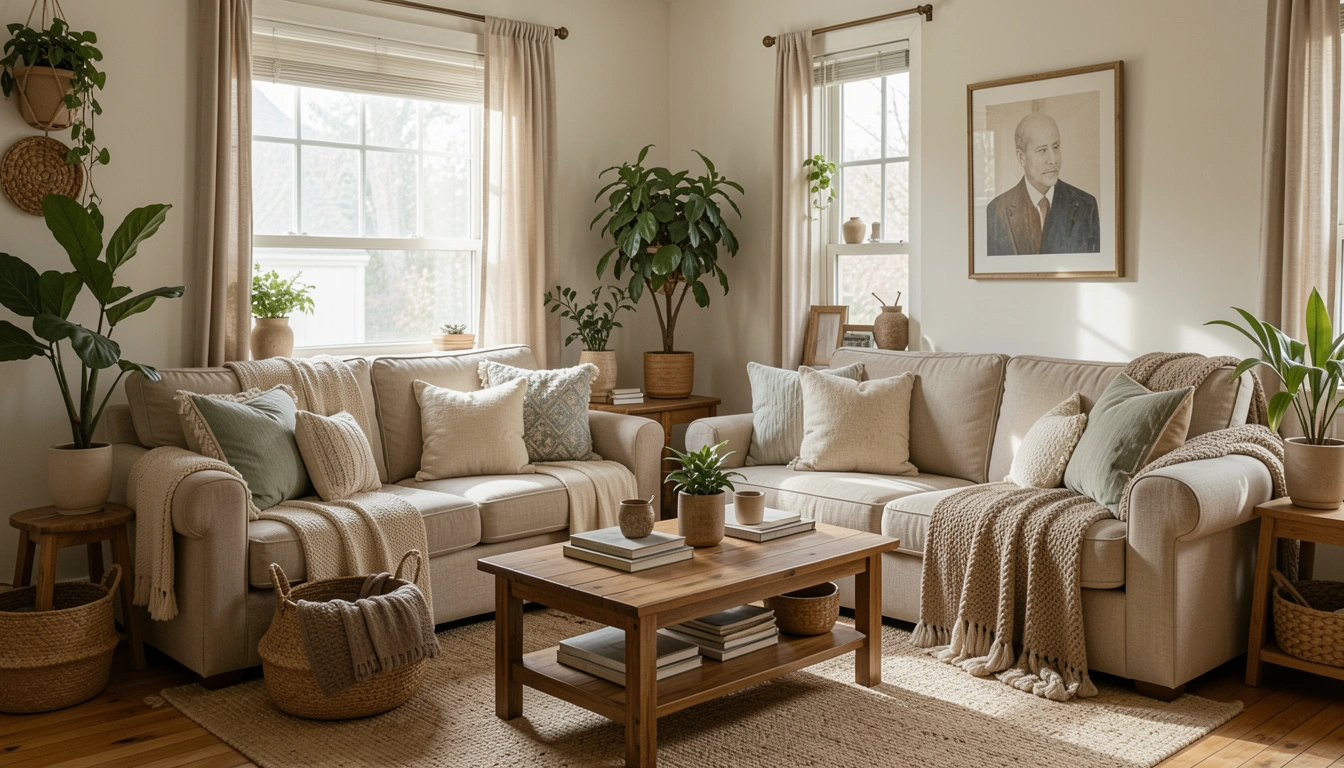
I stared at the empty spot between my two couches. It felt dead, like the room stopped breathing there. No flow, just awkward negative space pulling everything off balance.
I'd tried stuffing it with random stuff before—cluttered it up. Made it worse.
Then I figured a simple way to make it feel right. Warm, connected, without crowding the couches.
How To Decorate Living Room Corner Between the Couches
This shows you how to fill that corner so the room flows from couch to couch. It ends up balanced and comfortable, like the space was always meant to be there. I do this whenever a living room feels unfinished.
What You’ll Need
- Tall arched floor lamp in matte black metal, 65 inches
- Faux fiddle leaf fig plant in woven basket, 6 feet tall
- Slim wooden side table with shelf, 20×20 inches, natural oak
- Round jute rug, 4×4 feet, neutral beige
- Framed abstract line art print, 24×36 inches, black and white
- Ceramic vase set, textured white, medium and small sizes
- Woven seagrass storage basket, 18 inches tall
- Chunky knit throw blanket in cream, 50×60 inches
Step 1: Clear and Ground the Space
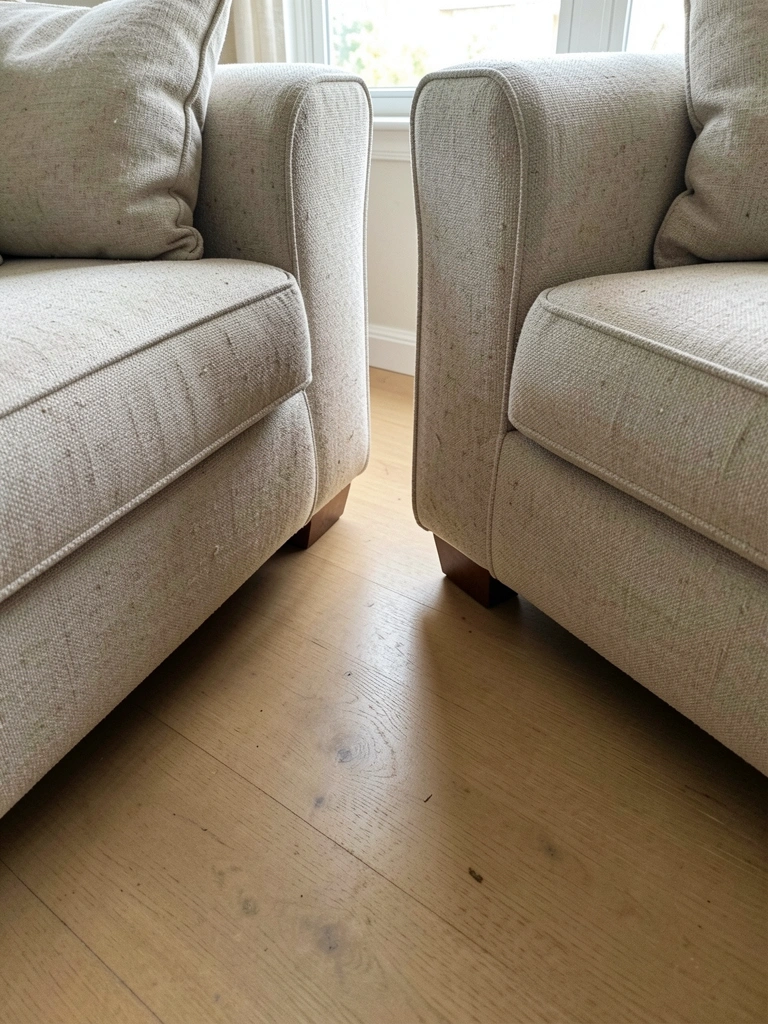
I start by pulling everything out of that corner. Dust it off. Step back. Now you see the plain floor between the couches—it's honest space.
This grounds everything. Without it, new pieces fight for room. Visually, the couches frame a clean triangle. People miss how empty feels intentional at first.
Don't cram right away. That mistake blocks the path. I keep it bare till it breathes.
Now it pulls your eye gently, ready for layers.
Step 2: Add Vertical Height First
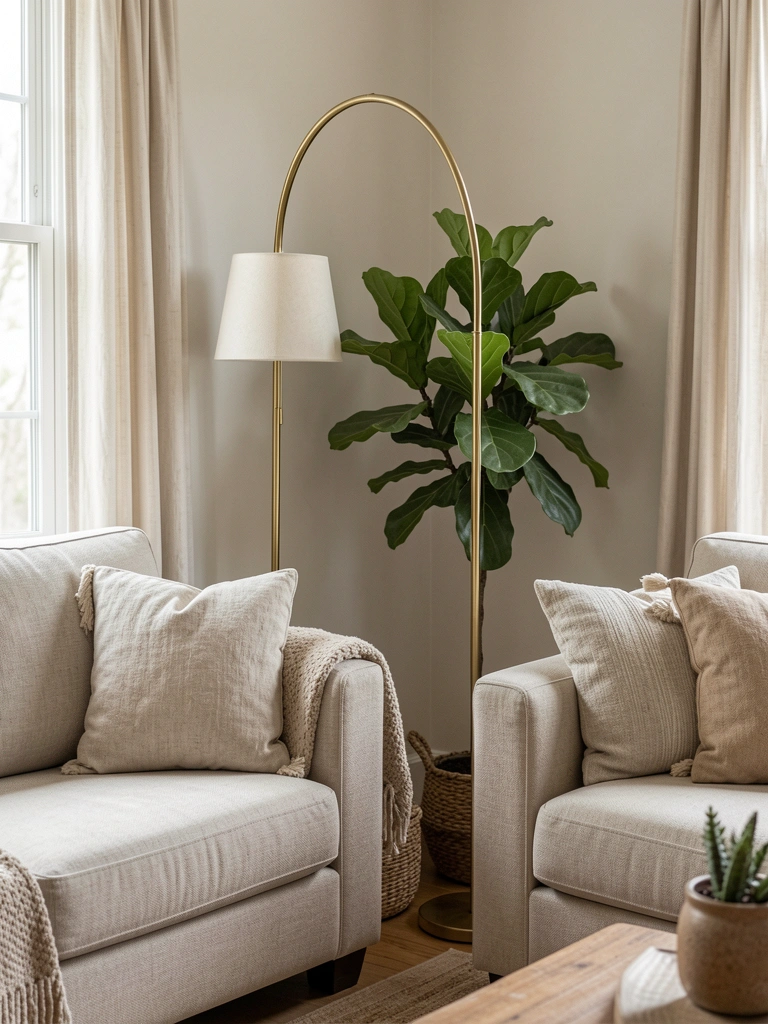
I place the tall floor lamp or plant right in the corner's peak. It rises above couch backs, drawing the eye up.
Suddenly, the room gains depth—no flat wall anymore. Height connects floor to ceiling, makes the space feel taller.
Most skip this; they start low and it stays squat. Avoid centering it dead-on—angle slightly toward one couch for flow.
I nudge mine 10 degrees. Feels balanced now.
Step 3: Layer a Low Surface
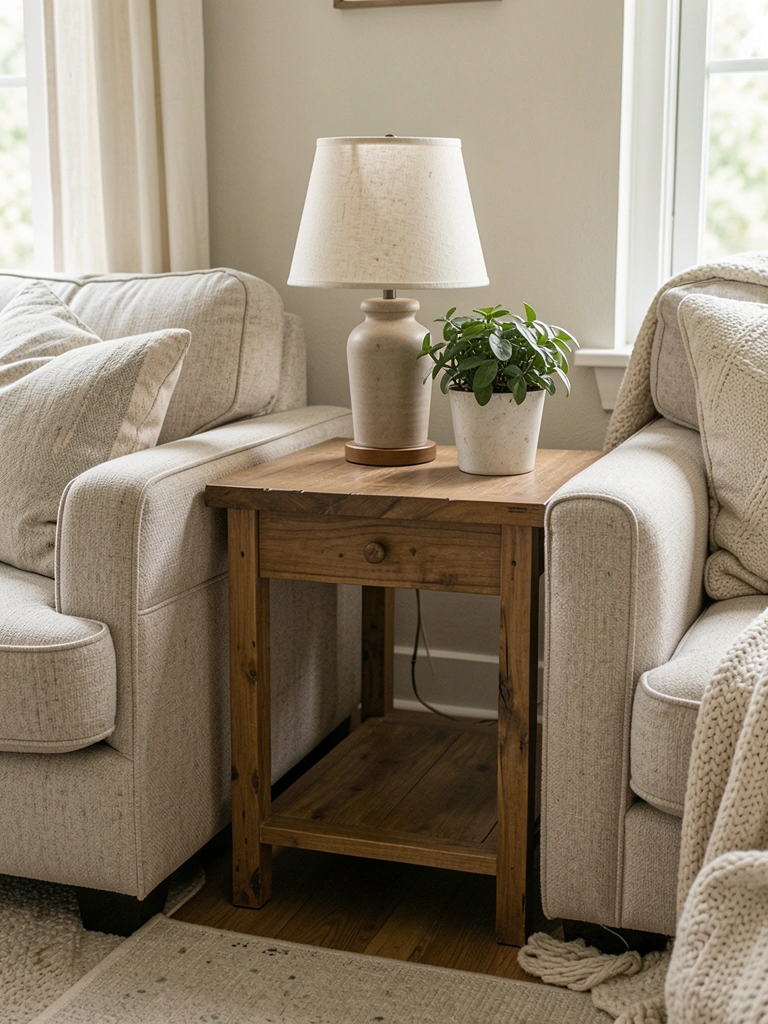
Next, I slide in the slim side table. Tuck it under the lamp, even with couch seats. Not touching—leave a hand's width gap.
The corner warms up. Table offers a spot to rest a book, echoes couch arms. It bridges the couches visually.
Folks overlook scale; too big crowds legs. I pick narrow ones. Don't overload it yet—empty shelf invites touch.
Room flows better, like an extension of seating.
Step 4: Soften with Texture and Rug
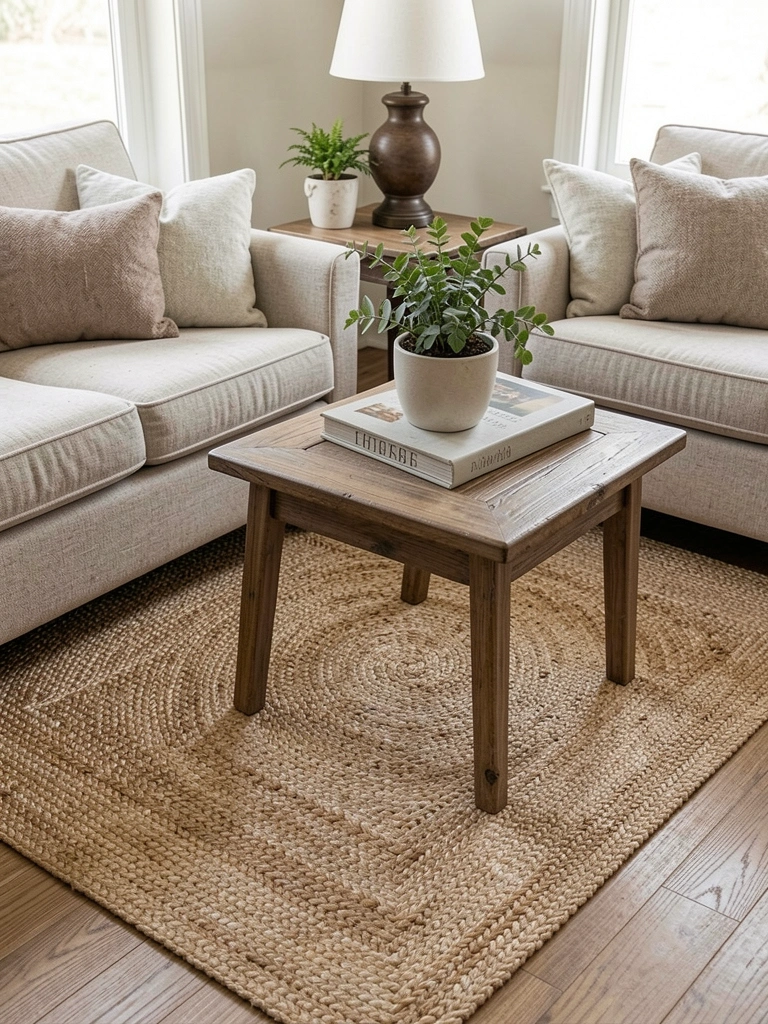
I unroll the round rug partly under the table. Let edges peek toward couches. Texture grounds it all.
Walls recede; floor warms. Rug ties pieces without covering much. Insight: it muffles echoes, quiets the room.
Mistake is full coverage—chops flow. Half-in works. Drape the throw loosely over table arm.
Cozy without trying.
Step 5: Finish with Personal Layers
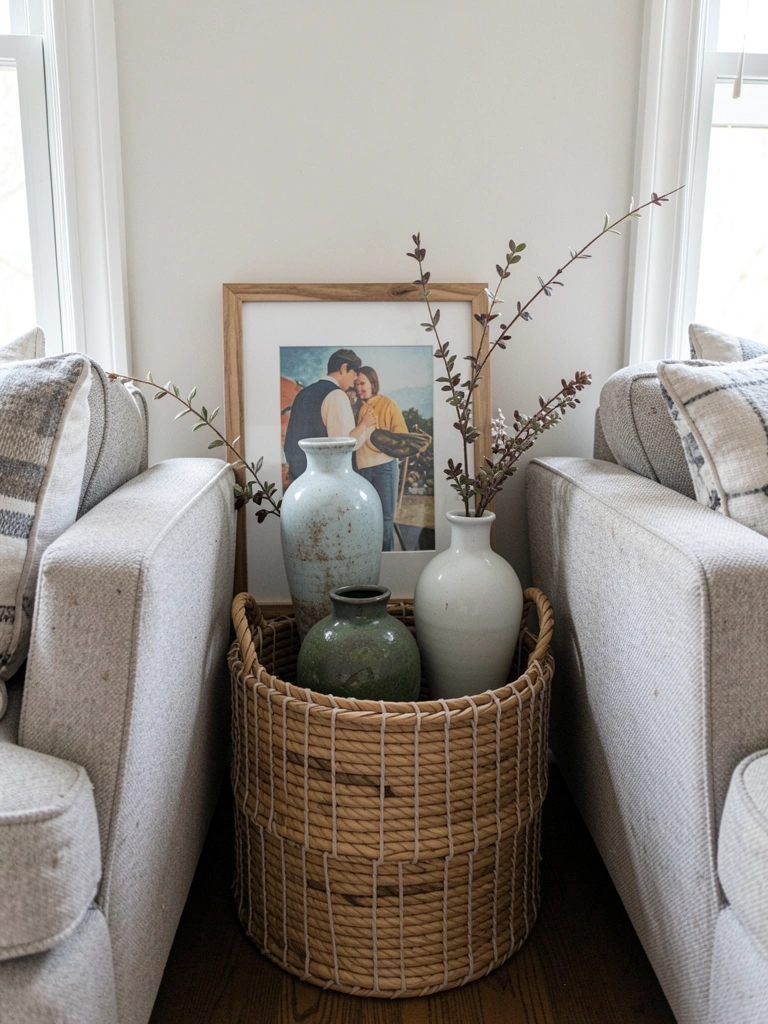
I lean the framed print on the wall above the table. Cluster vases and basket on the shelf—odd numbers, varying heights.
Now it's lived-in. Layers add warmth, eye lingers. People miss asymmetry; even feels stiff. Avoid perfection—tilt one vase.
Step back. Adjust till it settles. Corner blends, room whole.
Why This Corner Matters
That spot between couches shapes the whole room. Ignore it, and seating feels isolated.
I learned when my room always looked lopsided. Filling it right connects everything.
- Pulls traffic flow smoothly
- Balances negative space
- Makes couches feel like a unit
Simple fix, big shift in comfort.
Adjustments for Small Rooms
In tight living rooms, scale down. I swap tall lamp for a shorter plant.
Keep gaps open. Test by walking through.
- Use wall sconces over floor pieces
- Mirrors reflect light, add air
- One layer at a time
Stays breathable, never squeezed.
Quick Seasonal Swaps
Twice a year, I refresh. Swap plant for branches in fall.
Colors shift subtly—cream throws to wool.
- Vases: fresh flowers or pinecones
- Art: seasonal prints
- Baskets: swap fillers like shells or books
Keeps it fresh, low effort.
Final Thoughts
Start with just height and a table. See how it sits.
You'll feel the difference immediately. Trust your eye—tweak till comfortable.
That corner now works for you, quietly. Rooms like this build over time.
Leave a Reply