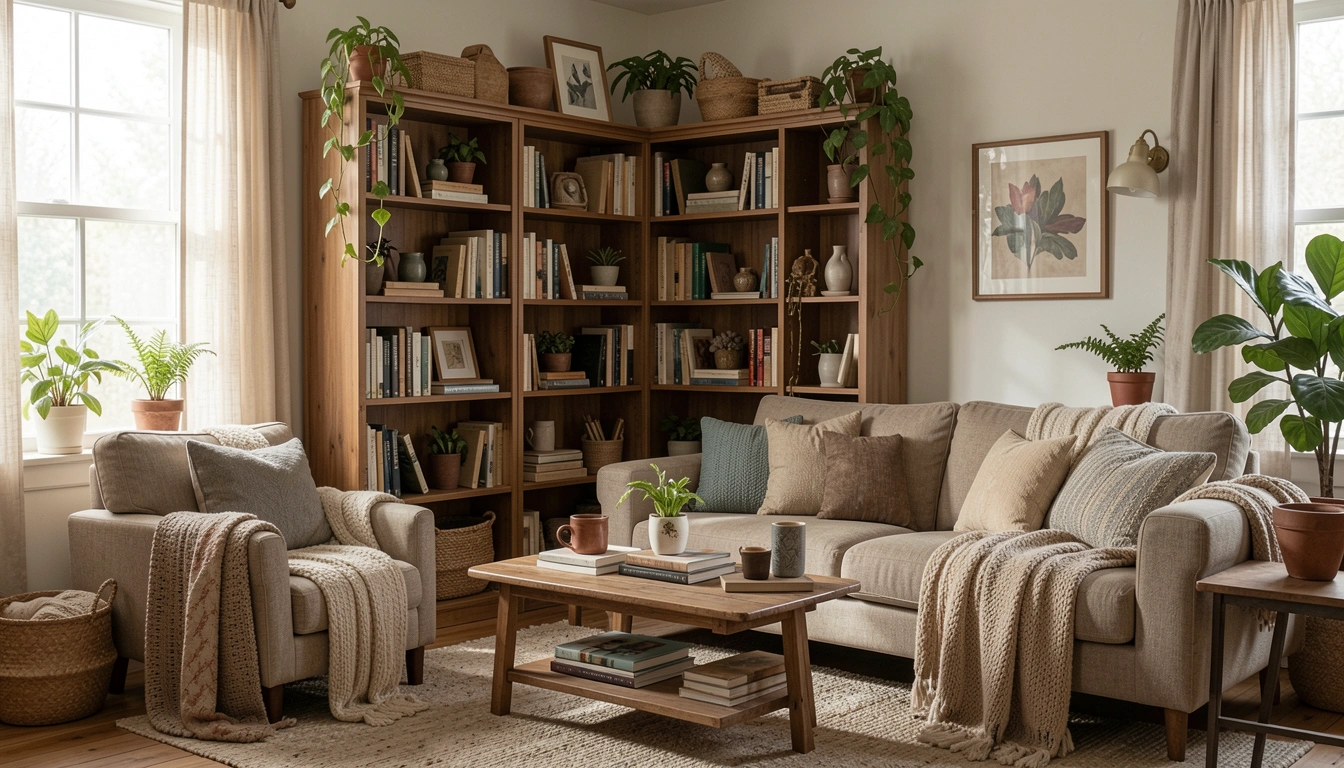
I had this corner bookshelf in my living room. Empty shelves stared back, making the whole space feel lopsided. Furniture floated without an anchor. Dust gathered instead of warmth.
I tried piling books randomly. It looked cluttered, not settled. The corner just pulled focus the wrong way.
One quiet afternoon, I stepped back and started over. Now it holds the room together.
How To Style Living Room Corner Bookshelf Decor
This guide walks you through how I fill a living room corner bookshelf so it feels balanced and comfortable. You'll get a corner that grounds the space without effort. It anchors the room naturally.
What You’ll Need
- Tall ceramic vase (18-inch, neutral beige)
- Faux fiddle leaf fig plant (24-inch)
- Set of 5 hardcover books (various sizes, neutral spines)
- Matte black picture frames (5×7-inch, set of 3)
- Woven seagrass storage baskets (10-inch, set of 2)
- Small brass bookends (pair, 6-inch)
- Potted succulent (4-inch ceramic pot)
- Layered linen napkins (set of 4, earth tones)
Step 1: Clear the Shelf and Set the Base
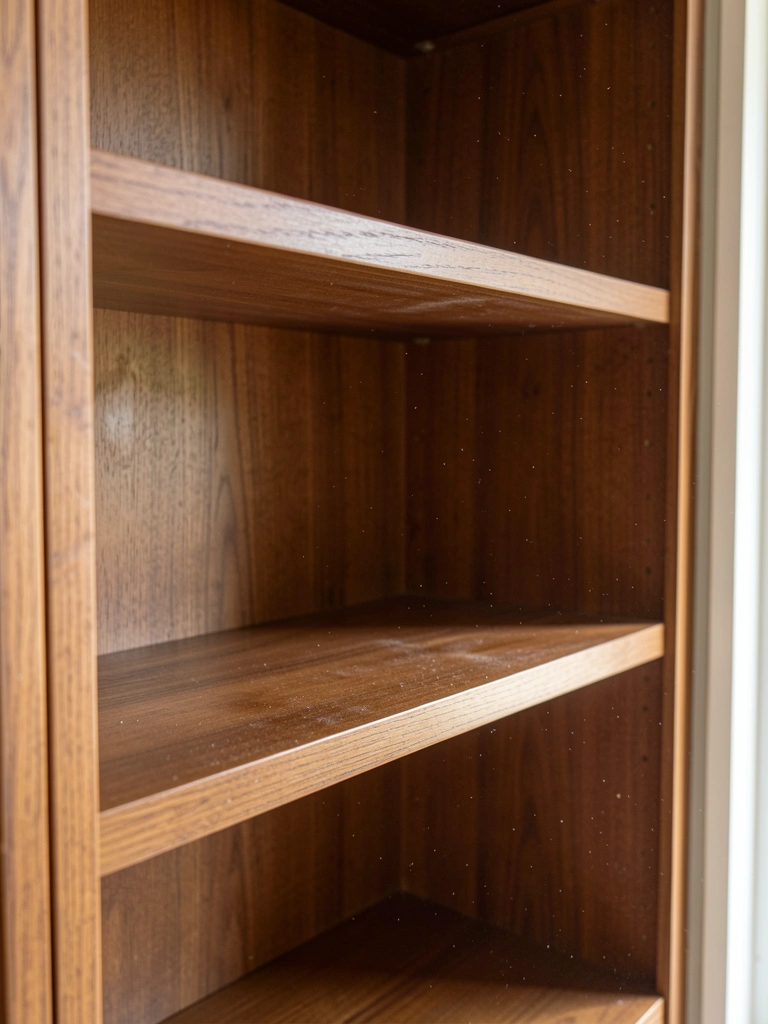
I start by taking everything off the shelves. Wipe them down. Stand back and eye the empty structure. This lets me see the corner's true shape—how light hits it, where shadows fall.
Visually, the space opens up. It feels lighter, ready. Most people miss how much the base layer sets the mood; without it, nothing else settles.
One mistake: skipping the wipe-down. Dust makes new items look tired fast. I place bookends at outer edges now. They frame the whole unit, giving stability.
Now the shelf waits, calm and open.
Step 2: Anchor with Tall Pieces
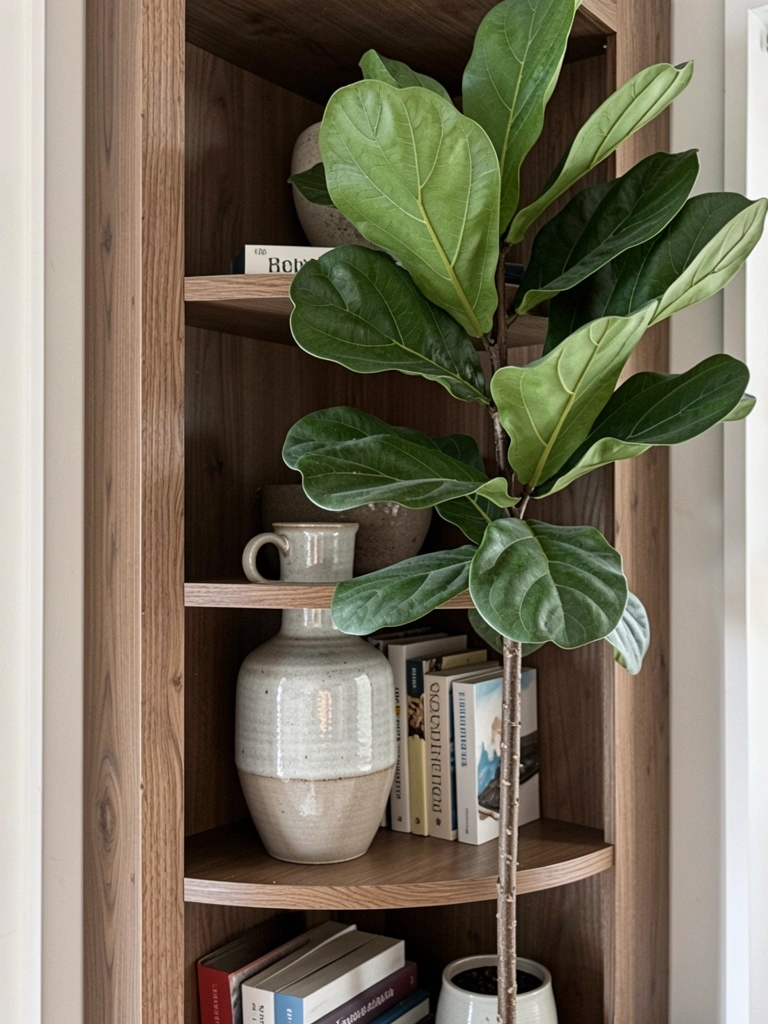
I pick my tallest items first—the vase and plant. They go in the back corners. One left, one right. This draws the eye up, makes the shelf feel taller.
The corner shifts; it pulls the room's gaze without crowding. People overlook height here—it balances the low furniture nearby.
Avoid cramming them center; that blocks flow. I step away, check from the sofa. They stand firm, creating quiet structure.
Step 3: Layer in Books for Weight
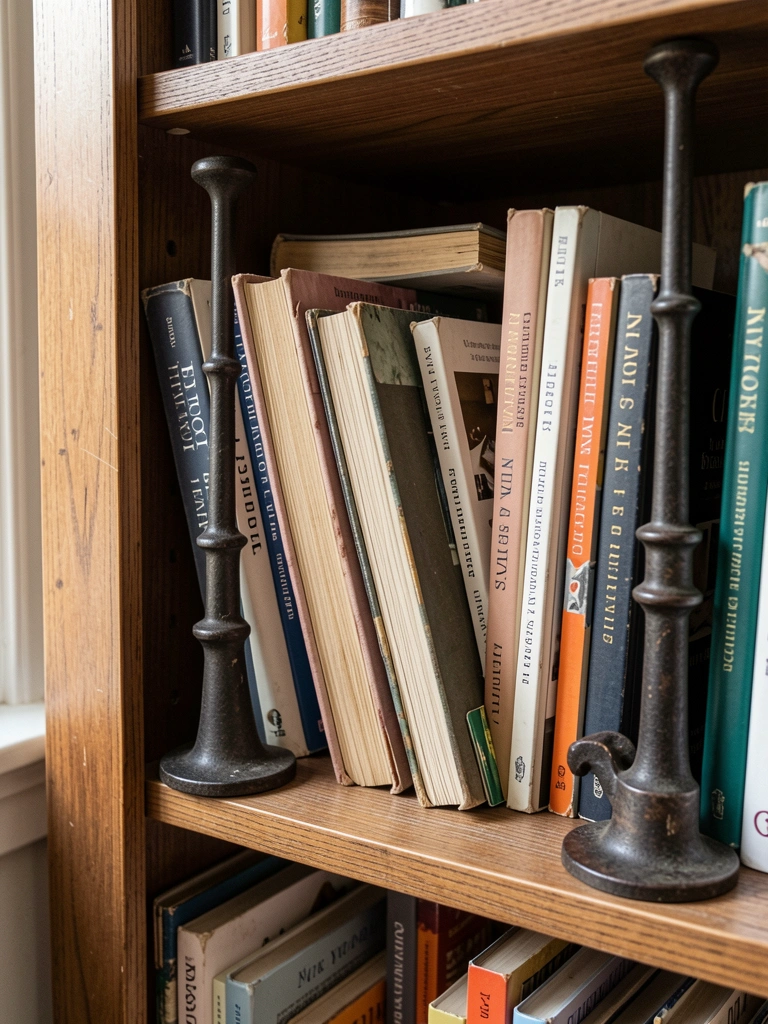
Next, I add books. Stack some horizontally in the middle shelf. Lean others vertically between bookends. Mix sizes—no perfect rows.
Weight settles in. The shelf feels grounded, like it's been there years. Insight: books add rhythm; group by size, not color, for natural flow.
Don't line them edge-to-edge. Gaps let light breathe. From across the room, it reads balanced now.
Step 4: Soften with Organic Shapes
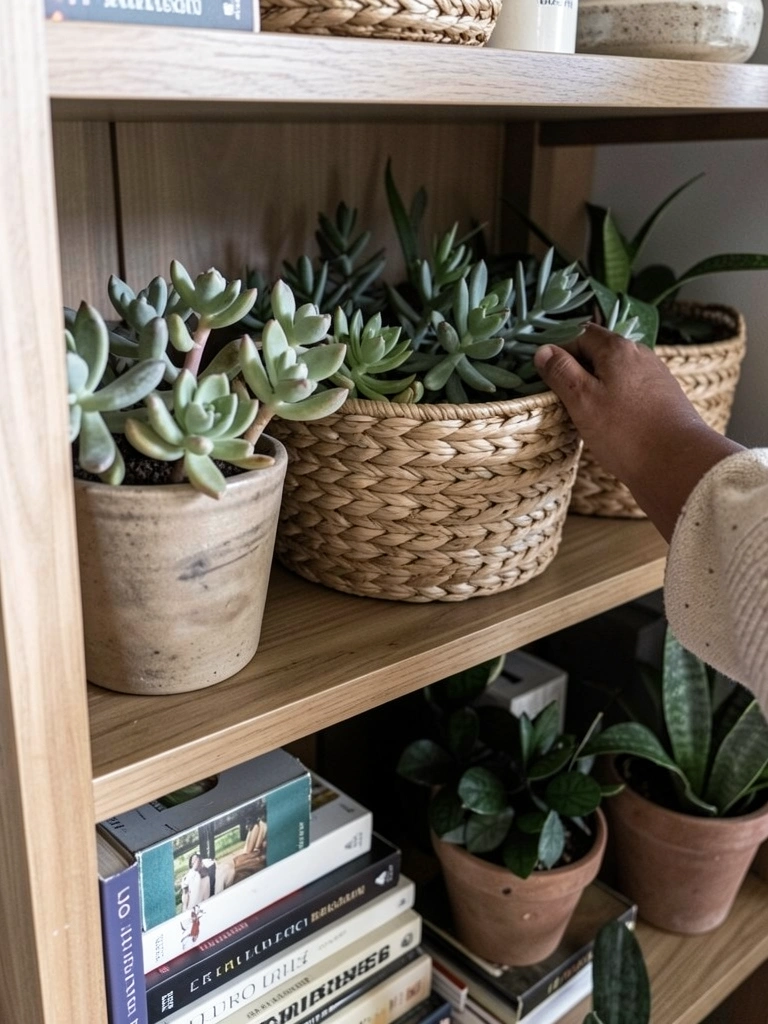
I tuck in the succulent and baskets. One basket mid-shelf, half-full. Succulent nestles beside books. These round out the angles.
Textures warm up—green softens wood, weave adds depth. Most miss how curves ease hard lines; the corner invites touch now.
Skip matching pairs here. Odd numbers feel lived-in. It flows better from every angle.
Step 5: Finish with Personal Touches
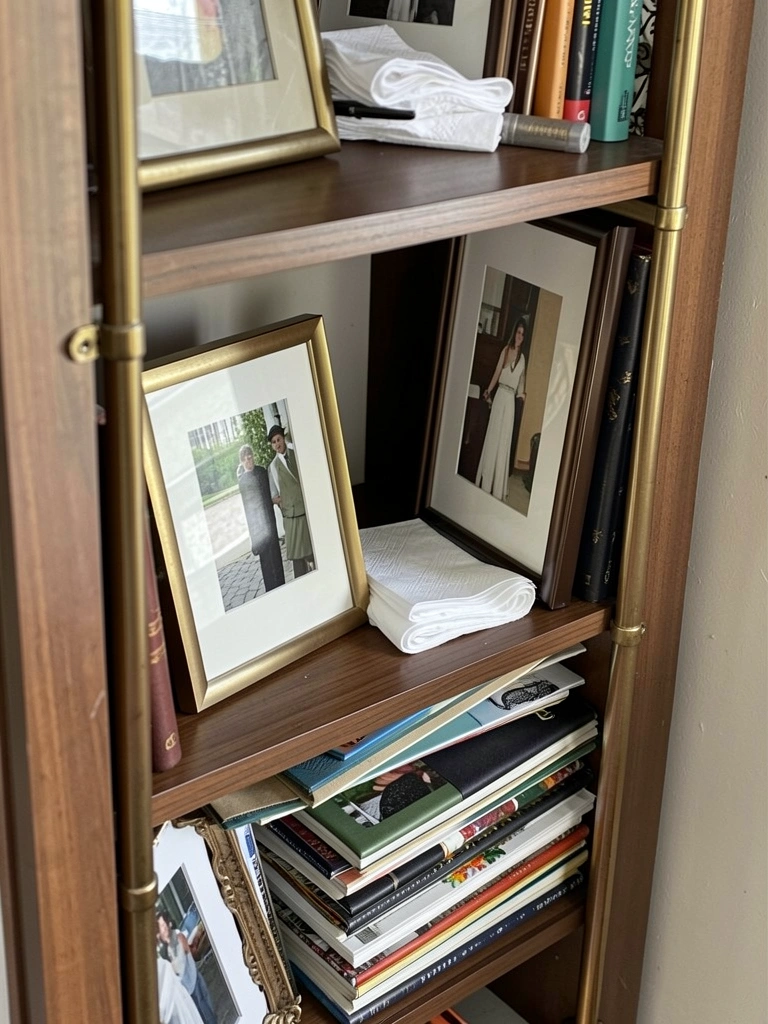
Last, frames and napkins. Lean a photo against books. Drape napkins loosely. They nod to daily life.
The whole shelf unites—balanced, not busy. People forget to edit: pull one item if it crowds. Step back often.
Live with it a day. Tweak. The room feels whole.
Balancing Heights on Your Shelf
Heights keep the eye moving. I always start tall in back.
- Tallest pieces frame ends.
- Mid-heights fill middles.
- Low items hug the base.
Without this, shelves slump. In my living room, it makes the corner echo the ceiling height. Simple check: scan top to bottom. Smooth?
Working Textures Together
Mix smooth and rough for depth. Ceramic next to weave. Books against leaves.
I avoid all-shiny or all-matte. It dulls.
- Wood shelf + seagrass = warmth.
- Brass + linen = subtle shine.
Touch it after styling. Inviting?
Adapting for Your Room's Light
Corner light changes daily. I watch mine morning to night.
Darker spots get lighter items. Bright ones take deeper tones.
- Face south? Add greens.
- North-facing? Warm woods.
It stays comfortable year-round.
Final Thoughts
Start with one shelf if the whole unit feels big. You've got this—it's just placement.
Your corner will settle the room. Walk by it daily; it grows on you.
Keep it light. Real life fills the rest.
Leave a Reply