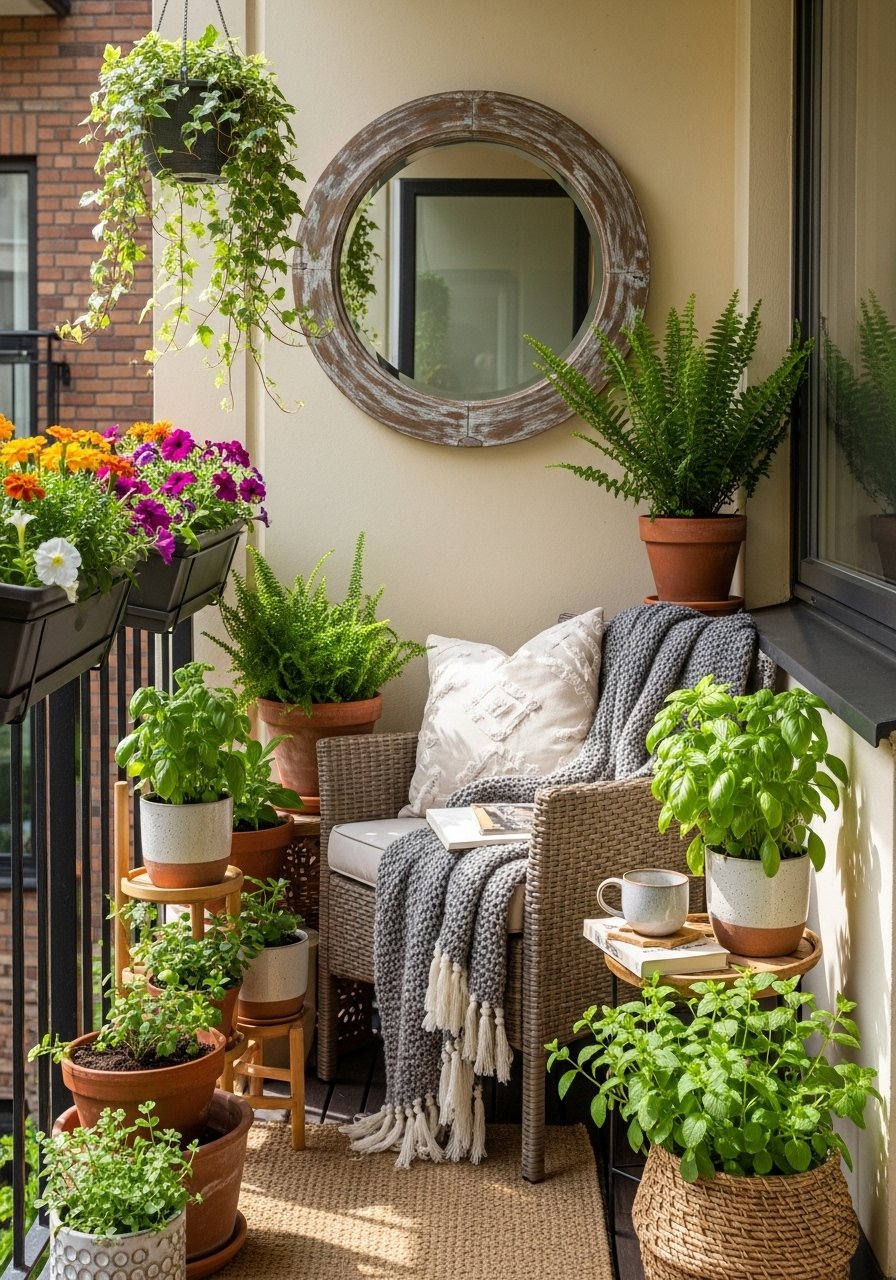
I kept staring at my cramped living room and thinking I was missing something simple. The pieces were fine, but the room felt tight and awkward.
I treat small rooms like a garden bed now: remove, rearrange, and place things so the eye can rest. It makes the space feel intentional and comfortable, not staged.
How To Decorate A Tiny Living Room On A Budget Without Sacrificing Style
This is the method I use every time a small room feels crowded. You’ll learn how to edit, layer, and place pieces so the room reads calm, warm, and useful — without spending much.
What You’ll Need
- 28-inch round floor mirror (antique brass frame)
- Narrow 4-tier bookshelf (oak finish, 12" depth)
- Set of 2 floating wall shelves (white, 24" each)
- 36" fabric storage ottoman bench (gray)
- Adjustable arc floor lamp (brass)
- 5×7 natural jute rug (neutral)
- Ceramic plant pot set (assorted sizes, neutral glaze)
- Set of 2 linen throw pillows (18"x18", soft beige)
Step 1: Pick one focal spot and edit everything else
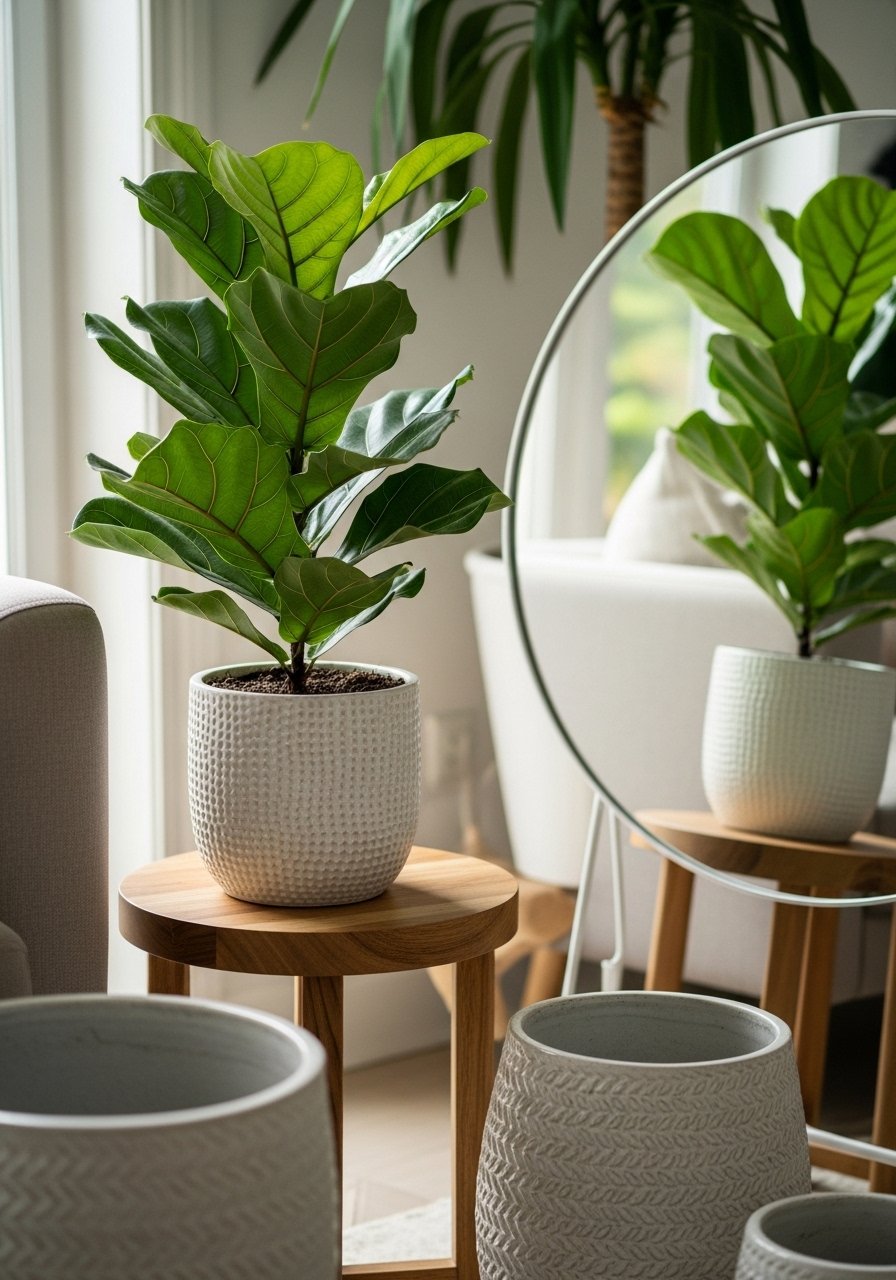
I start by choosing one place I want the eye to land — usually the wall opposite the main window or the small corner that feels alive. I pull everything away and stand back. That single focal spot gives the room a purpose.
Visually, the room instantly breathes when everything else is edited down. People often miss that empty space matters as much as objects. Don’t try to give every surface equal attention; avoid clustering your best pieces into one tight pile.
Step 2: Add reflected light and layered lamps
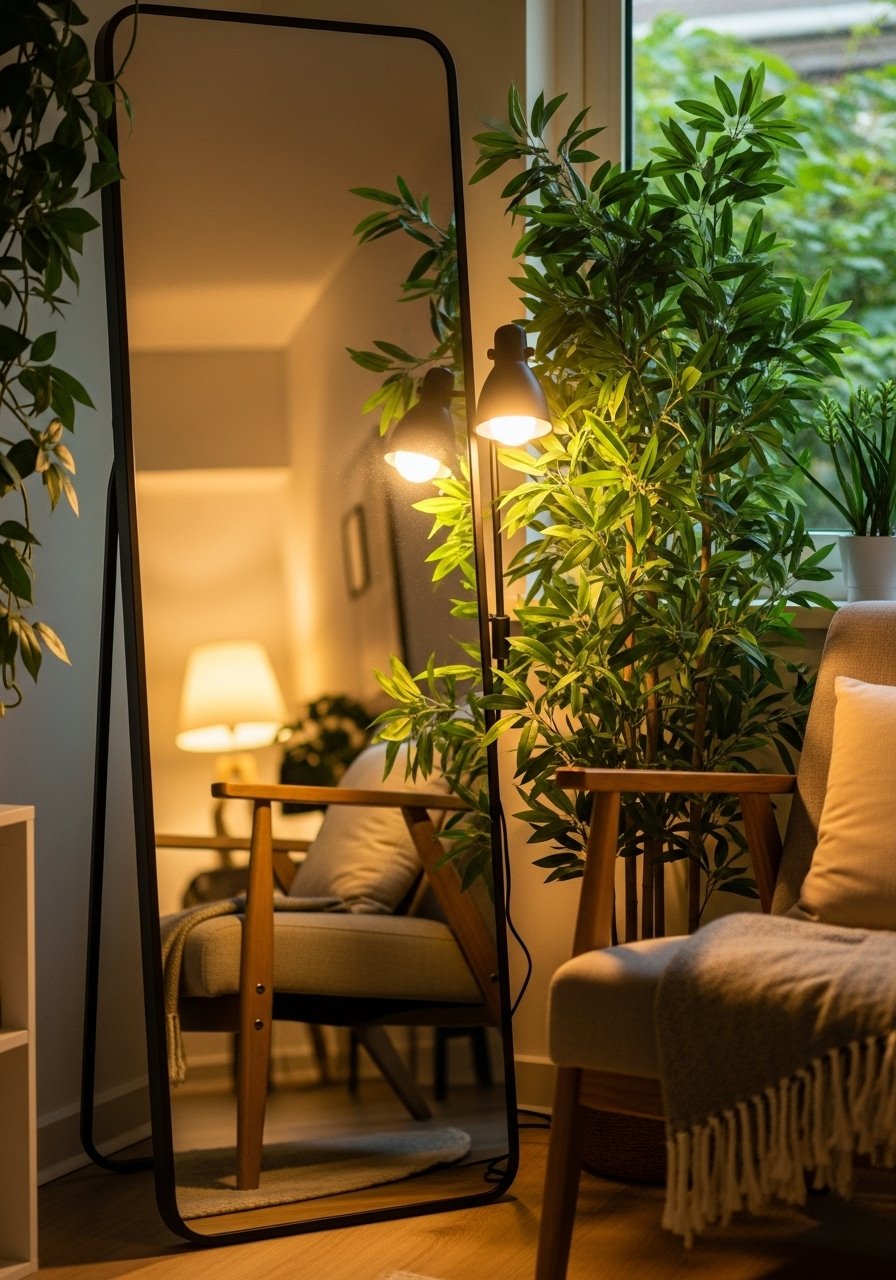
I use a floor mirror to bounce daylight into corners and a low lamp for evening warmth. Mirrors make the room feel deeper without adding furniture. Lamps at different heights create layers and keep the room from feeling flat.
You’ll see more depth and warmer shadows right away. A common miss is relying only on overhead lighting. The small mistake to avoid is placing a mirror without thinking about what it reflects — don’t mirror a cluttered shelf; mirror greenery or open space.
Step 3: Go vertical with shelves and plants
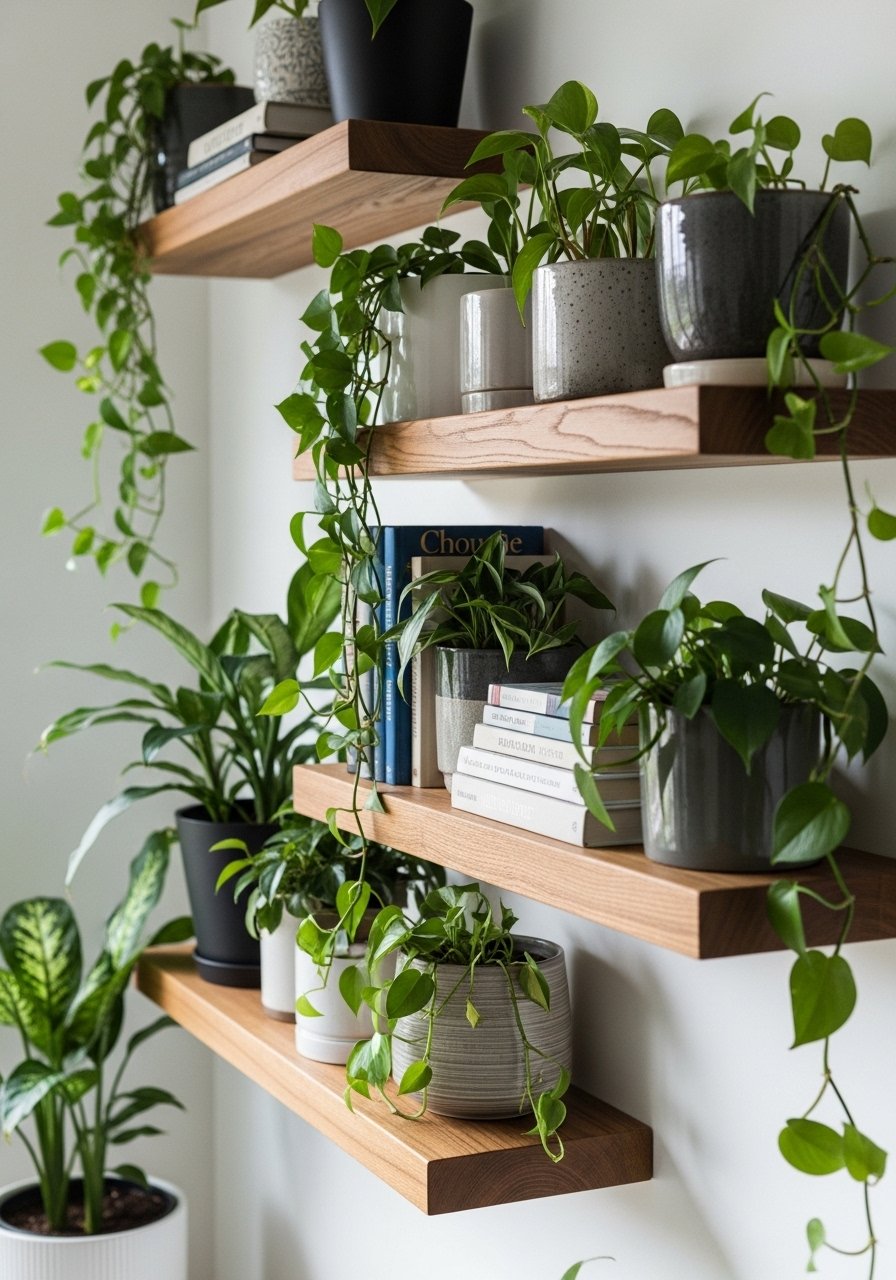
When floor space is tight, I look up. Floating shelves and a narrow bookshelf let me stack books and plants so the eye travels upward. Strategically placed plants soften the shelves and make the room feel curated, not cramped.
The visual change is immediate: clutter moves off the floor and becomes part of the composition. People often forget to vary heights and textures on the shelves. Avoid overfilling them — a few well-placed items look cleaner than a shelf crowded end to end.
Step 4: Choose multi-use pieces and keep scale small
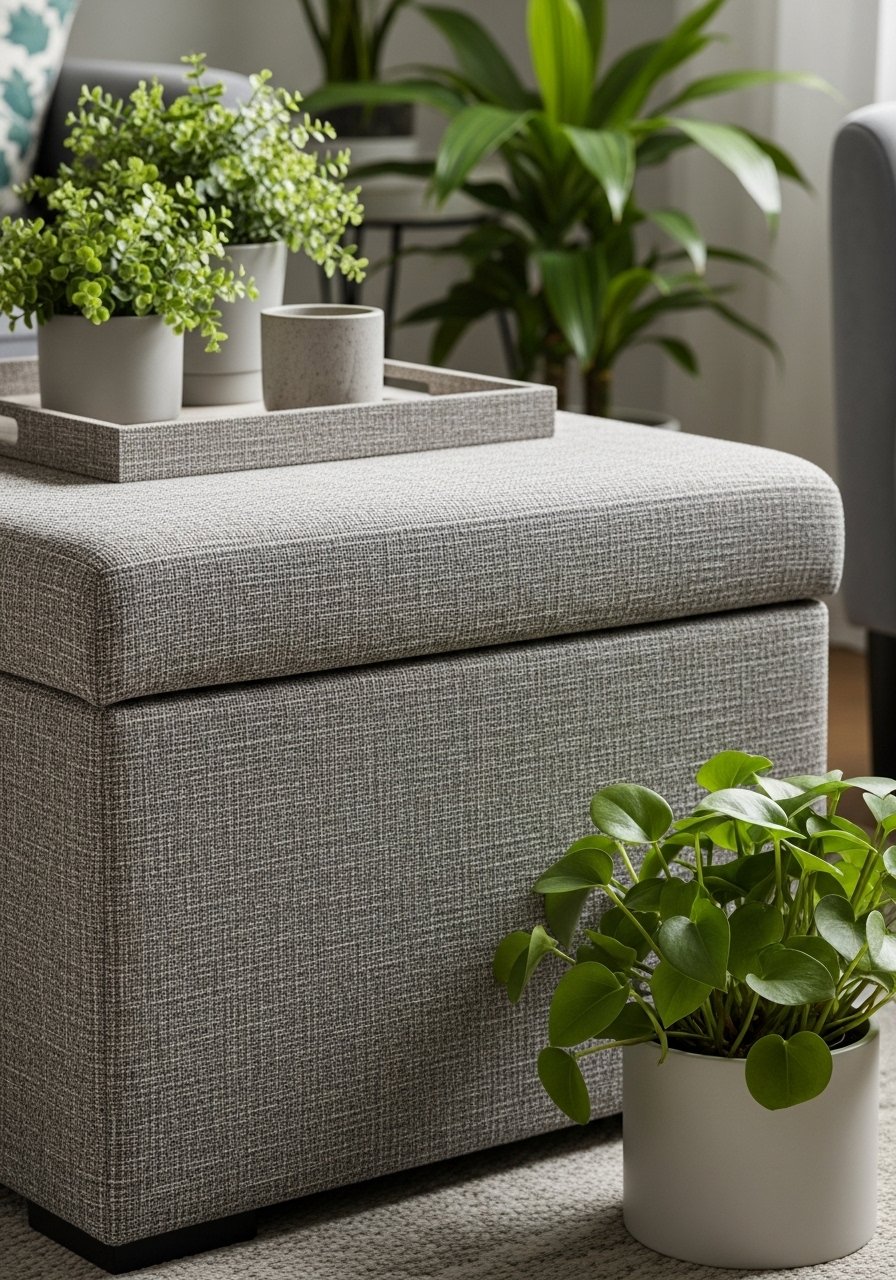
I favor furniture that pulls double duty — a storage ottoman for extra blankets, nesting tables that tuck away, and a slim console that reads light. Smaller-scale pieces give the illusion of space and keep walkways clear.
You’ll notice fewer visual interruptions and a smoother flow. The insight people miss is to leave breathing room around furniture; spacing matters more than adding another tiny table. Don’t cram too many compact pieces — that just creates visual noise.
Step 5: Anchor with rug, textiles, and one plant collection
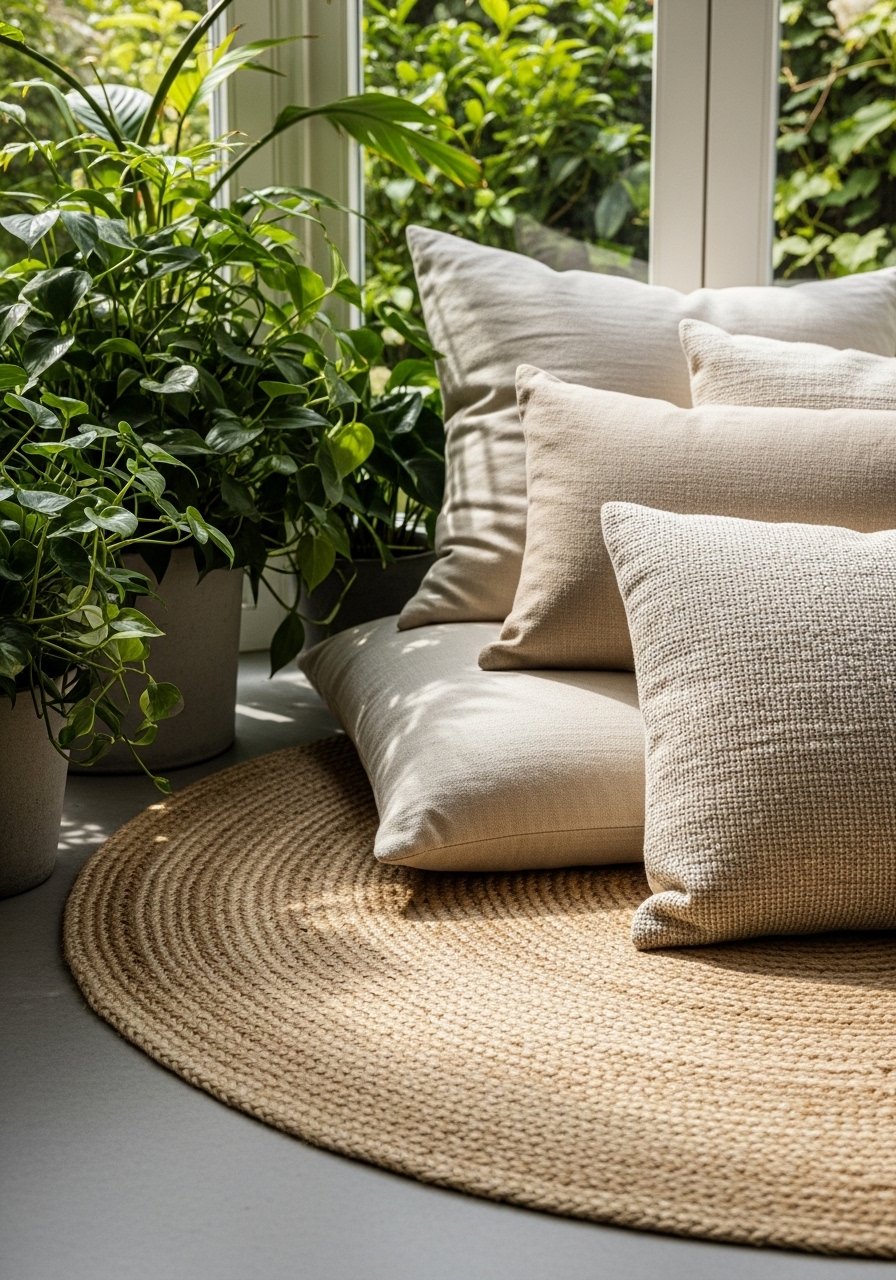
I finish by grounding the seating with a modest rug, two matching pillows, and one curated group of plants. The rug ties the pieces into a clear zone. A consistent palette — two neutrals plus one accent — keeps things calm.
The room feels cohesive and intentional when these touches are in place. Many people over-accessorize; the missed insight is restraint. Avoid scattering tiny decorative items everywhere. A few considered pieces are calmer and more comfortable.
Color, Texture, and Scale
I aim for a light base — soft walls, natural rug, neutral upholstery. That keeps the room feeling open. Then I add texture with woven baskets, a linen throw, and terracotta or ceramic pots.
Scale is about the relationship between pieces. Small rooms need narrow furniture and low-profile lighting. If you’re unsure, pick one larger piece and match others to its scale so nothing feels tacked on.
Keeping It Cozy Without Clutter
Editing is gardening in slow motion: I prune items I don’t use and rotate objects seasonally. A storage ottoman and a narrow bookshelf hide the parts you don’t want on display.
Simple habits help:
- Put things away nightly.
- Keep tabletops to 2–3 items.
- Use baskets for throws and kids’ toys.
Small Upgrades That Look Expensive
A good lamp, a clean mirror, and well-styled plants change the mood more than new furniture. I shop thrift or look for neutral pieces I can live with for years.
Try swapping pillow covers or moving a plant to a new spot before buying. Those small changes often give the biggest payoff for little cost.
Final Thoughts
If you’re wondering how to decorate a tiny living room on a budget, start with one corner. Treat it like a small garden plot: edit, place, and let space breathe.
Work in layers — light, plant life, and textiles — and keep scale in mind. Start small, and you’ll see steady, comfortable improvement without fuss.
Leave a Reply