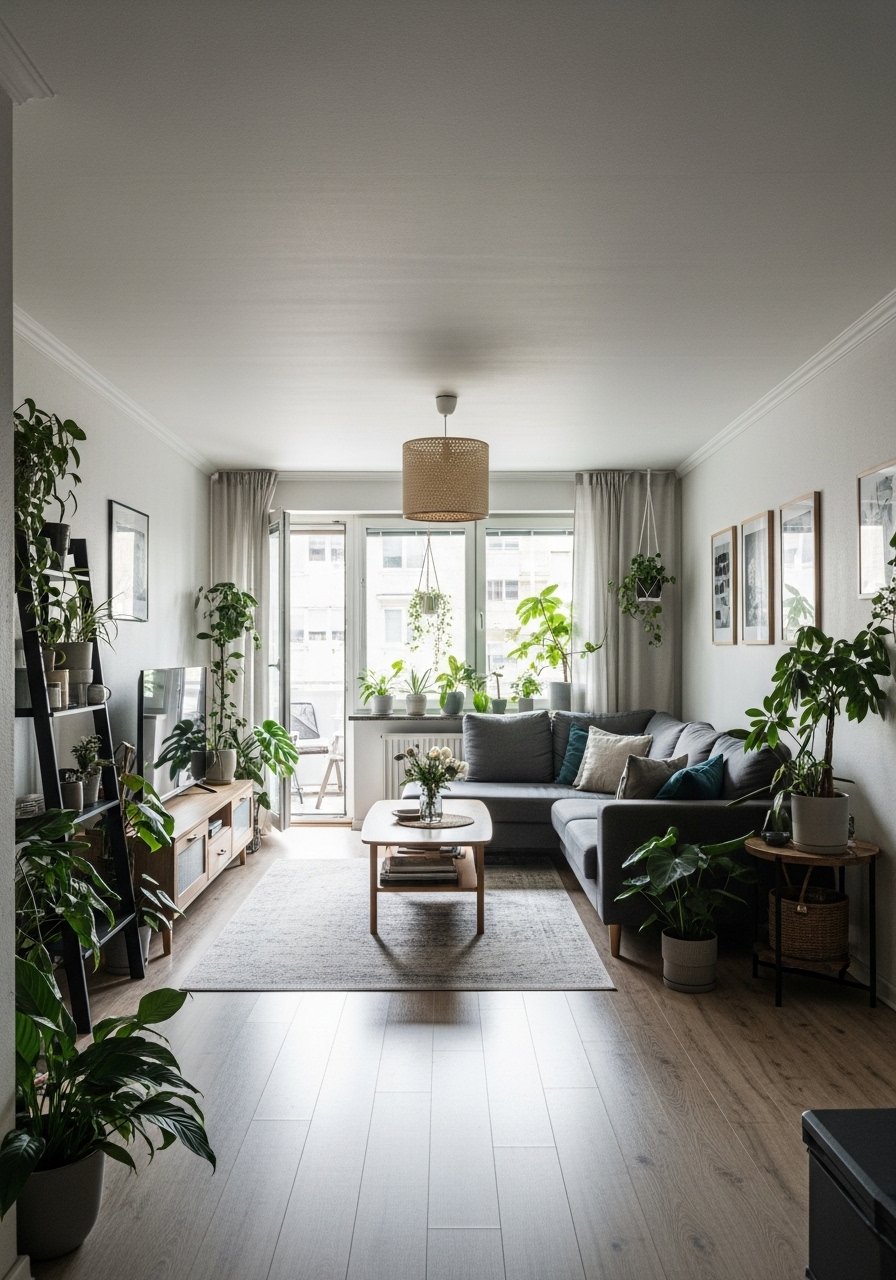
I used to shove a couch into whatever corner was left and wonder why the room still felt tight. That awkward, crowded feeling is familiar. It’s the tiny choices that add up.
I’ll show you how to arrange furniture in a very small living room so it looks calm, roomy, and lived-in—without buying much new stuff.
How To Arrange Furniture In A Very Small Living Room For Maximum Space
This is the method I use every time a tight room has to work harder. You’ll learn how to place pieces so the room reads larger, traffic flows easily, and the space feels balanced and comfortable.
What You’ll Need
- Compact slim-arm sofa (68", light grey)
- Narrow walnut console table (24" deep)
- Small round nesting tables (wood & brass)
- 4×6 neutral flatweave rug
- Slim tripod floor lamp (brass)
- Storage ottoman (fabric, 18")
- Floating wood wall shelves (set)
- Wall-mounted swivel TV bracket
Step 1: Pick the right anchor and let it breathe
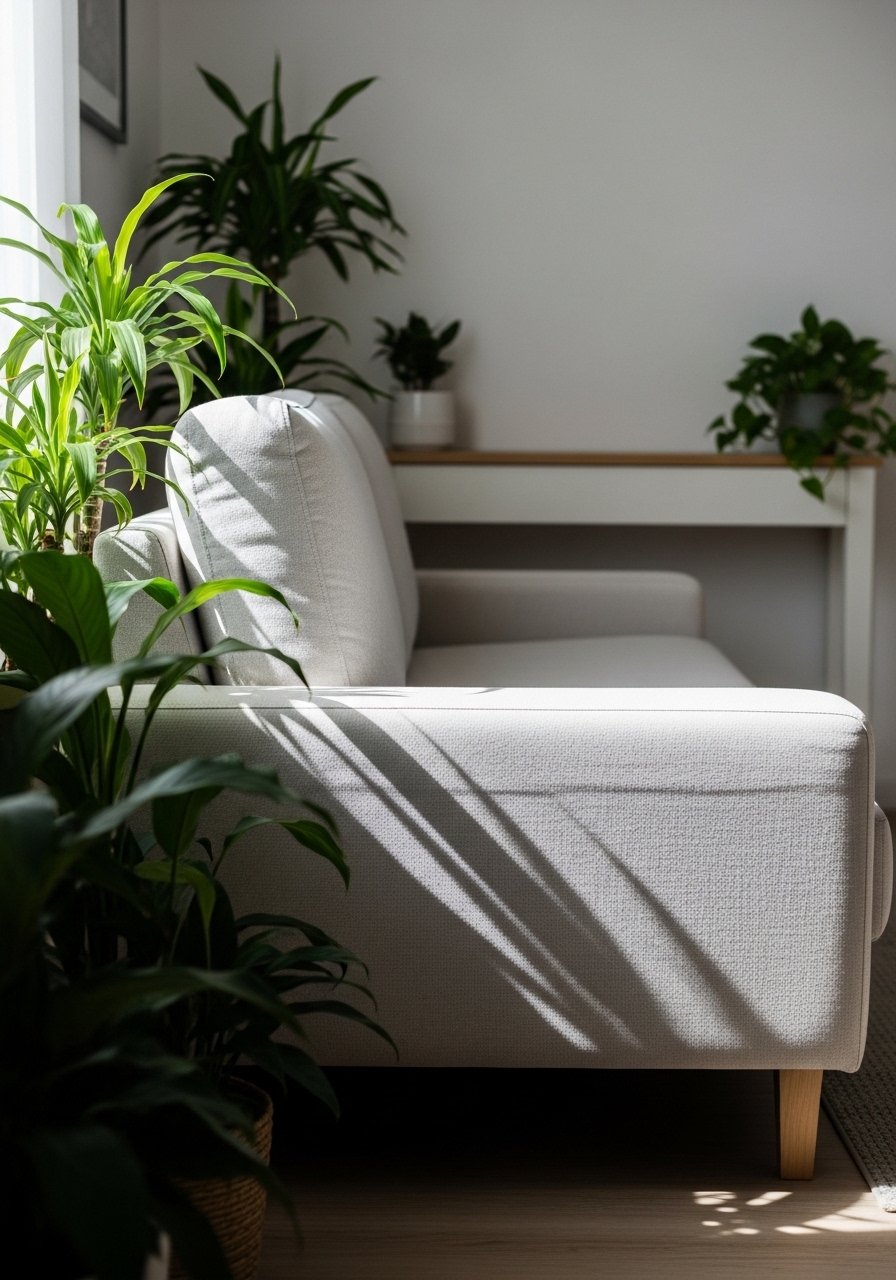
I start by choosing the anchor piece—usually the sofa. I place it on the longest wall or slightly floated away from a wall with a narrow console behind. That small gap gives the sofa breathing room and creates a slim walkway behind it. Visually the room opens immediately because you avoid the “boxy” feel. People often miss that a slightly offset sofa reads lighter than one slammed flat against a wall. The mistake is centering it under a window or doorway and blocking flow.
Step 2: Replace a big coffee table with nesting or a stool
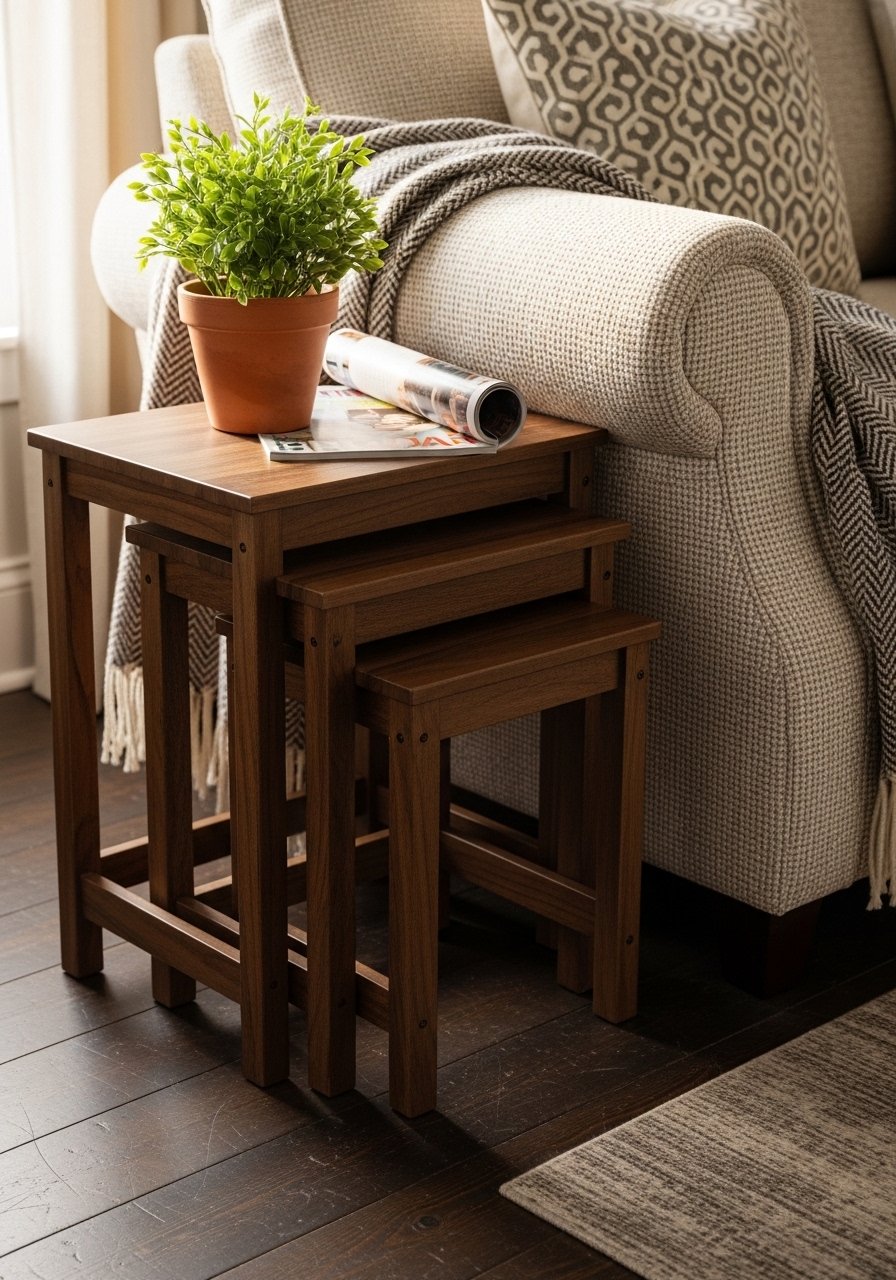
I swap one bulky coffee table for nesting tables or a storage ottoman. Nesting tables tuck away when you need space. An ottoman doubles as seating and a hidden-storage drop for throws. Visually, the floor looks clearer and the center of the room breathes. Most people keep the oversized table because it “fills” the room, but that actually makes things feel cramped. Avoid choosing pieces that are the same visual weight as the sofa—mix scale.
Step 3: Create clear sightlines and a natural path
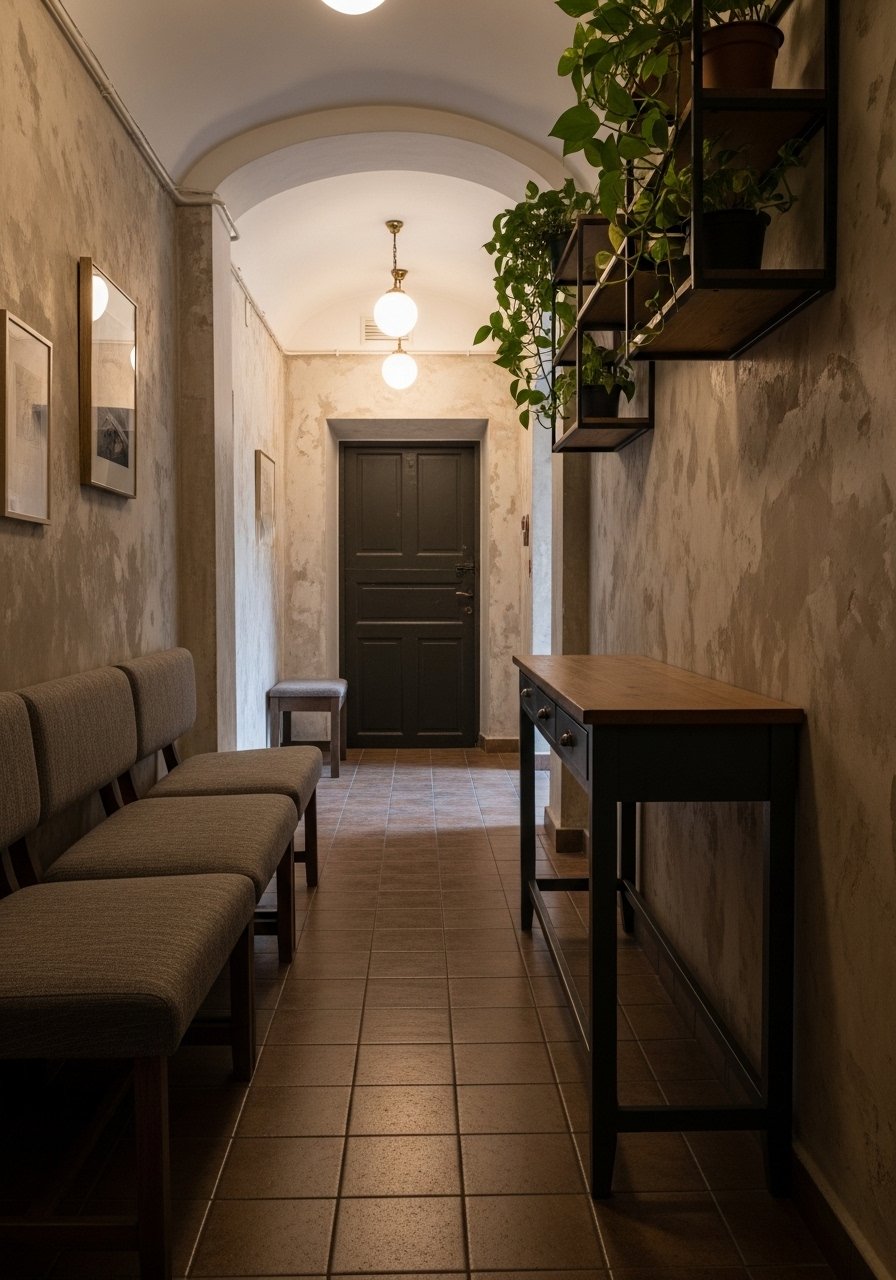
I walk the room and map the path I use most. I shift chairs and the console so there’s a clear route that feels effortless. When sightlines go through to a window or a plant corner, the room reads bigger. An insight I use: angle one chair slightly to open the view, not to block it. The common mistake is lining everything up parallel to walls, which makes movement stiff and reduces usable space.
Step 4: Anchor zones with the right rug and textiles
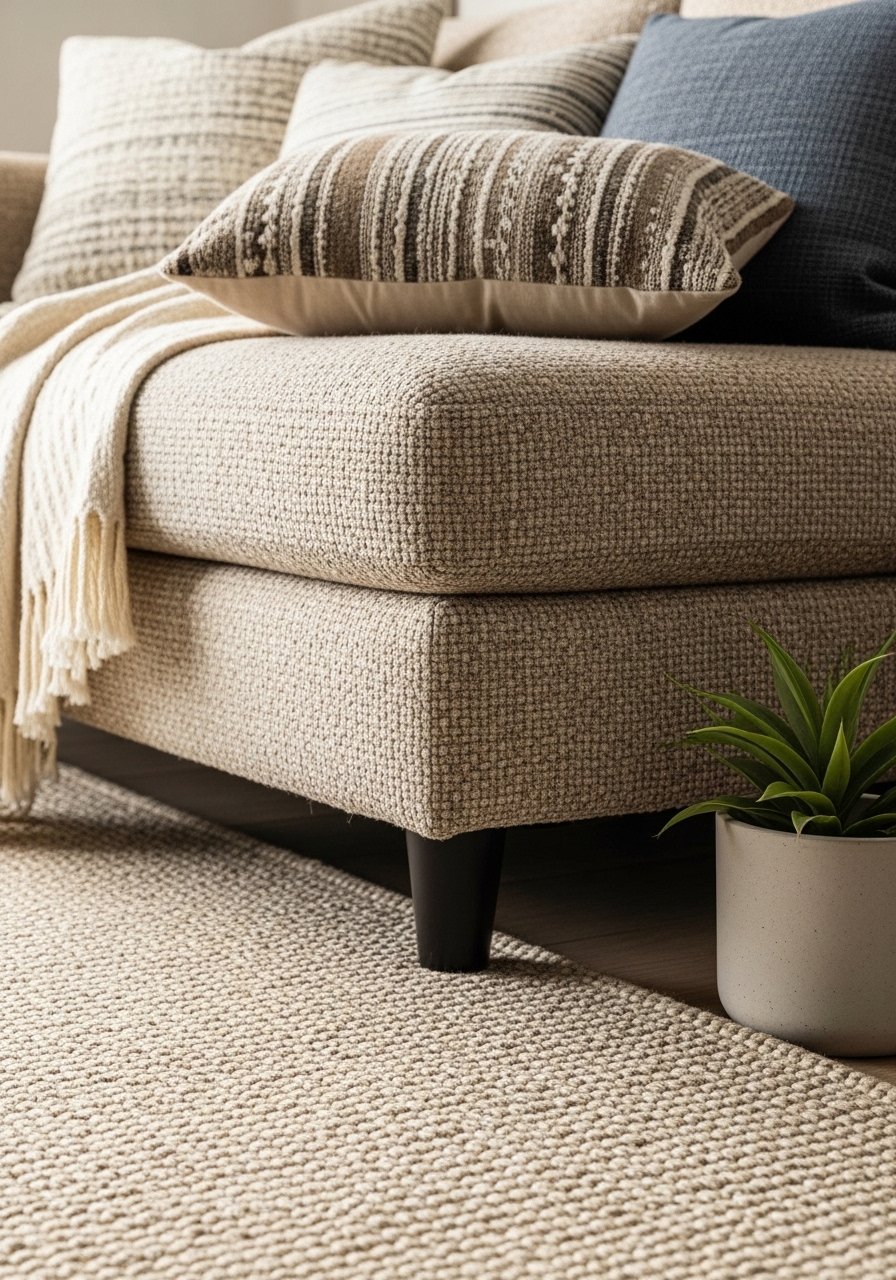
I pick a rug that fits the seating group—often just under the front legs. That tiny choice ties the furniture together without swallowing the floor. Layering a textured throw and a thin runner at the entry helps the eye move and keeps things cozy. People miss scale here: too-small rugs float without purpose. The error to avoid is a rug that becomes the only focal point; it should help the furniture read as a single, calm group.
Step 5: Lift the eye with vertical pieces and plants
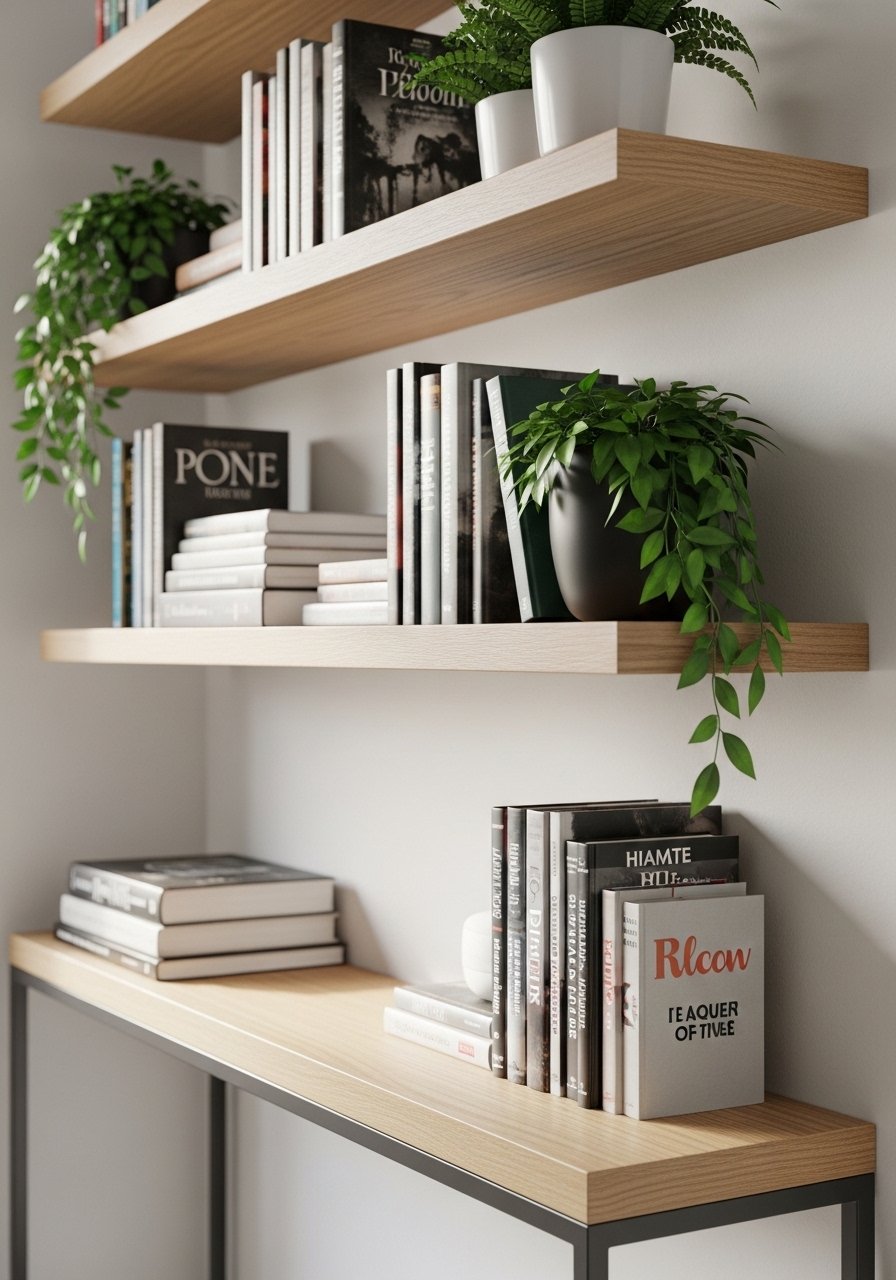
I use floating shelves, tall plants, and mount the TV if possible. Drawing the eye up frees floor space and makes ceilings feel taller. Plants soften corners and add life without bulk. An insight I’ve learned: stagger shelf heights so the eye climbs naturally. A usual mistake is clustering low storage at floor level, which keeps attention stuck there. Keep some empty vertical space and the room will feel airier.
Choosing the Right Scale
I always work with the scale of the room, not what I wish it were. Small legs, low profiles, and slim arms keep pieces visually light. Measure roughly and imagine a person moving through. If a piece makes you hesitate to walk around it, it’s too big.
- Look for raised legs to show more floor.
- Favor pieces with small footprints.
- Keep at least one seating piece per adult without crowding.
Working with Light and Plants
I place furniture to maximize natural light. A sofa across from a window bounces daylight into the room. Plants are my secret for softening hard edges. They add vertical interest and make a small space feel collected, not crowded.
- Use taller plants in corners.
- Keep lower plants close to seating.
- Let light dictate placement more than symmetry.
Quick Multipurpose Furniture Choices
I choose items that pull double duty. A console becomes a desk, an ottoman becomes a table, and nesting tables become occasional trays. Multipurpose pieces reduce clutter and keep the room flexible.
- Think storage seats and slim consoles.
- Swap out heavy pieces for lighter shapes.
- Keep functions clear so the room doesn’t look busy.
Final Thoughts
Start with one change: move the sofa or try nesting tables. Small moves give immediate payoff. I promise it’ll feel more spacious and calmer.
Trust your eye. Live with the change for a few days before you tweak again. The right arrangement is what you actually use, not what a picture shows.
Leave a Reply