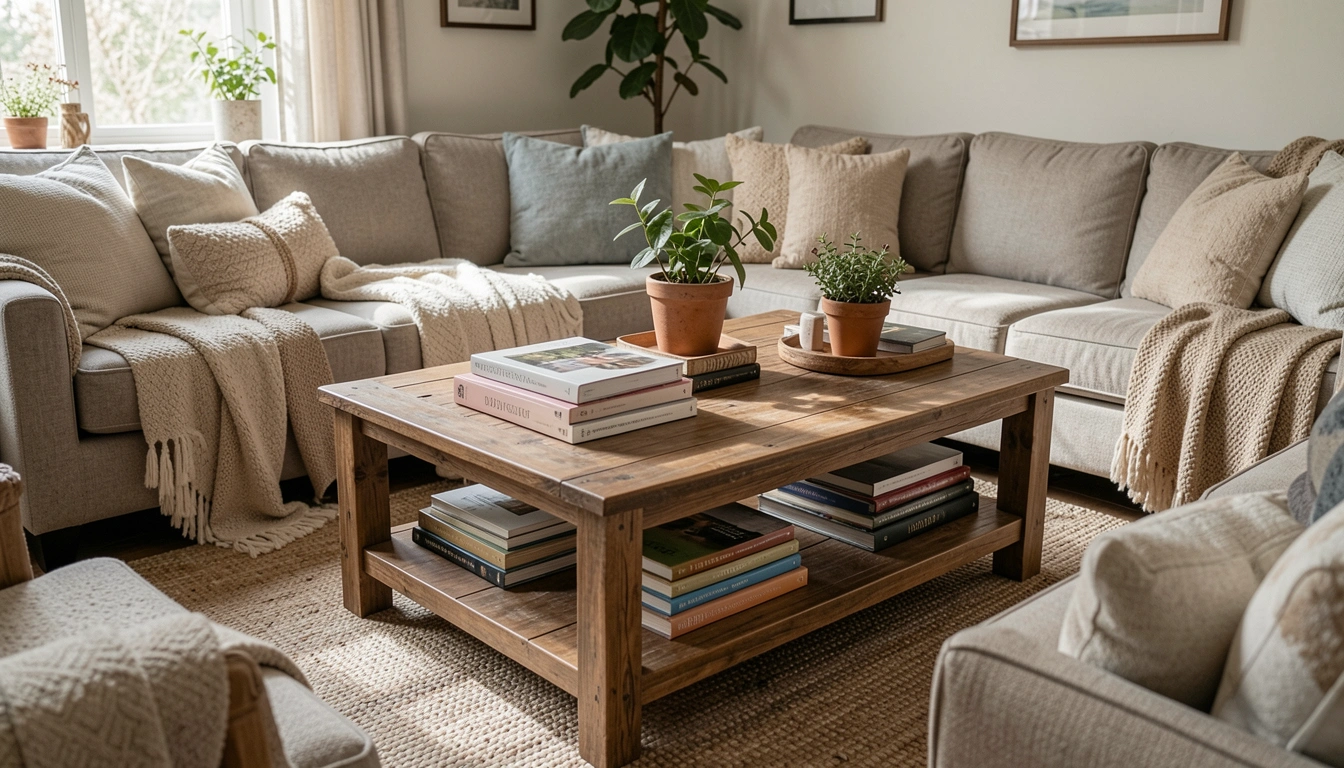
I stared at my living room coffee table. It held keys, mail, a half-empty mug. Bare otherwise. I wanted books there—something grounded, like in magazines. But my first try? Just a sloppy pile. Looked cluttered, not right.
Books make sense on a coffee table. They invite touch, add weight to a room. Yet mine felt off. Too tall stacks blocked the view. No balance.
I kept tweaking. Now it anchors the room. Simple, lived-in. Here's how.
How To Style Living Room Coffee Table For Books
This shows you how to layer books on your living room coffee table so it feels balanced and warm. No fuss. You'll end up with a spot that draws the eye but stays comfortable. I do this whenever the table looks empty.
What You’ll Need
- Oversized coffee table book on architecture, 12×10 inches
- Slim travel photo book, neutral cover, 10×8 inches
- Matte black metal tray, 18-inch square
- Ceramic vase, white, 8 inches tall
- Faux eucalyptus branch, 12 inches long
- Sculptural candle holder, brass, 6 inches
- Small wooden bowl, 5 inches diameter
- Stack of coasters, leather, set of 4
Step 1: Pick and Stack Your Base Books
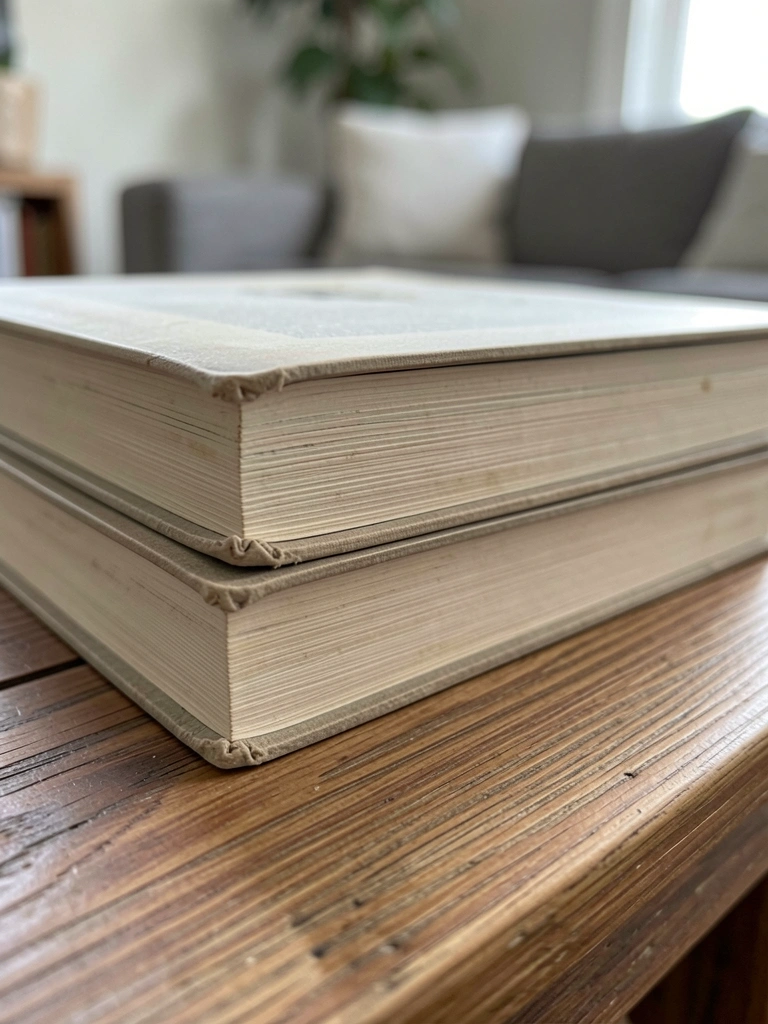
I start with two or three books that match my room's colors—neutral tones, nothing flashy. Lay the largest flat first. Stack the next at a slight angle, offset. This creates a low, sturdy base.
Visually, the table gains weight right away. It stops feeling like a blank slate. The stack pulls your eye in without dominating.
People miss how book spines add rhythm—mix thick and thin for interest. Avoid stacking too straight; it looks rigid. Lean one forward a bit. Feels more lived-in.
I once used four books. Too tall. Blocked the remote. Stick to three max for easy reach.
Step 2: Anchor with a Tray
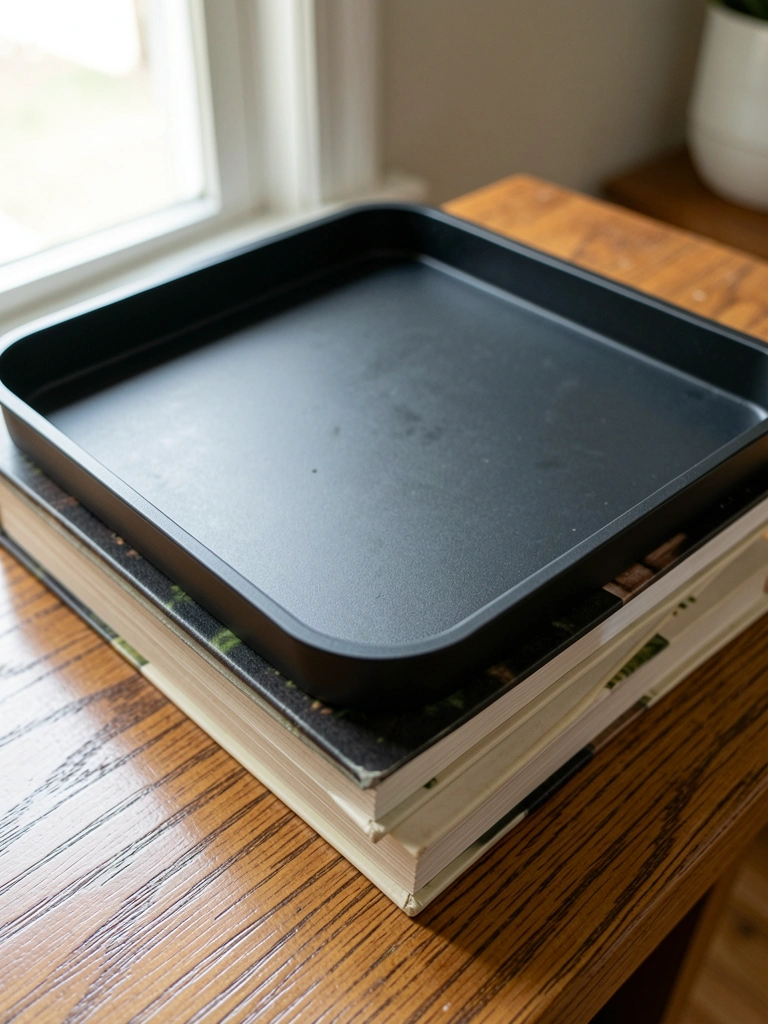
Next, I center a tray on the stack. Not perfectly—let book corners poke out. Mine's matte black metal, about arm's length square. It corrals everything, keeps dust off pages.
The table shifts from messy to contained. Light bounces off the tray, brightens the spot.
Most forget trays ground loose items. Without one, books slide during use. Don't choose a tray taller than your books; it unbalances the height.
I tried glass once. Reflected too much clutter underneath. Opaque works better in real life.
Step 3: Add Height with a Vase and Greenery
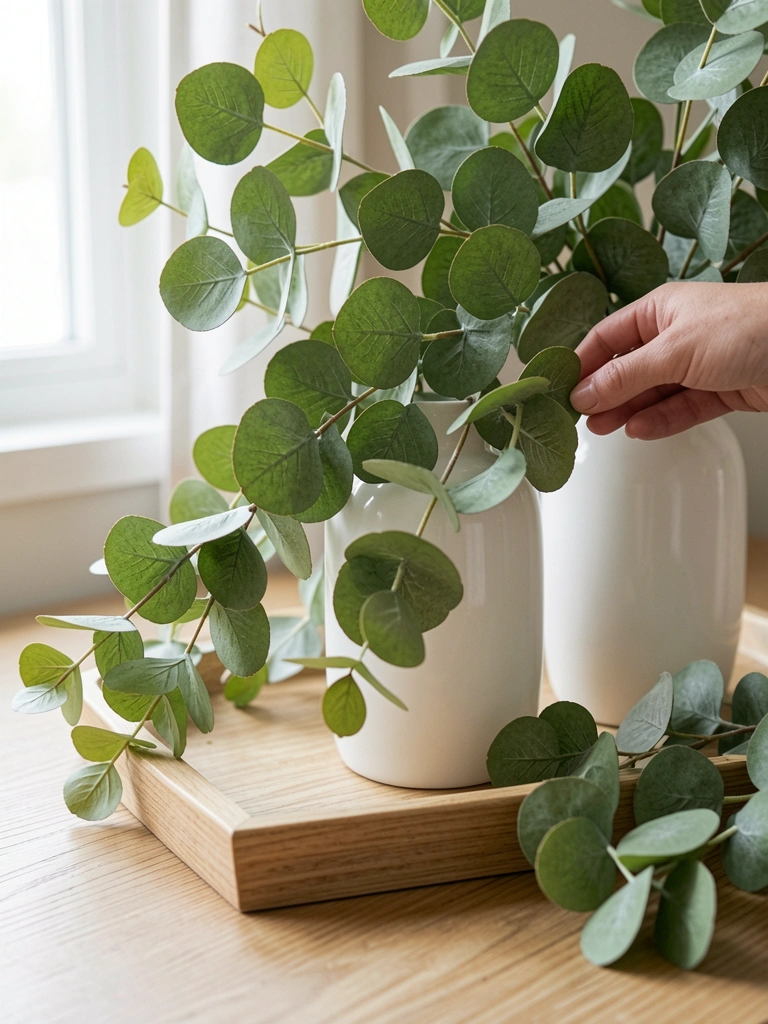
I drop a vase in one tray corner—white ceramic, mid-height. Tuck faux eucalyptus inside, let stems spill. Keeps it soft, not stiff.
Now the surface breathes. Height draws the eye up, but greenery softens the lines. Feels warmer.
The insight? Odd heights create flow—vase taller than books, branch lower. Avoid matching heights; it flattens everything.
Skip real flowers if kids or pets are around. They tip easy. Faux holds up daily.
Step 4: Layer Personal Touches
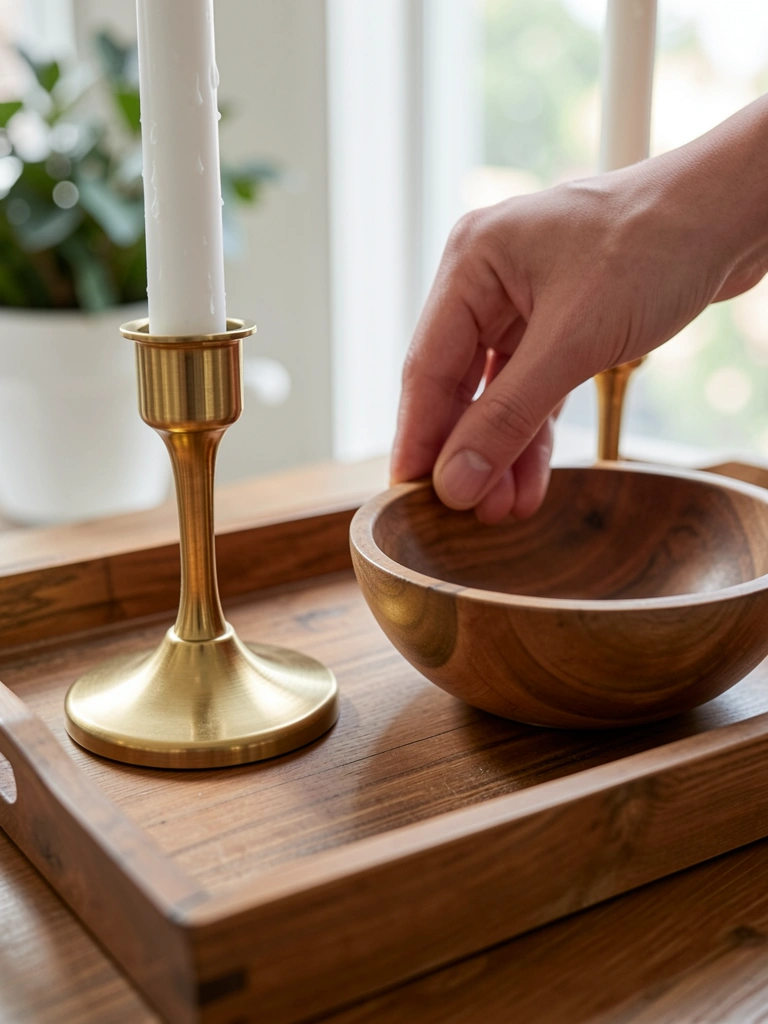
On the opposite side, I add a brass candle holder and wooden bowl. Loose, not crammed. Maybe a coaster peeks under.
The table feels full but open. Touches make it mine—scent from the candle, texture in wood.
People overlook negative space. Leave room for a mug. Don't fill every inch; it crowds.
I added too many once. Felt heavy. Pull back to four or five items total.
Step 5: Step Back and Balance
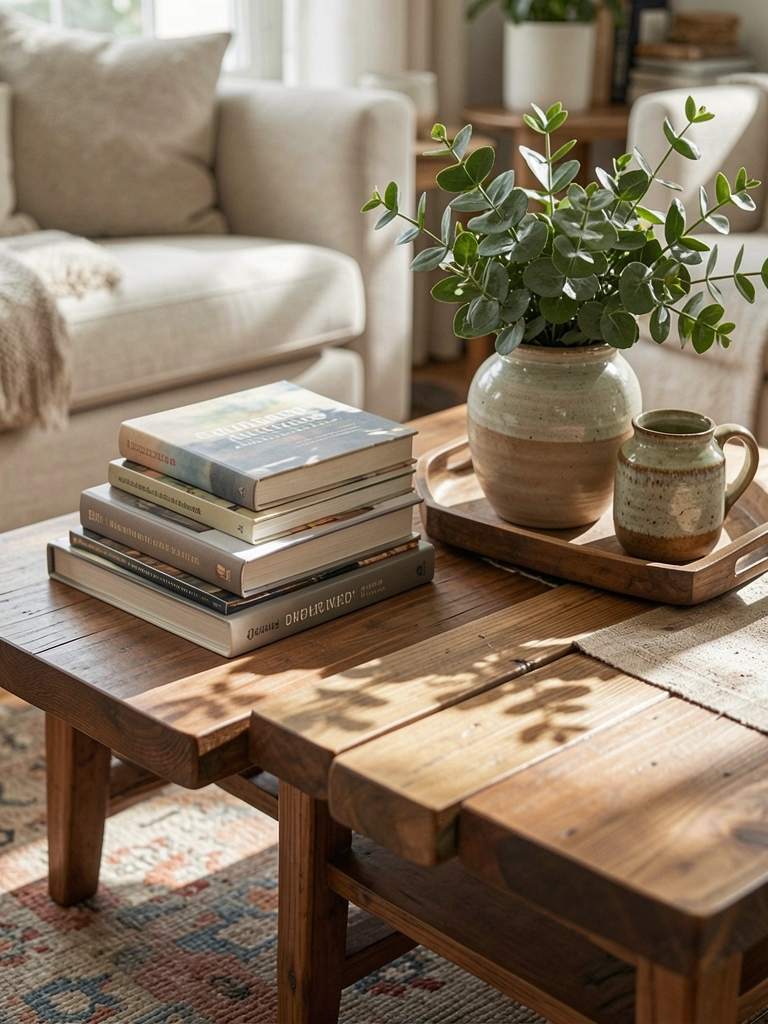
I walk back five feet. Adjust—nudge the branch left, tilt a book. Aim for weight on both sides, varied heights.
Everything settles. The table anchors the room, invites sitting.
Key miss: viewing from sofa height. Test there. Avoid centering everything; offset feels natural.
Don't over-touch. First balance sticks 90% of time.
Why Books Anchor a Coffee Table
Books give your living room coffee table permanence. They stay put, unlike vases that shift. I reach for mine during coffee chats—grounds conversations.
In my space, spines echo wall colors. Creates quiet ties.
- Choose covers that blend, not clash.
- Two to three suffice—no library vibe.
- Rotate themes: art one month, gardens next.
Refreshing for Seasons
I swap books twice a year. Summer? Light beach reads. Winter? Cozy cabins.
Keeps it fresh without overhaul.
- Fall: Warm earth tones, foliage stems.
- Spring: Pastels, fresh branches.
- Test one change at a time.
Tray stays. Saves effort.
Pairing with Your Room
My neutral room loves matte finishes. Dark wood table? Go brass accents.
Match scale to table size—big surface, larger books.
- Light room: Deep book spines add depth.
- Busy room: Fewer items, cleaner books.
- Test in your light—day vs. lamp.
Final Thoughts
Start with your favorite two books. Build slow. Your table will feel right soon.
It took me three tries per room. Now it's habit.
Yours can ground the living room too. Just balance, breathe, done.
Leave a Reply