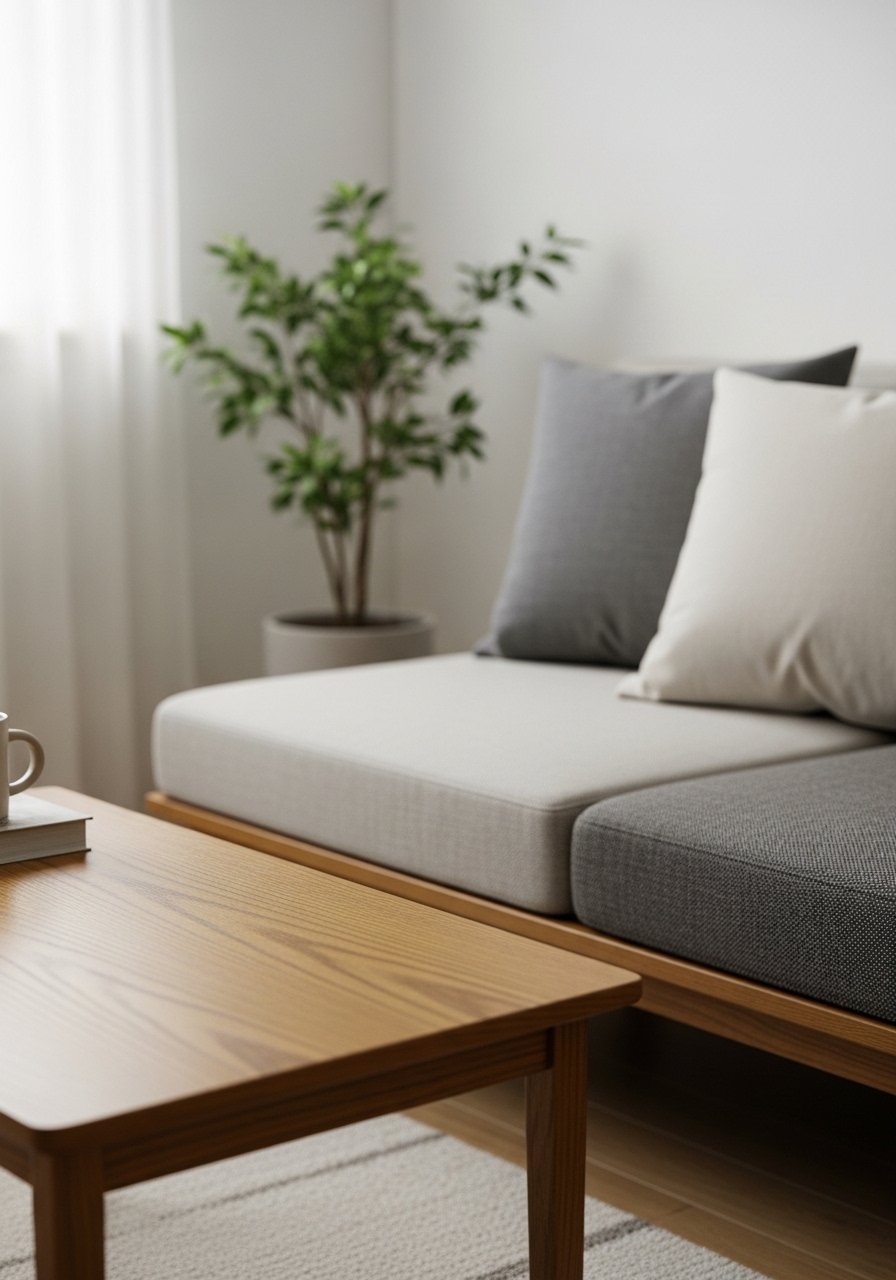
I used to cramp my small living room with too much furniture. I finally learned less can feel lived-in, not empty.
These ideas are practical. I write from rooms I’ve fixed, not showrooms.
27 Elegant Minimalist Small Living Room Ideas For Clean Aesthetics
These 27 ideas are simple, lived-in solutions I’ve used in small spaces. Clear steps, real mistakes, and items to buy are included.
1. Slim Low-Profile Sofa That Opens the Room
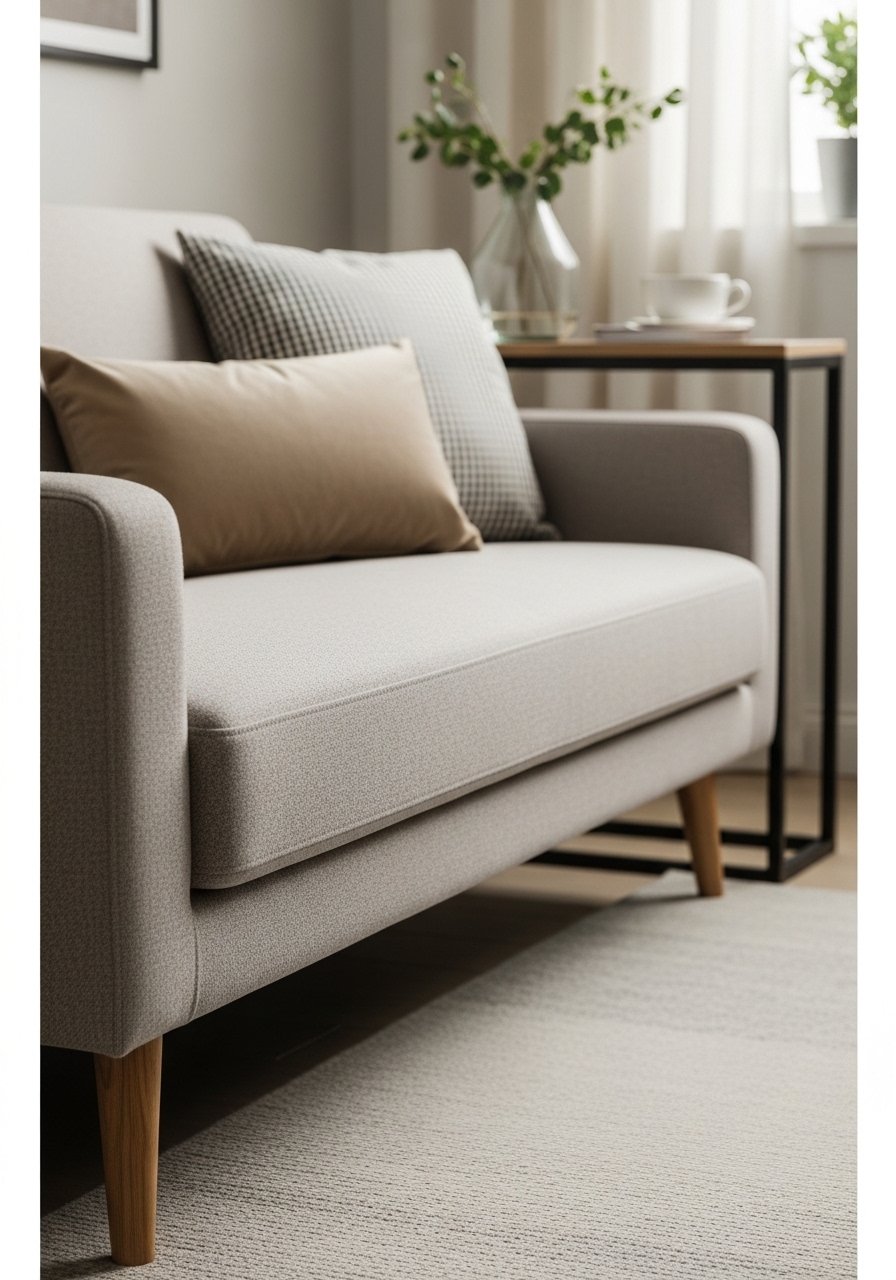
I swapped a bulky sofa for a slim low-profile one and the whole room breathed. I still wanted comfort, so I picked one with firm cushions. It sits lower and shows more floor, which tricks my eye into thinking the space is larger.
My old high-back couch made the room feel boxed-in. Lesson learned: show floor and legs.
What to watch for: arm width. Narrow arms save visual space but can be less comfy if you nap a lot.
What You’ll Need for This Look
2. Single Neutral Rug Anchoring The Seating
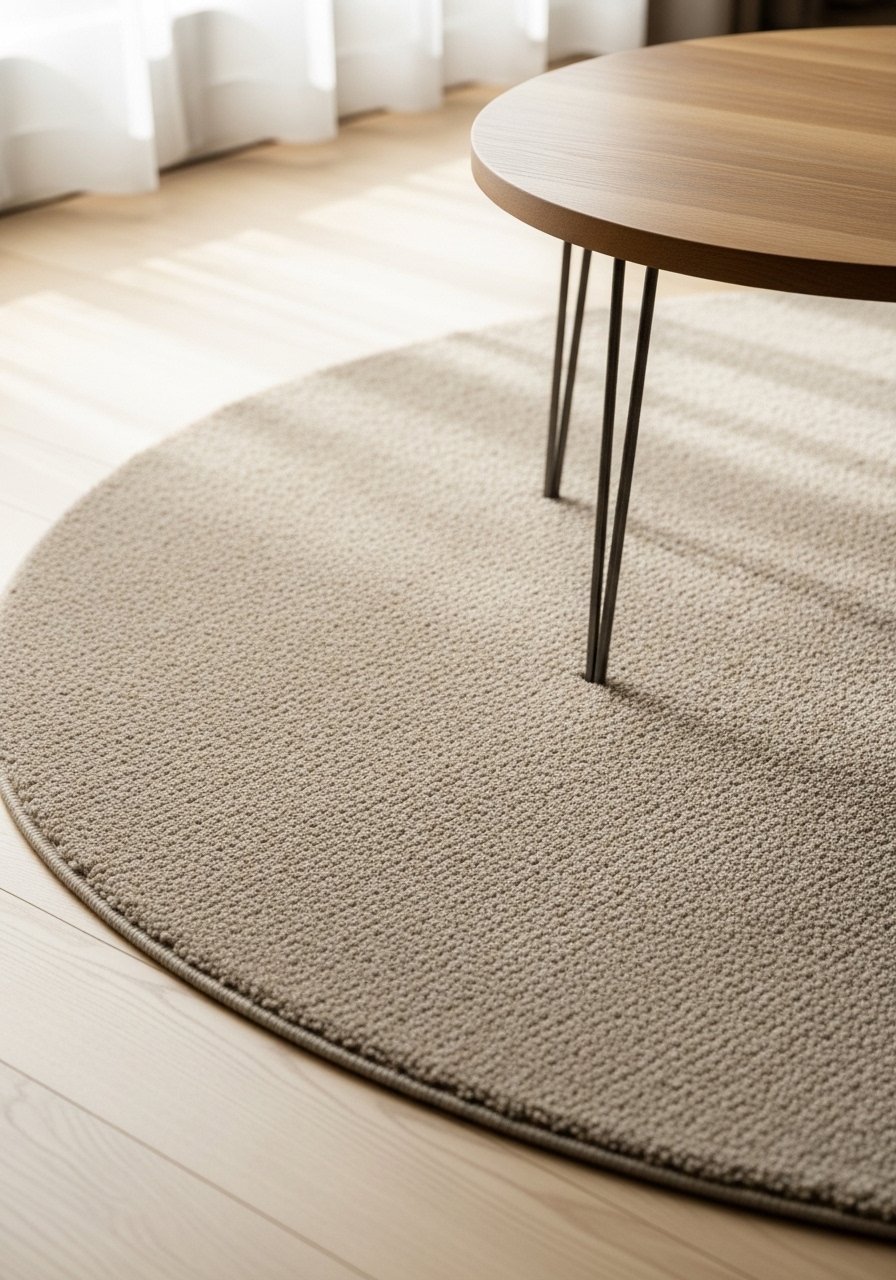
I used to layer too many rugs. One well-sized neutral rug changed everything. It defines the seating zone without shouting. I picked a low-pile rug so chairs slide and cleaning is easy.
I once bought an oversized shag that swallowed the room. It made the space feel heavy. This neutral rug bounces light and ties wood and fabric together.
Tip: leave a visible strip of floor around the rug to keep the room feeling airy.
What You’ll Need for This Look
3. Narrow Coffee Table With Open Legs
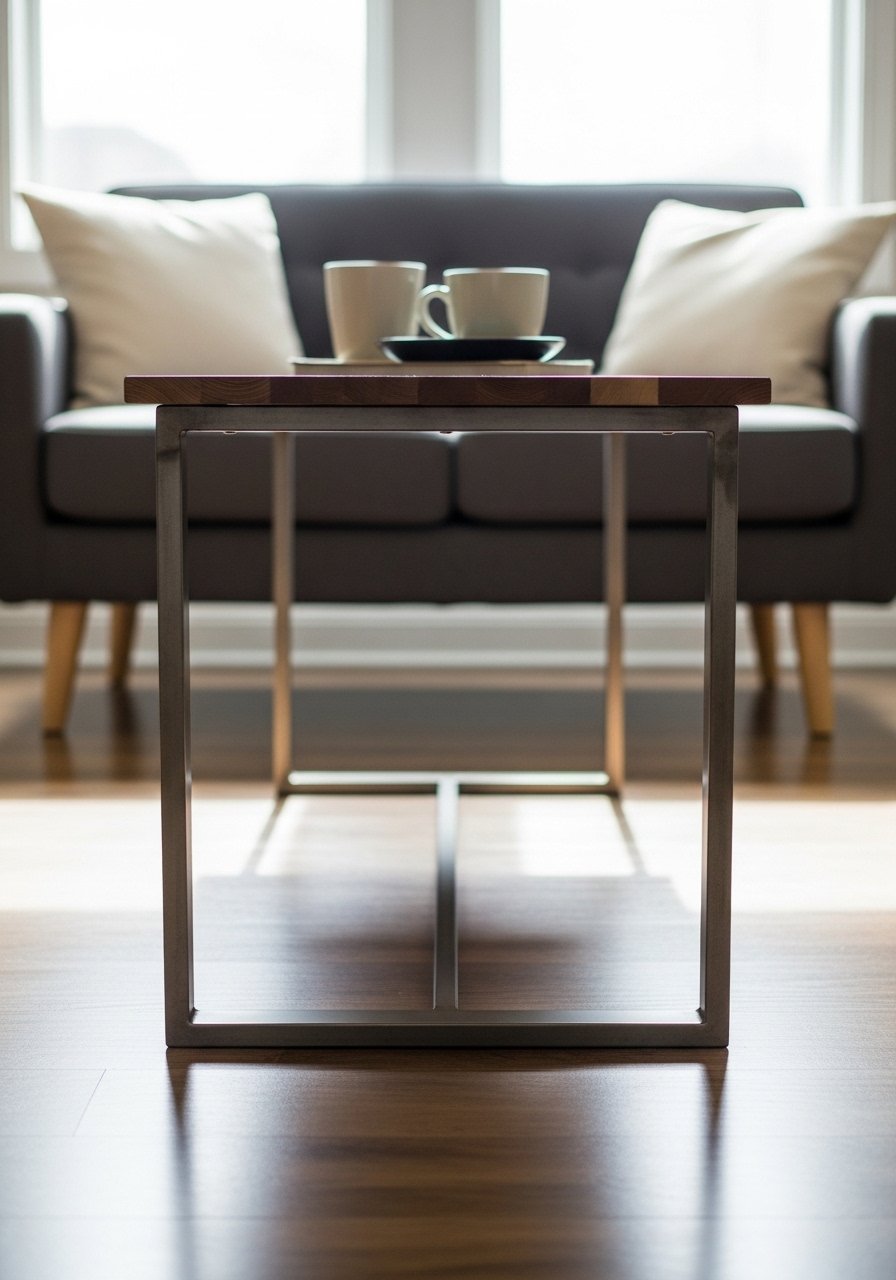
I switched from a heavy square table to a narrow coffee table with open legs. The openness keeps sightlines clear. Guests can tuck feet under it, and I still have a place for books and a cup.
My mistake: buying a heavy marble-top piece that visually anchored the room too much. The narrow table feels balanced and practical.
Look for slim depth so traffic flows freely.
What You’ll Need for This Look
4. One Accent Chair, Not Three
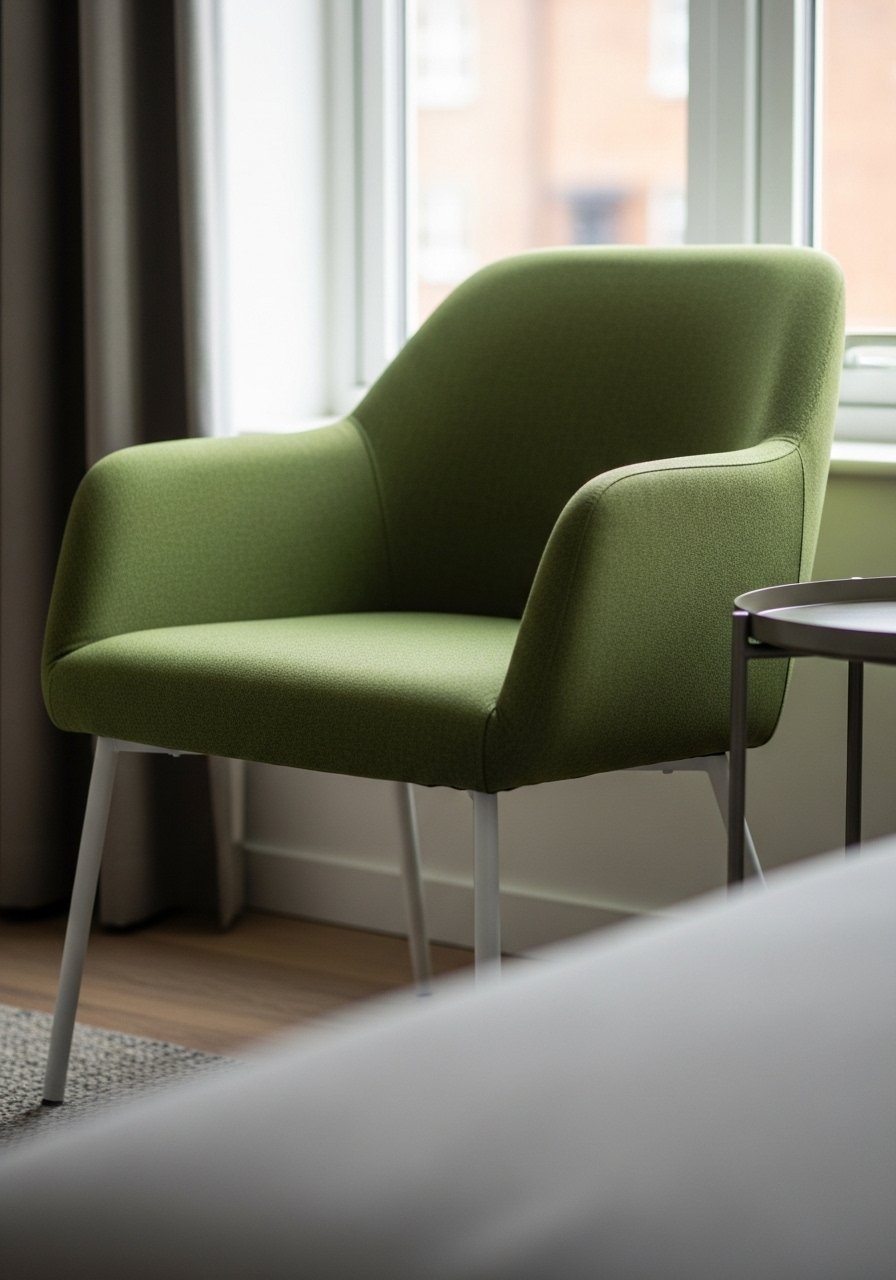
I used to cram multiple chairs into small rooms. Now I pick one accent chair with personality. It becomes a reading spot without cluttering pathways.
The chair I bought first had bulky arms and blocked light. I replaced it with a slimmer profile and suddenly the window felt bigger.
Choose a chair with exposed legs to show more floor and keep the room airy.
What You’ll Need for This Look
5. Floating Shelves Instead of a Big Bookcase
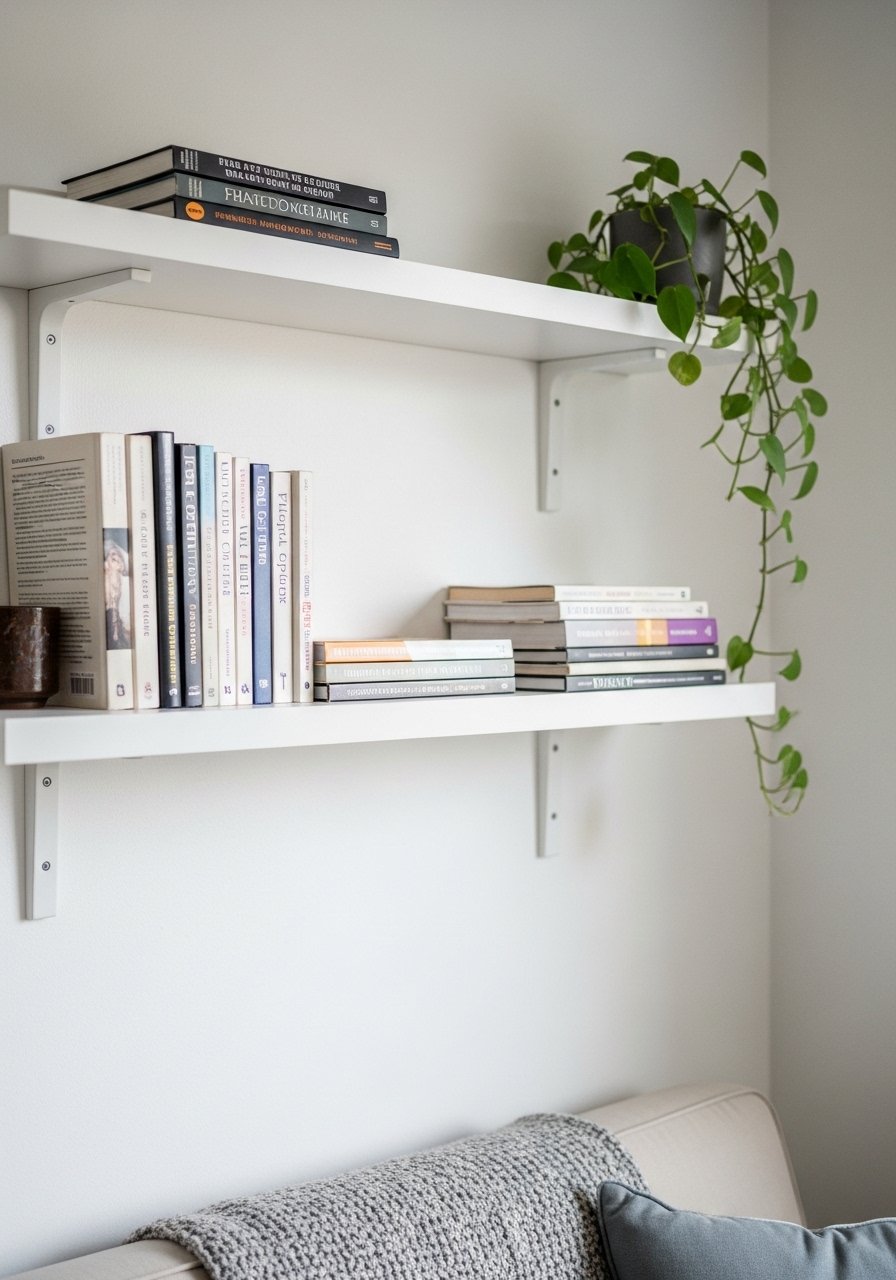
I ditched a bulky bookcase and installed floating shelves. They hold my favorite books, a lamp, and a plant. The wall reads lighter and I can place furniture closer to it.
My initial install was too high and looked awkward. I lowered the shelves to eye level and it feels balanced now.
Use matching shelf brackets and keep decor sparse to avoid visual clutter.
What You’ll Need for This Look
6. Slim Media Console With Cable Management
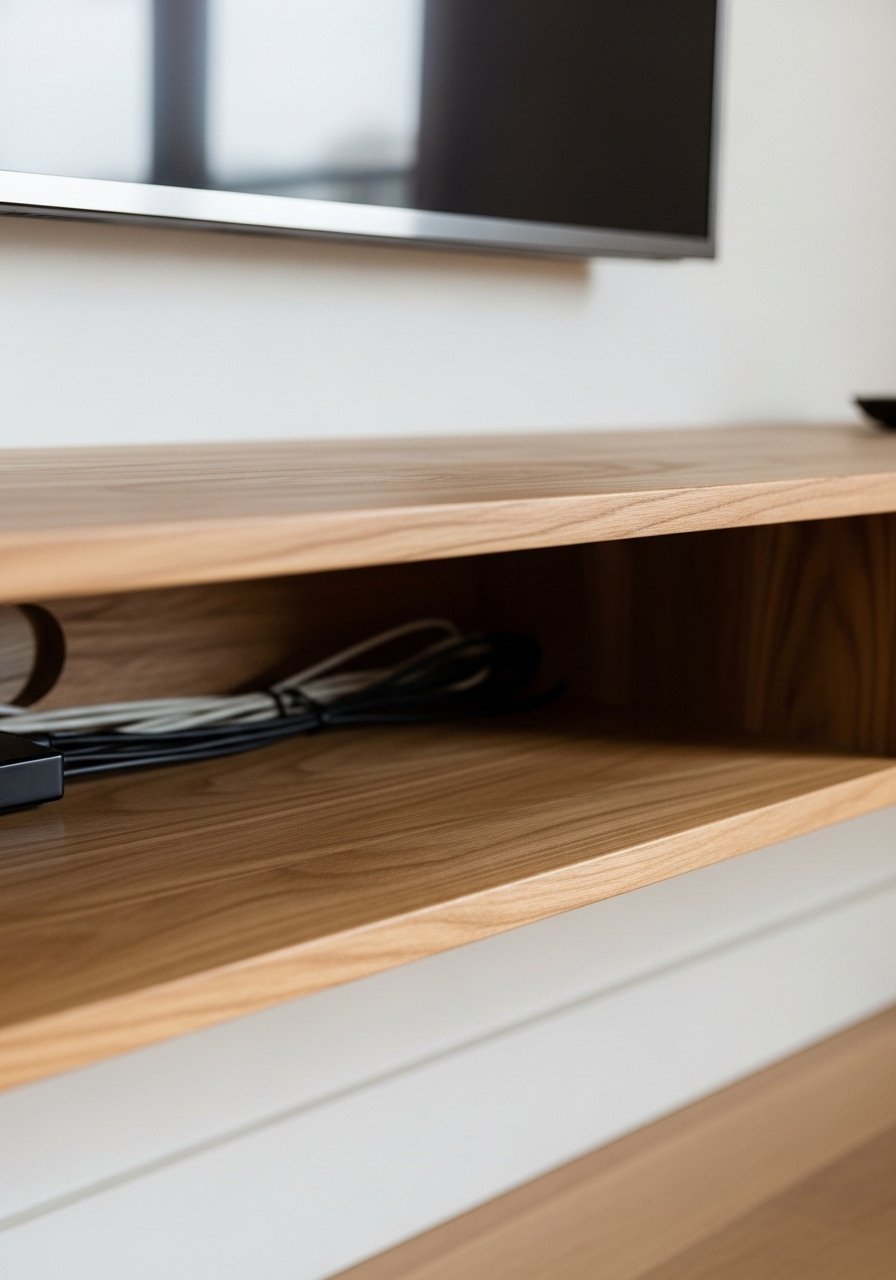
I built a narrow console that tucks under the TV. It stores remotes and hides tech. The open legs make the floor visible and the room feel lighter.
My first console was deep and ate walking space. The slim model gives storage without crowding.
Choose a piece with a small drawer or basket for chargers to keep surfaces clean.
What You’ll Need for This Look
7. Wall-Mounted Lighting to Free Floor Space
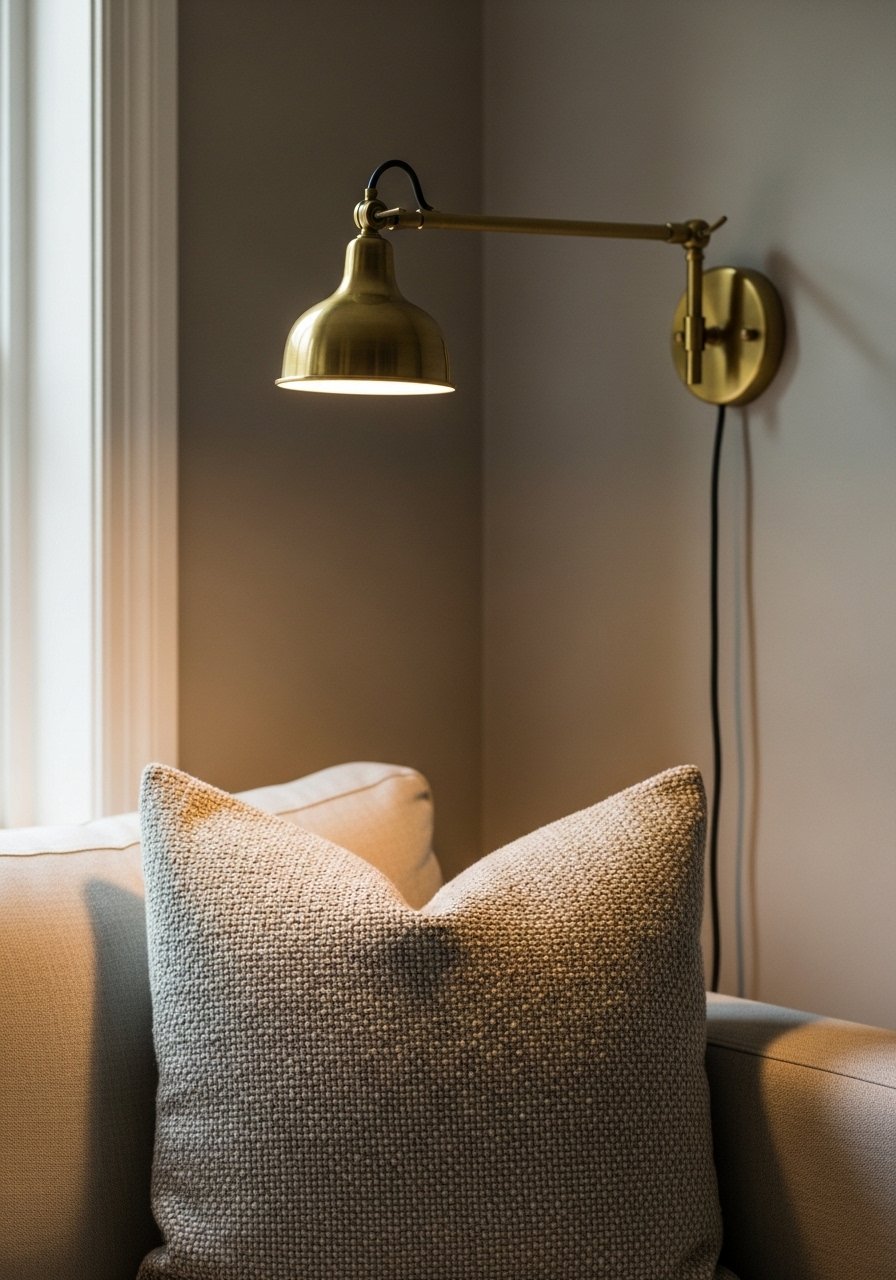
I replaced a heavy floor lamp with a wall-mounted swing arm. It frees floor space and directs light exactly where I need it. The arm folds back when not in use.
I once bought a wide-base lamp that bumped knees. Wall lighting solved that.
Make sure you can reach the switch from the couch or hardwire it for a cleaner look.
What You’ll Need for This Look
8. Narrow Console Behind the Sofa as a Shelf
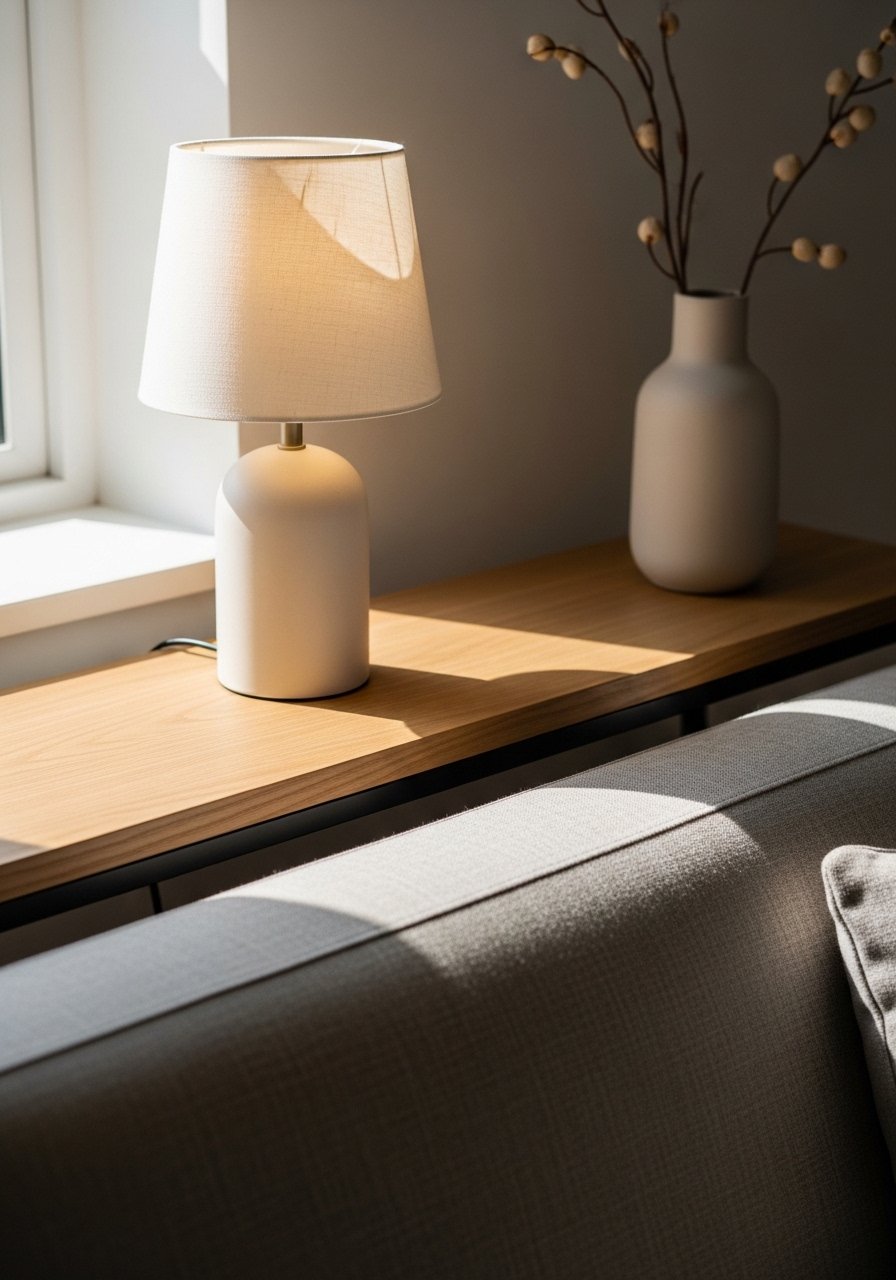
I added a slim console behind the sofa to create a landing spot. It fits narrow rooms and holds keys, a lamp, and a plant. It also visually separates the seating from the rest of the room.
I once tried a wide console that blocked flow. Keeping it narrow makes the room functional without feeling boxed.
Use it to display one or two items, not a collection.
What You’ll Need for This Look
9. Leaning Mirror to Double Light and Space
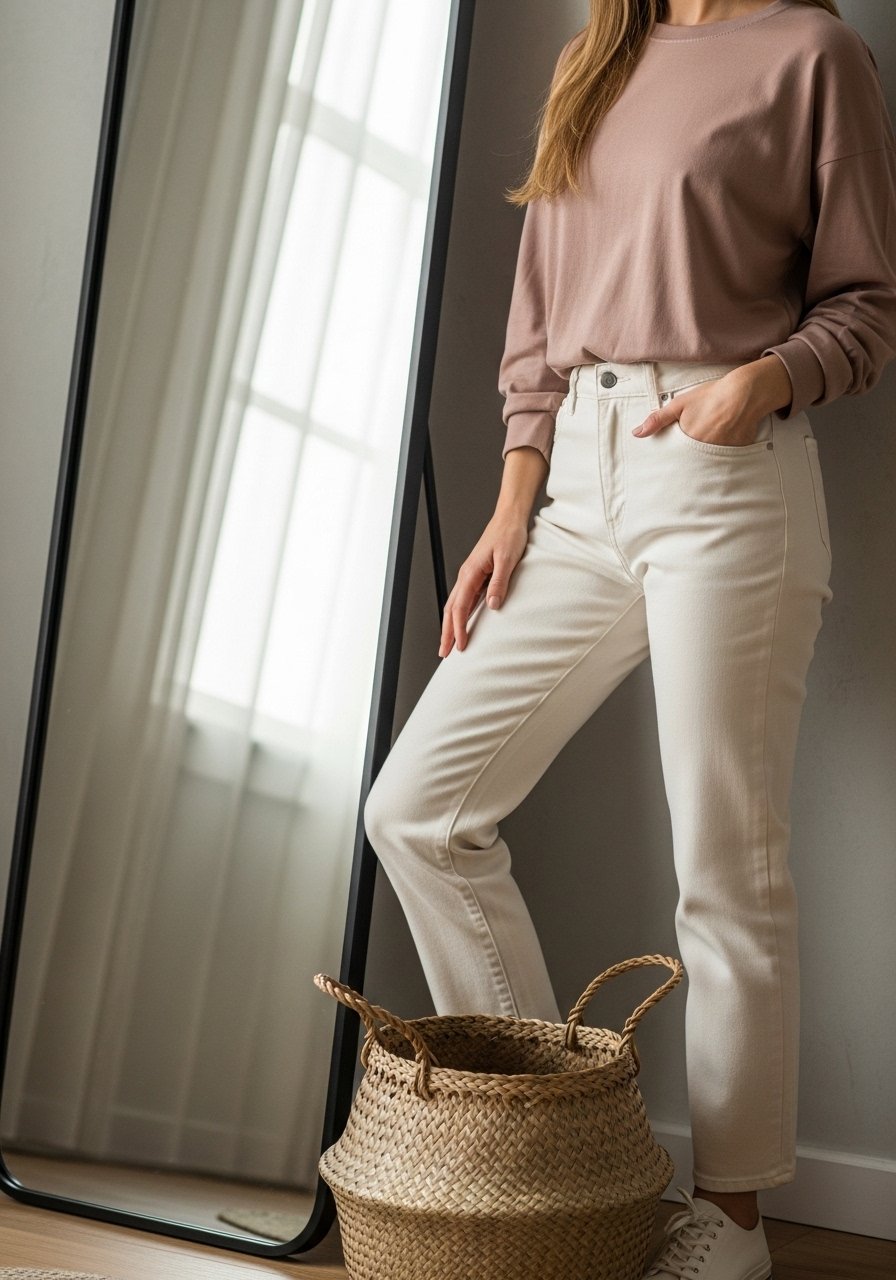
I propped a tall mirror against the wall and it doubled the window light. The room looks deeper and more open. I like the casual lean; it feels collected, not staged.
My first mirror was tiny and felt token. Bigger is better, especially when it reflects natural light.
Secure the mirror for safety and angle it slightly for light bounce.
What You’ll Need for This Look
10. Built-In Window Seat With Slim Storage
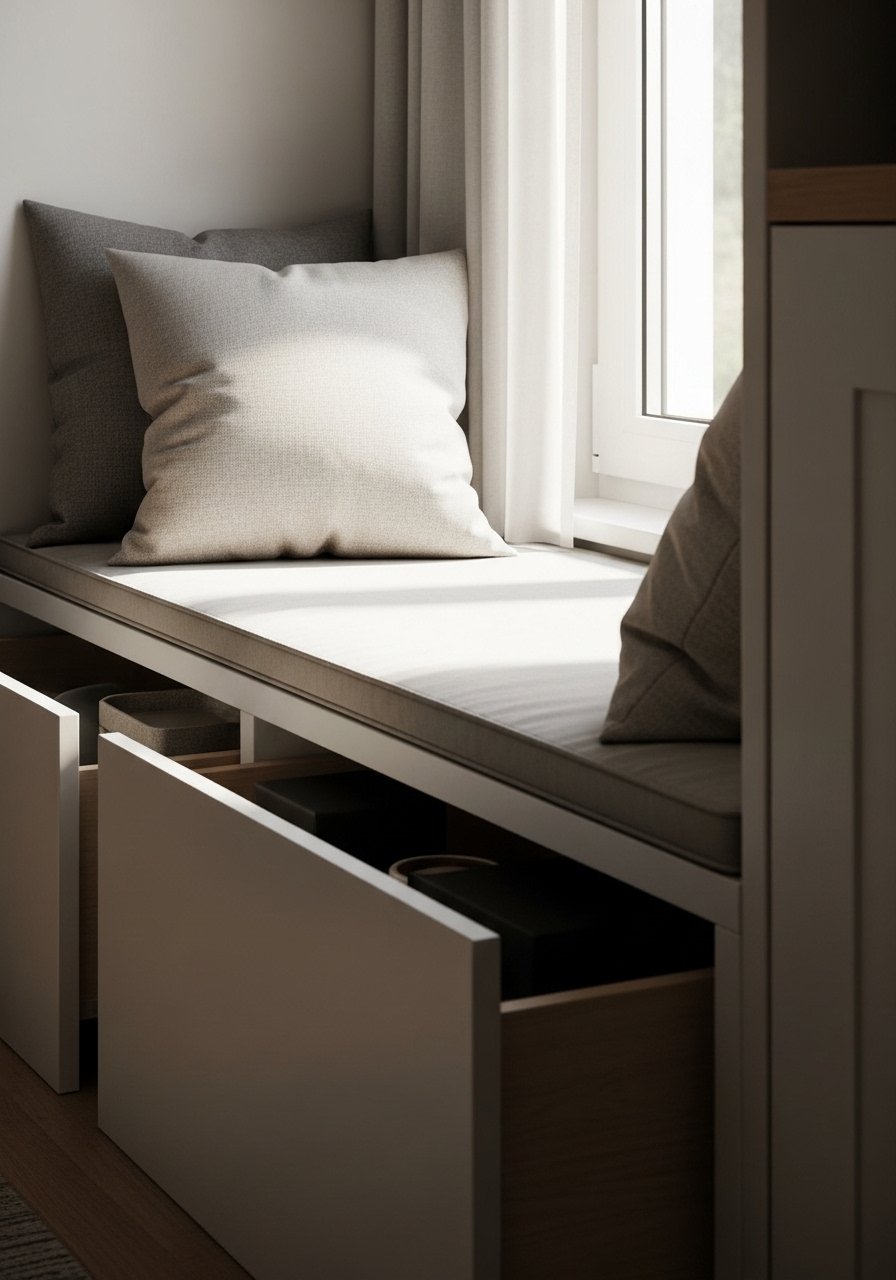
I converted a shallow alcove into a slim window seat with drawers underneath. It’s a cozy perch and adds storage without taking floor space.
At first I underestimated cushion thickness and it was uncomfortable. I replaced it with a thin high-density foam and it’s perfect.
Keep the seat narrow so it doesn’t stick out into traffic. Add a pillow for back support.
What You’ll Need for This Look
11. Neutral Throw and One Textured Pillow
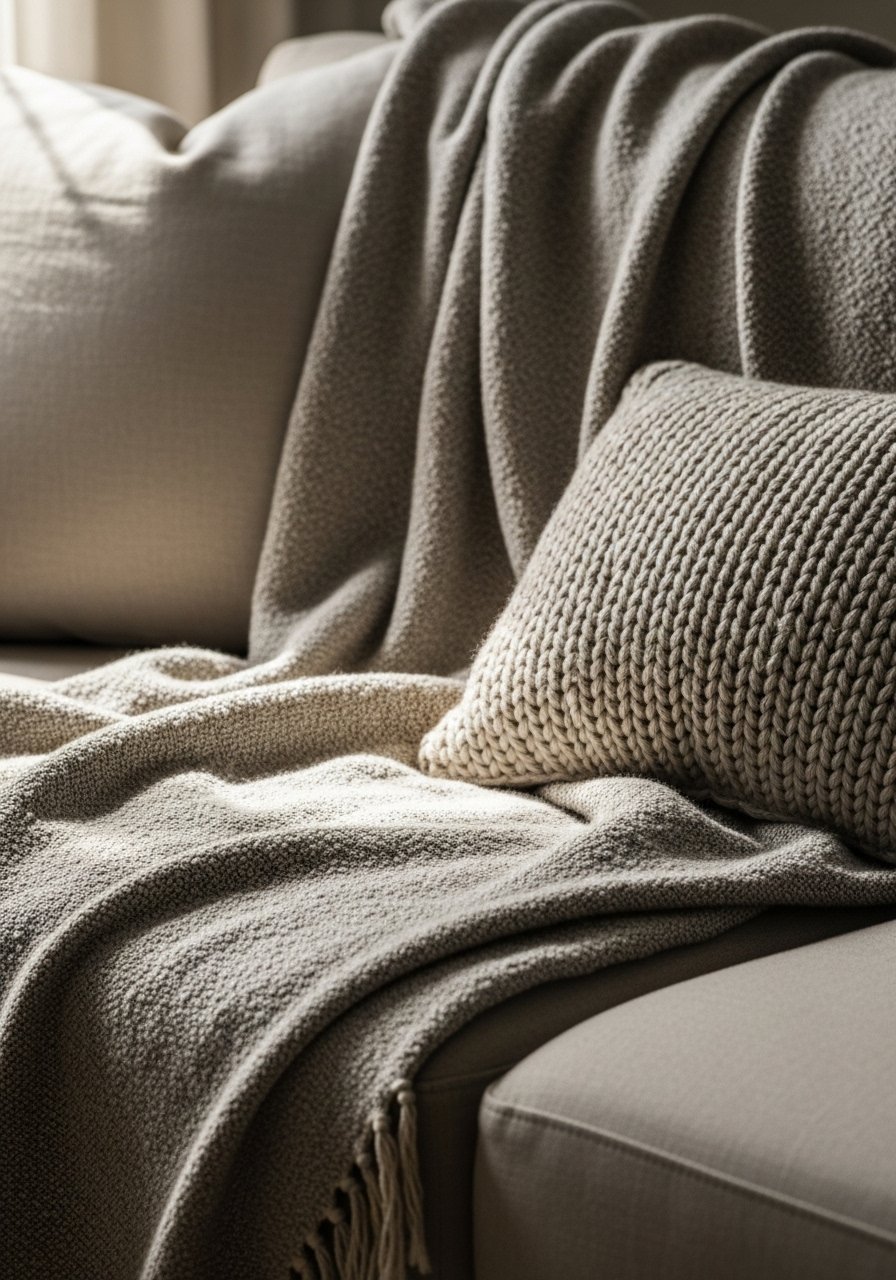
I stopped piling cushions and started using one textured pillow and a neutral throw. The space feels intentional and comfortable, not staged.
I used to buy too many patterns and it looked busy. A single texture adds warmth without clutter.
Fold the throw neatly or drape it casually. Both read as lived-in.
What You’ll Need for This Look
12. Slim Plant Stands to Add Life Without Crowd
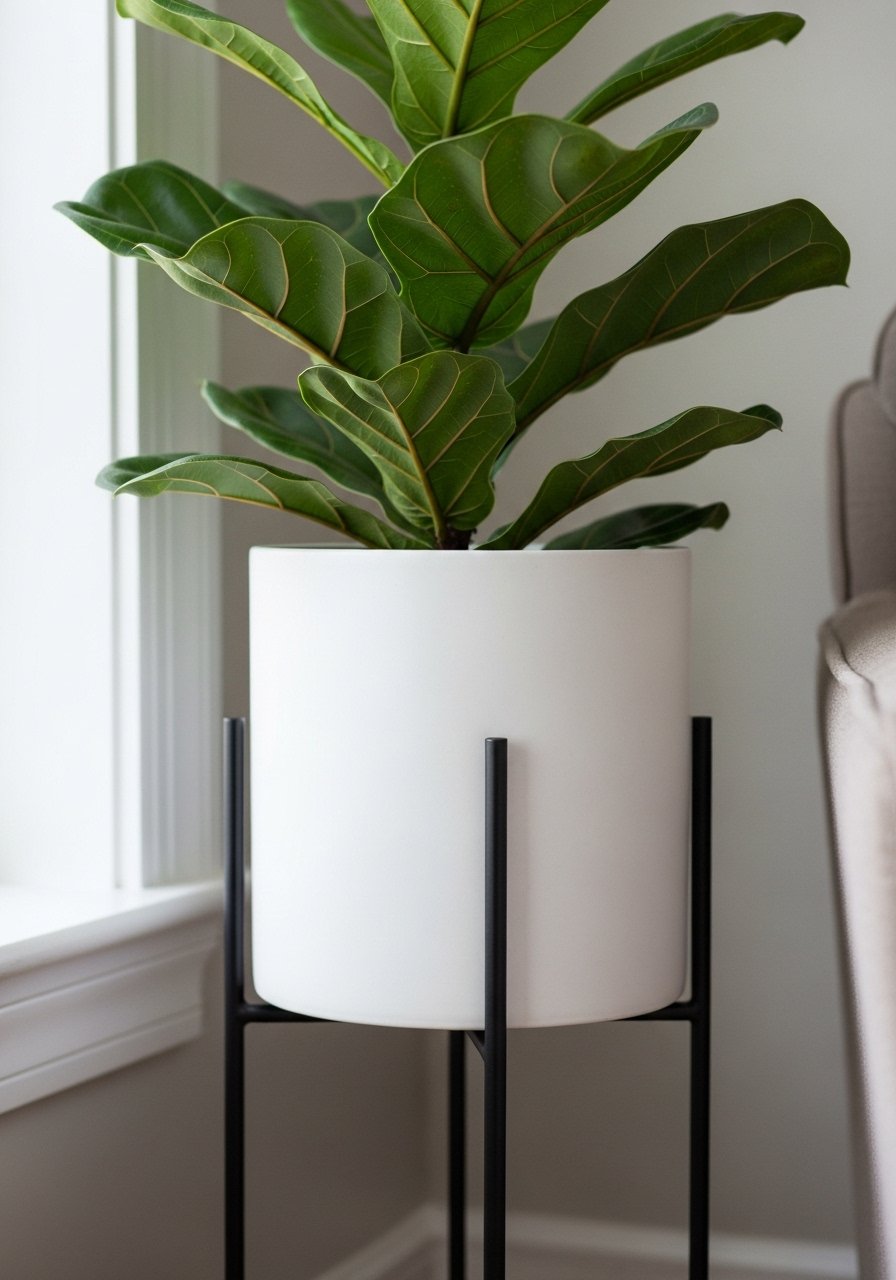
I learned plants can add life without clutter if each has its own slim stand. Taller plants draw the eye up, making the ceiling feel higher.
I once clustered too many pots on the floor and it looked messy. Elevated plants read as intentional.
Pick stands with narrow footprints so they don’t block traffic.
What You’ll Need for This Look
13. Low-Profile Storage Ottoman for Hidden Clutter
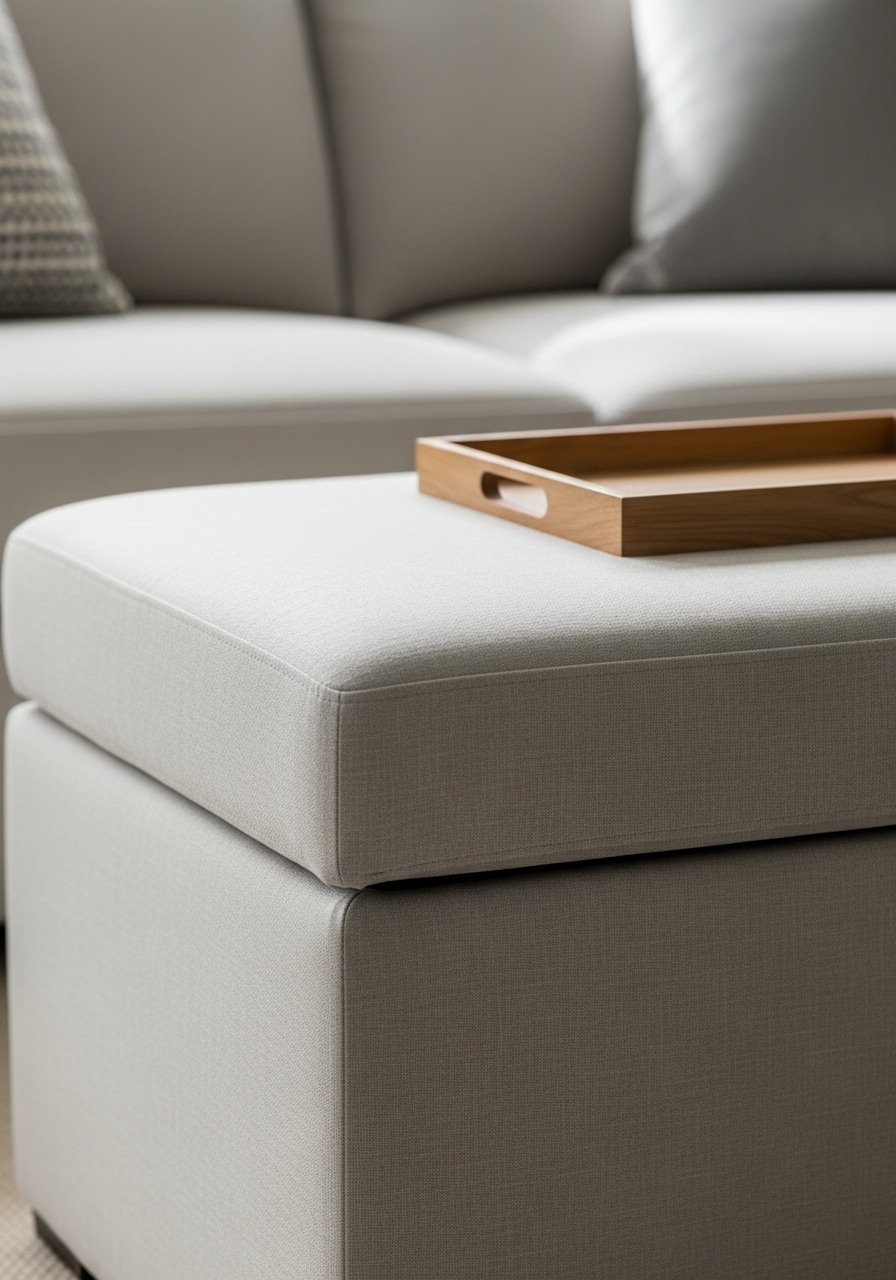
I needed hidden storage for blankets and kids’ toys. A low-profile ottoman doubles as coffee table space and keeps things out of sight.
My first ottoman was too tall and blocked lines. Keeping it low preserves flow and sightlines.
Pick one with a sturdy hinge and a surface that can take a tray.
What You’ll Need for This Look
14. Monochrome Art Grouping Above the Sofa
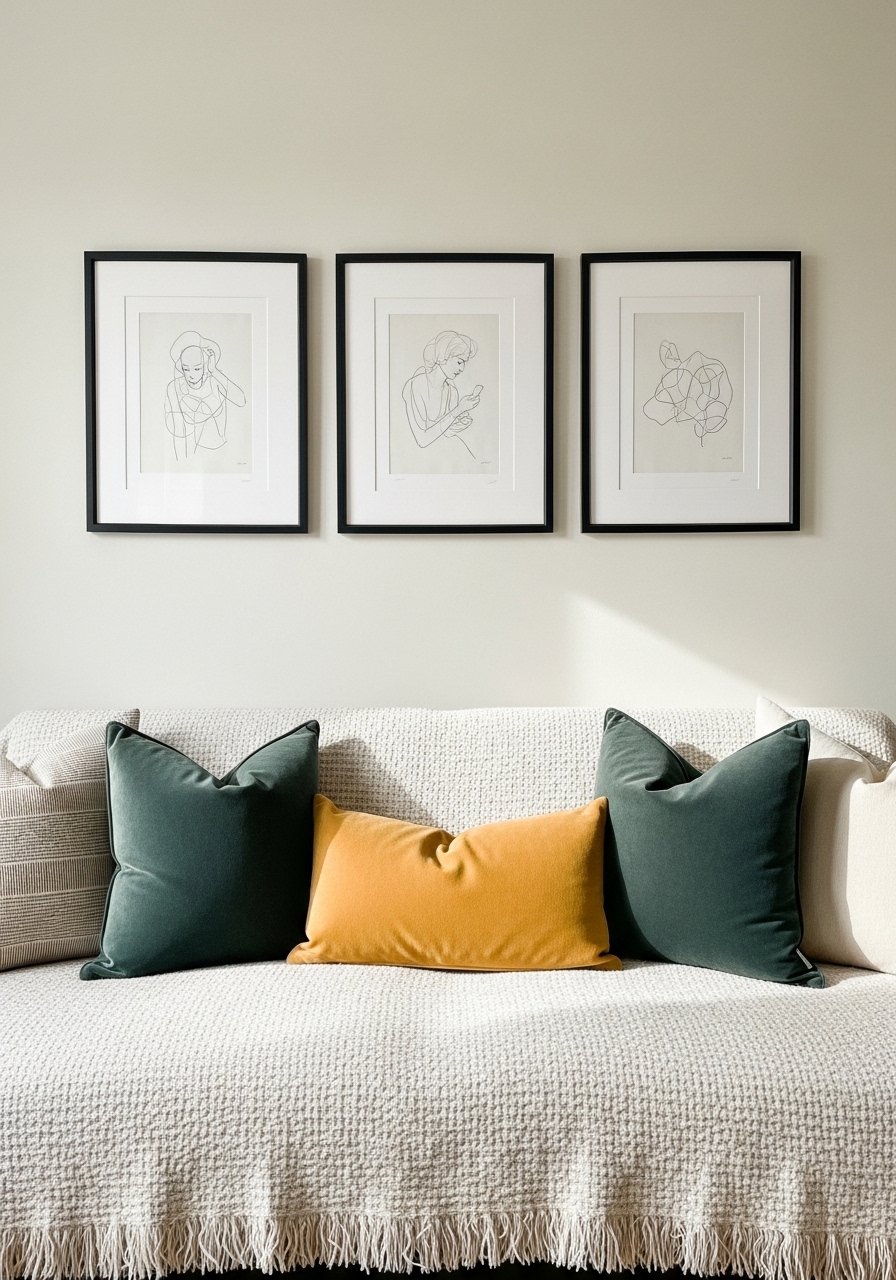
I created a simple monochrome gallery above the sofa. It gives the wall presence without introducing too many colors.
I once tried mixed frames and it felt chaotic. Matching frames in a grid keeps things calm.
Measure and dry-fit before hanging. Small shifts change the whole look.
What You’ll Need for This Look
15. Slim TV Mount and Floating Cabinet
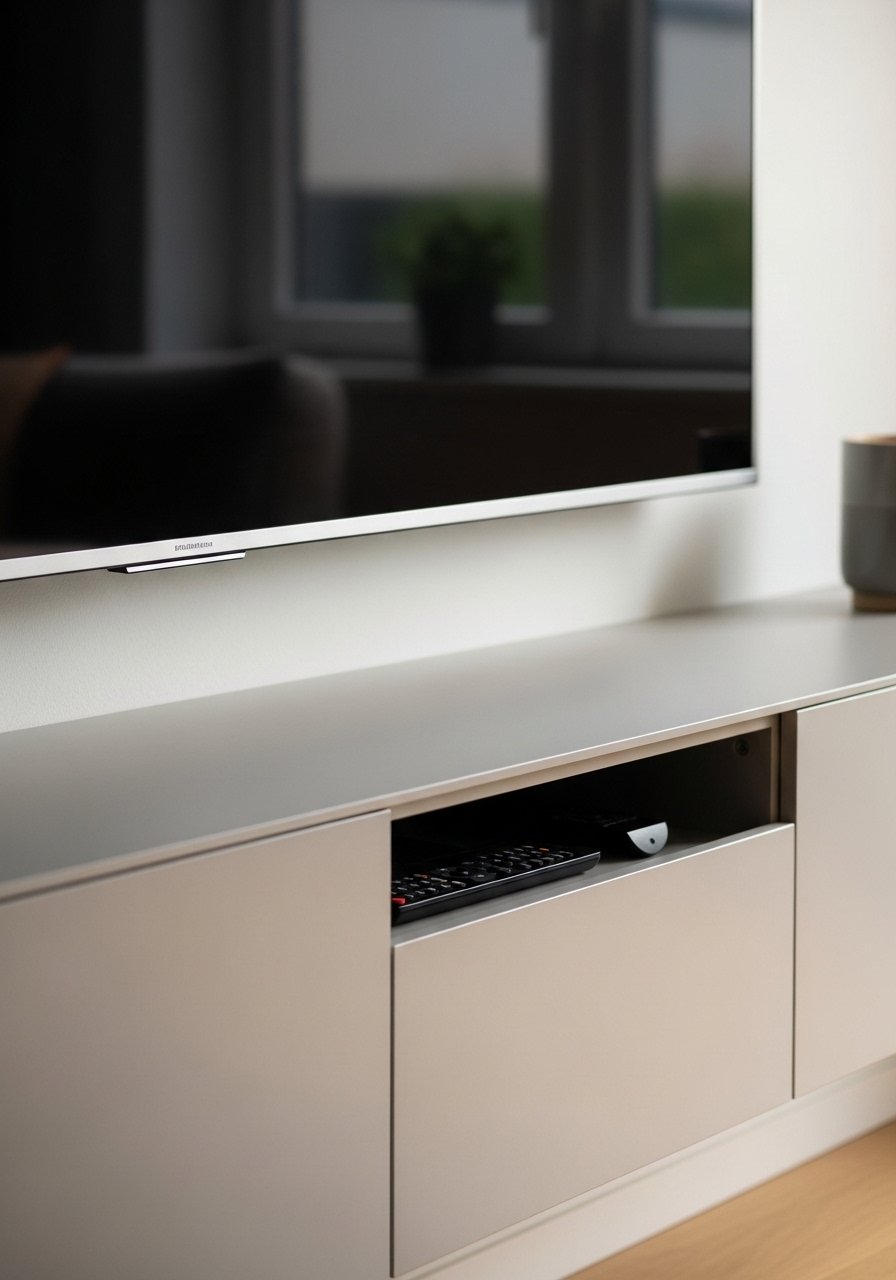
I mounted the TV and added a floating cabinet. The TV sits higher and the cabinet keeps devices hidden. The floor space under the unit feels continuous.
My old bulky stand made cleaning awkward. Floating storage is cleaner and lighter.
Ensure the mount is at comfortable viewing height before drilling.
What You’ll Need for This Look
16. Narrow Bar Cart as a Mobile Side Table
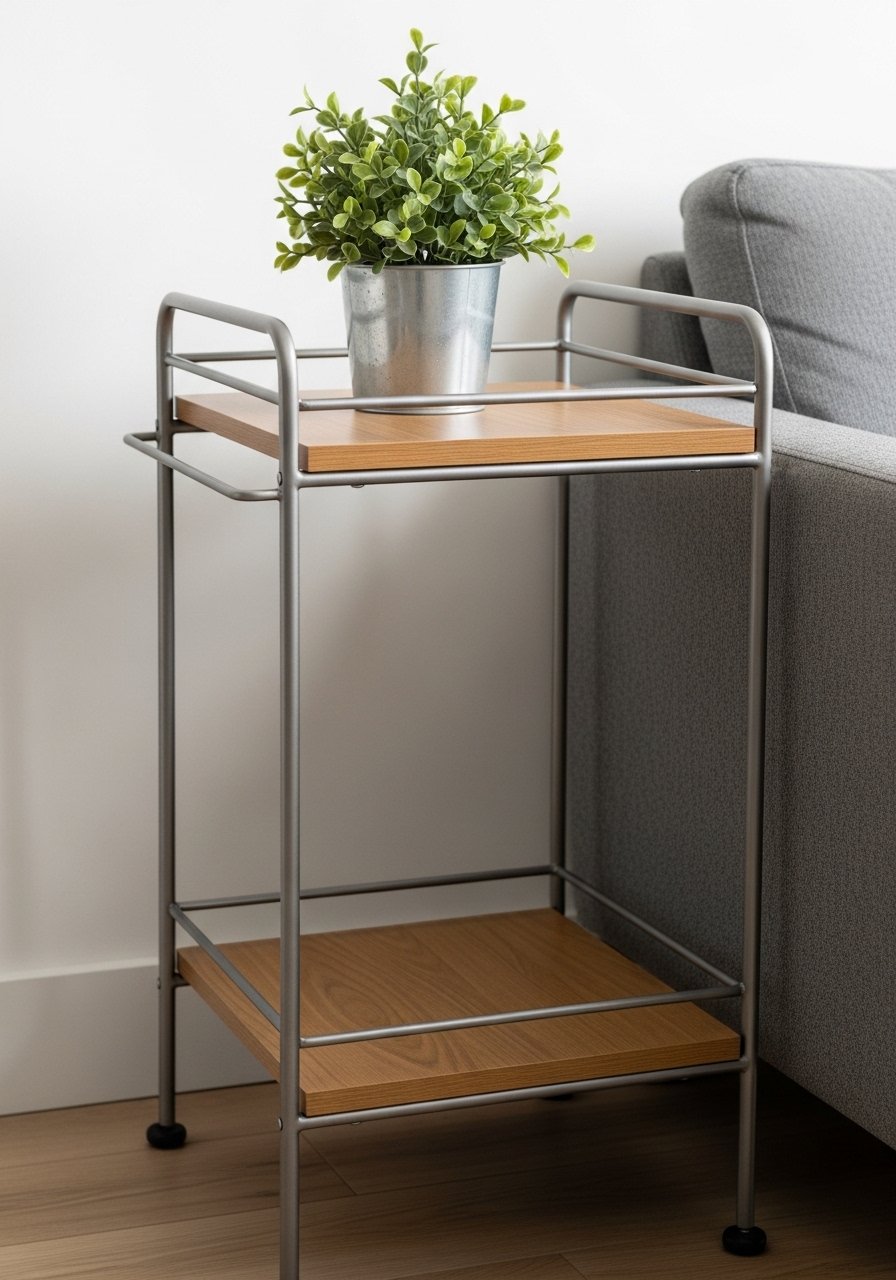
I use a narrow bar cart as a movable side table. It holds drinks, books, and a lamp and rolls away when I need space.
I once used a wide cart and it blocked passage. This slim design is flexible and useful.
Locking wheels help keep it in place on wood floors.
What You’ll Need for This Look
17. Minimal Drapes to Soften Light
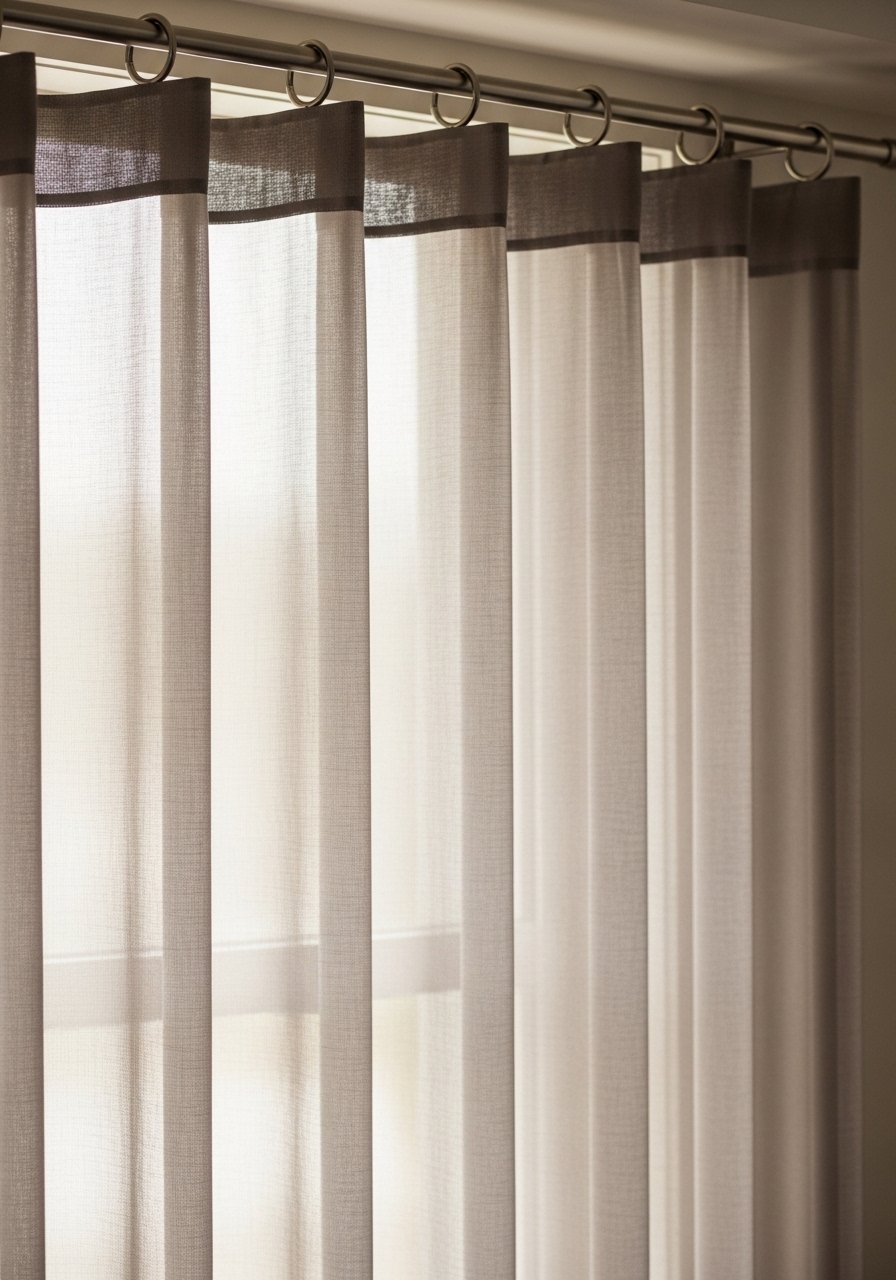
I swapped heavy curtains for sheer neutral drapes. They soften light, add privacy, and don’t overwhelm windows.
I used to pick heavy velvet and the room looked smaller. Sheers stretch the visual height and feel calm.
Hang them close to the ceiling to make windows read taller.
What You’ll Need for This Look
18. Narrow Entry Console for Keys and Mail
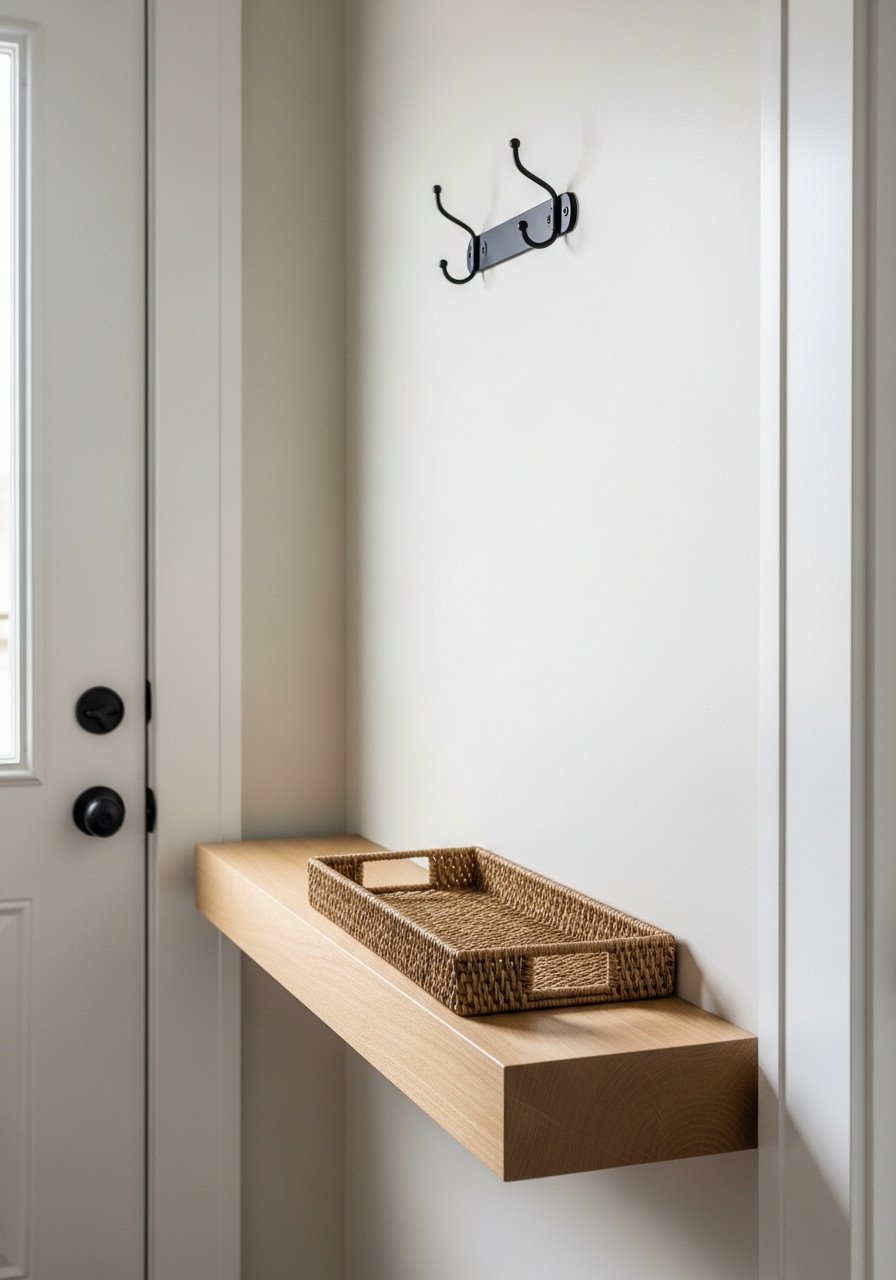
I added a tiny entry console by the door to corral keys and mail. It keeps the clutter from spreading into the seating area.
I once let that overflow onto the coffee table. A narrow console is a small habit changer.
A shallow bowl on top keeps daily items from roaming.
What You’ll Need for This Look
19. Low Open Shelving for Display, Not Storage
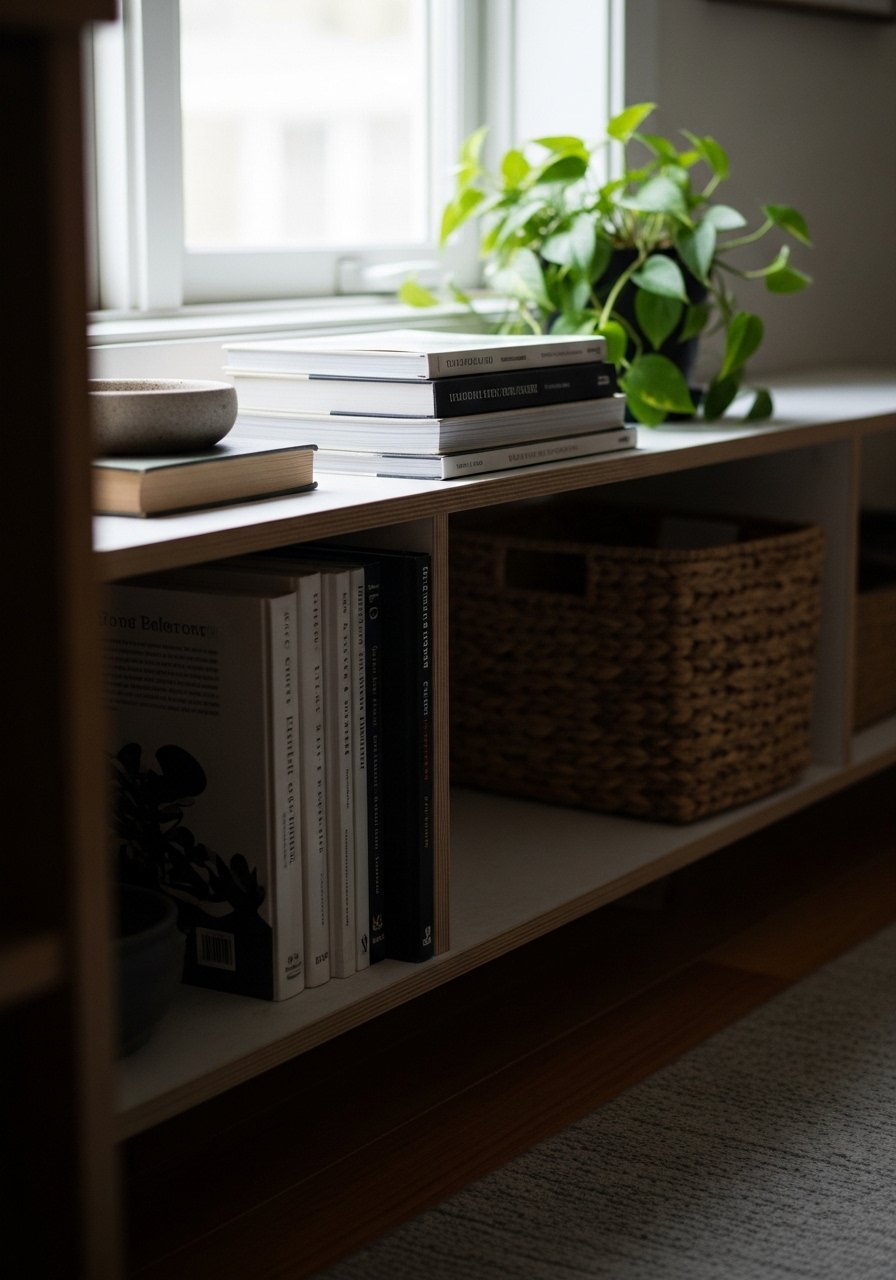
I installed low open shelving and limited what goes on it. A few books, one plant, and a basket is enough. It reads curated, not overloaded.
I used to use shelves as dumping grounds. Now each item earns a spot.
Keep shelf height low so it doesn’t compete with the vertical space.
What You’ll Need for This Look
20. Hidden Bedside for Studio Living Rooms
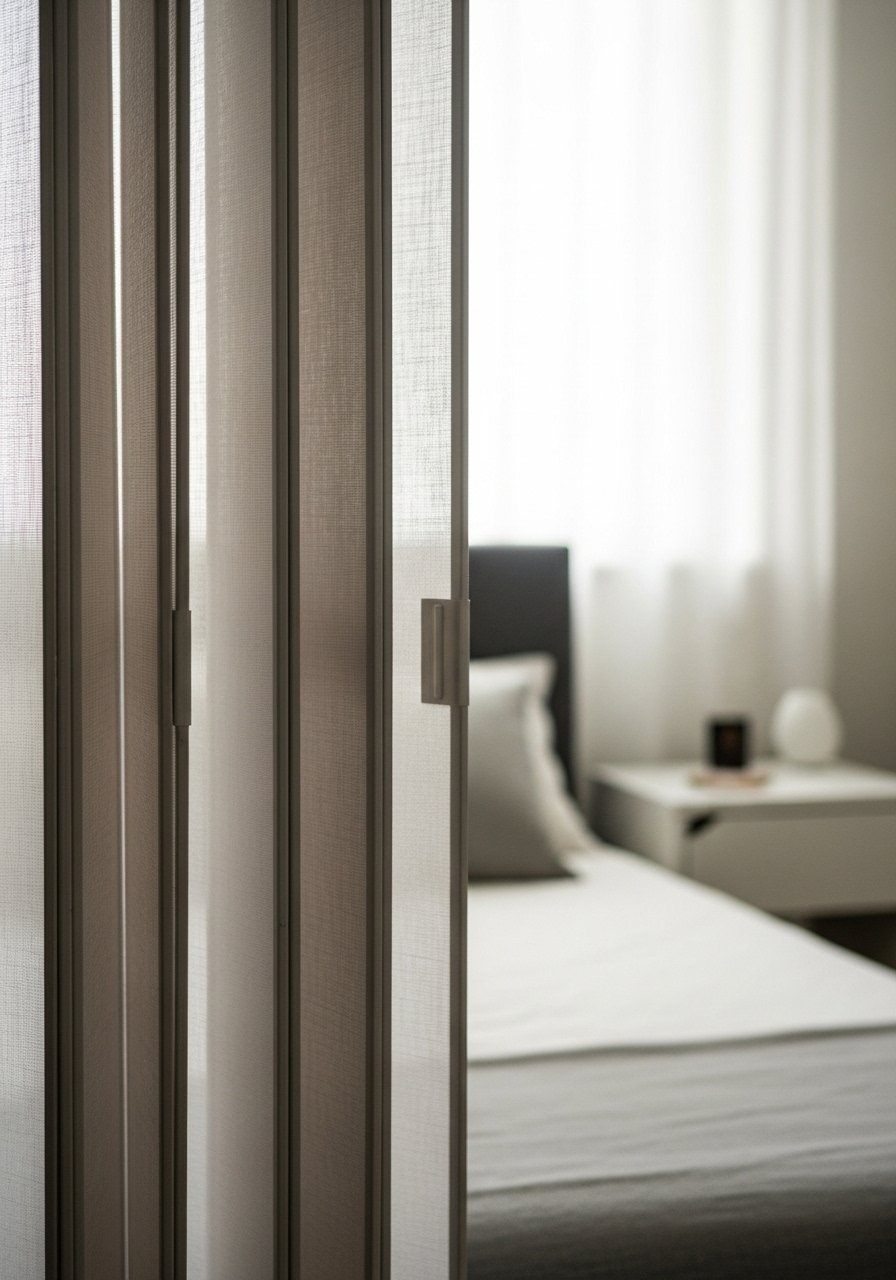
I live in a studio sometimes and used a slim folding screen to separate the bed from the living area. It creates a sense of rooms without walls.
My first screen was clunky. Choosing a lightweight, fabric screen makes the division subtle and airy.
Keep the screen narrow and foldable for flexibility.
What You’ll Need for This Look
21. Thin-Profile Armchair That Doesn’t Dominate
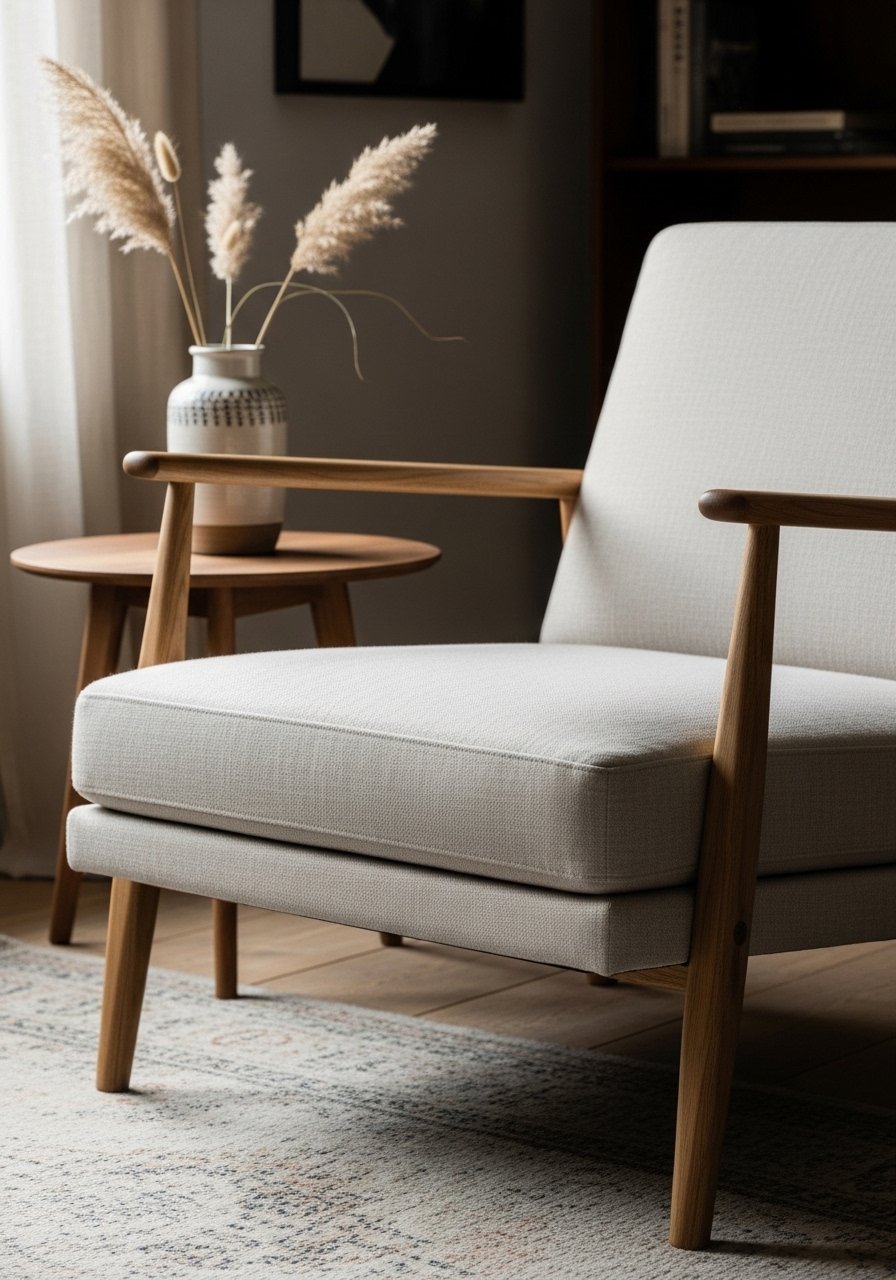
I swapped a bulky recliner for a thin-profile armchair. It’s surprisingly comfortable and gives clear sightlines across the room.
I used to pick plush chairs that visually crowded the space. Slim arms and exposed legs keep things open.
Test seat depth before buying; skinny silhouettes can be shallow.
What You’ll Need for This Look
22. Slim Storage Bench Under the Window
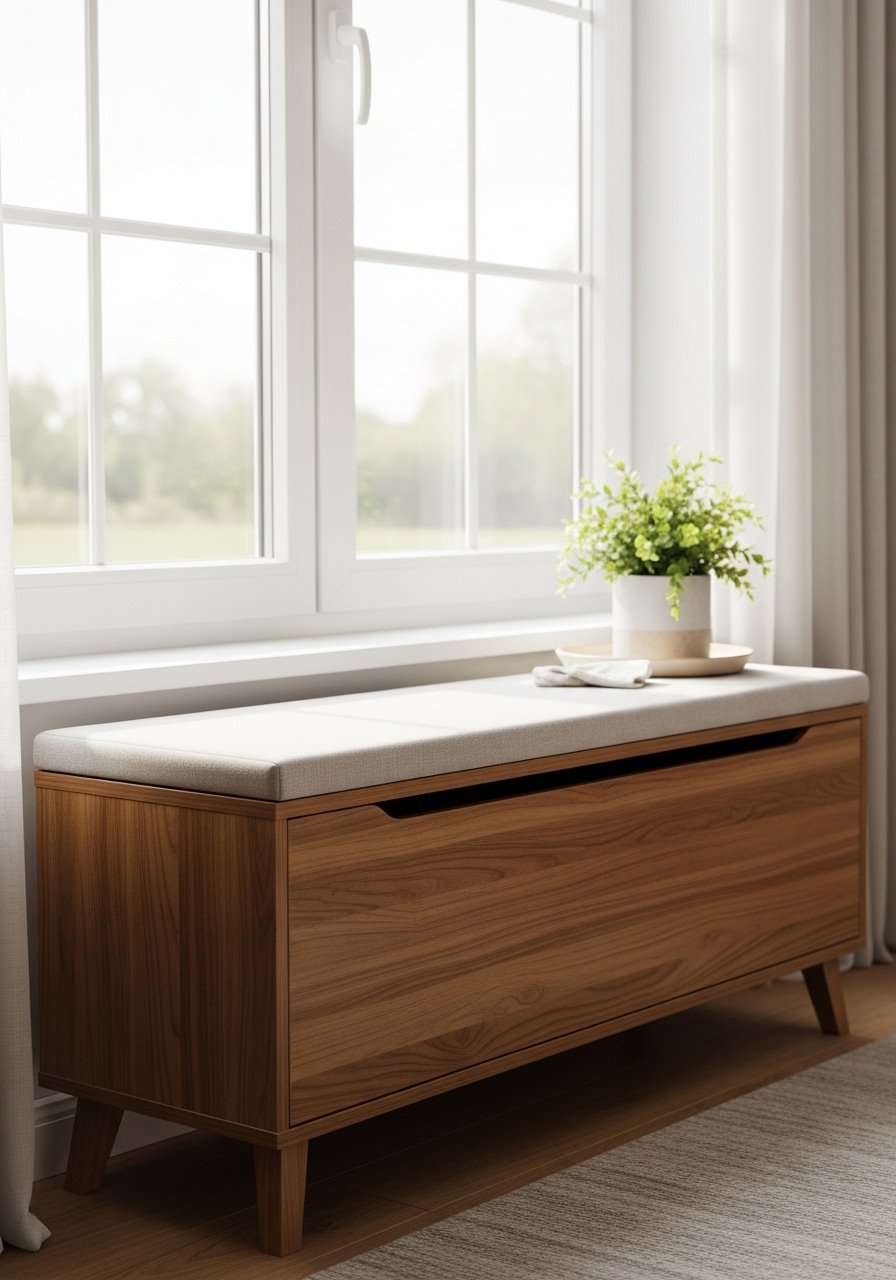
I placed a slim storage bench under the window for extra seating and hidden blankets. It reads tidy and doubles as display space for a plant.
I once used a bulky bench and lost floor room. Keep it narrow so it doesn’t stick into the seating plan.
Soft cushion on top makes it usable as extra seating.
What You’ll Need for This Look
23. Minimalist TV Frame to Tone Down Tech
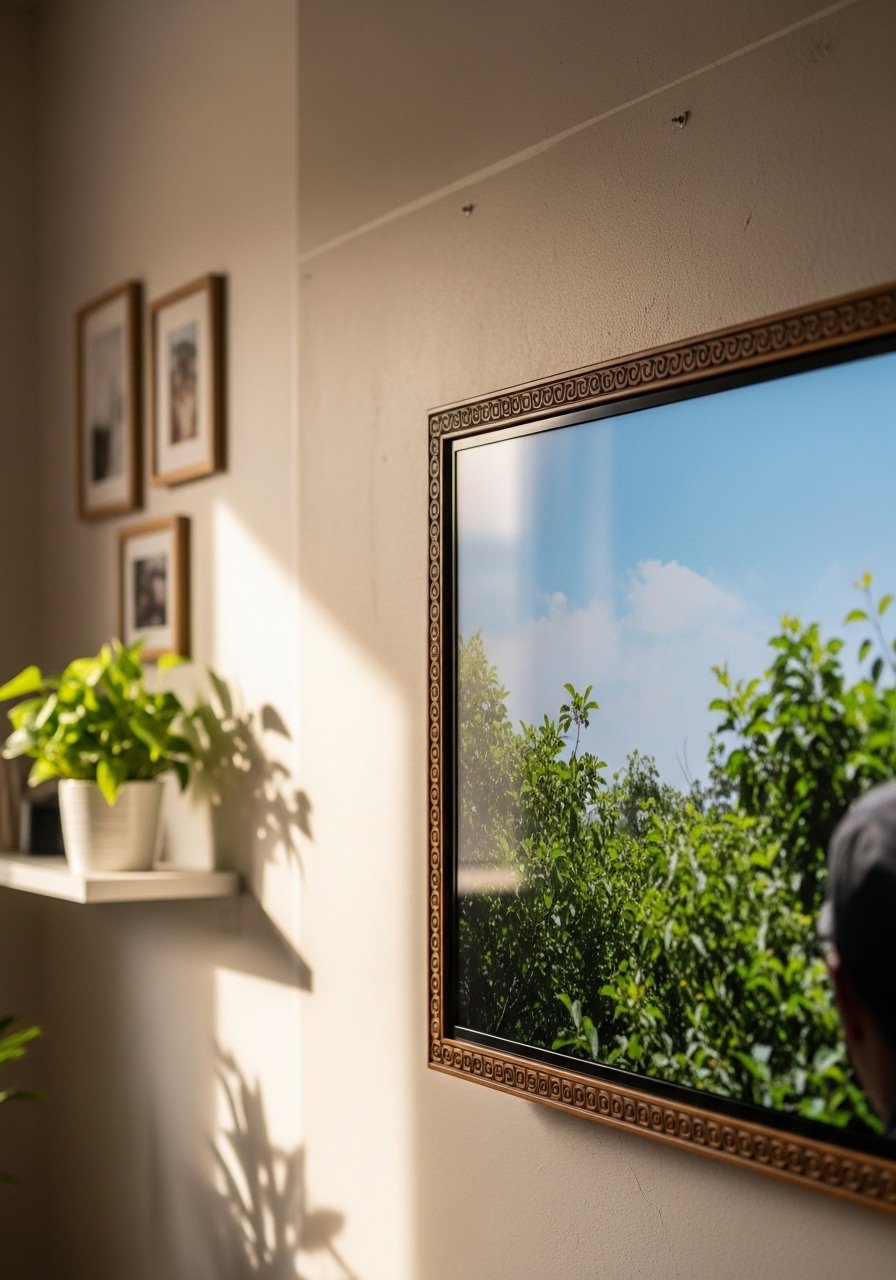
I added a simple frame around the TV to make it read like art. It softens the tech and integrates it with the room.
My first idea was to hide the TV; that felt dishonest. Framing makes it part of the design without fuss.
Keep the frame thin and matte to avoid glare.
What You’ll Need for This Look
24. Thin Rug Runner to Define a Walkway
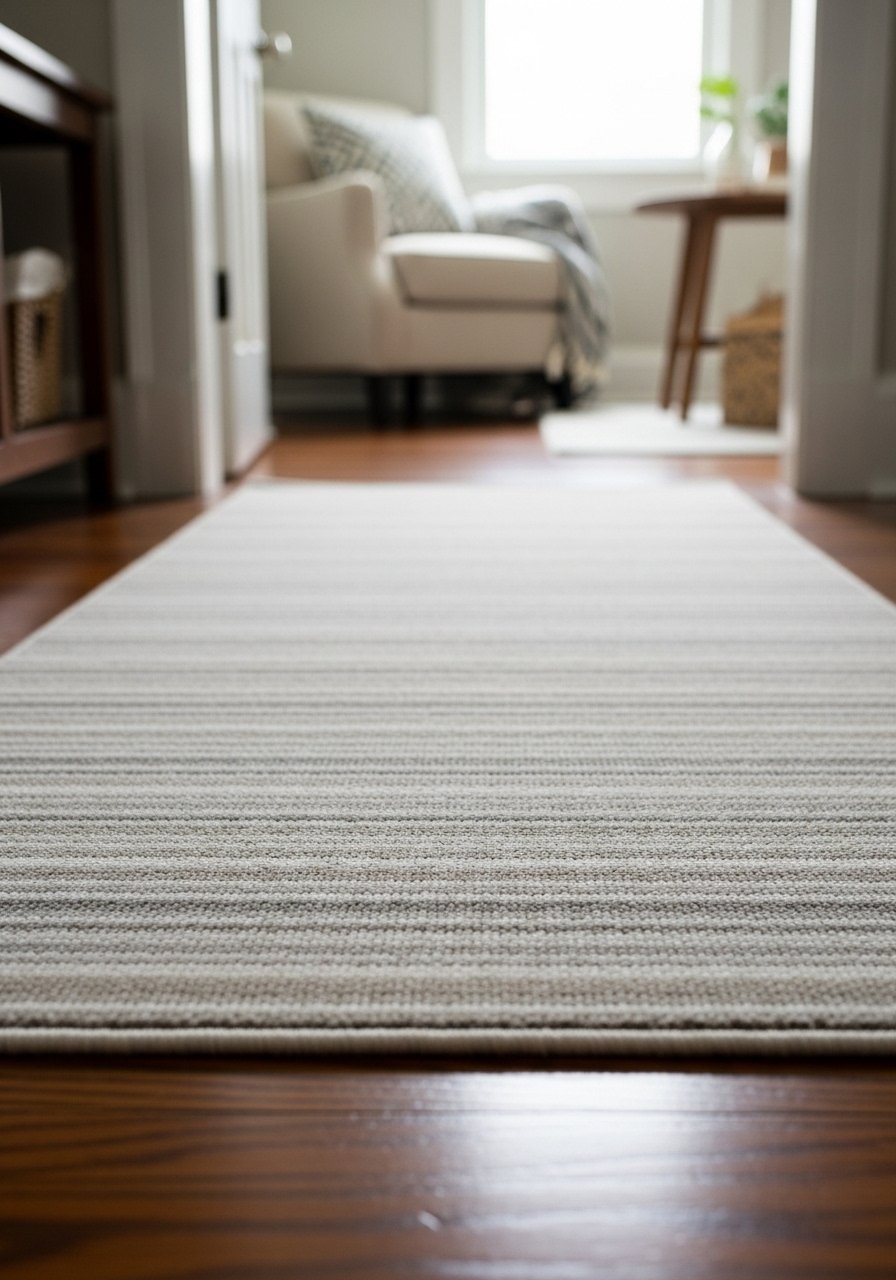
I use a runner to guide traffic through my small living room. It protects floors and subtly divides zones without a barrier.
I once tried a wide runner and it made the room look chopped up. Narrow works better for flow.
Pick a washable material for high-traffic areas.
What You’ll Need for This Look
25. Mounted Floating Desk That Folds Away
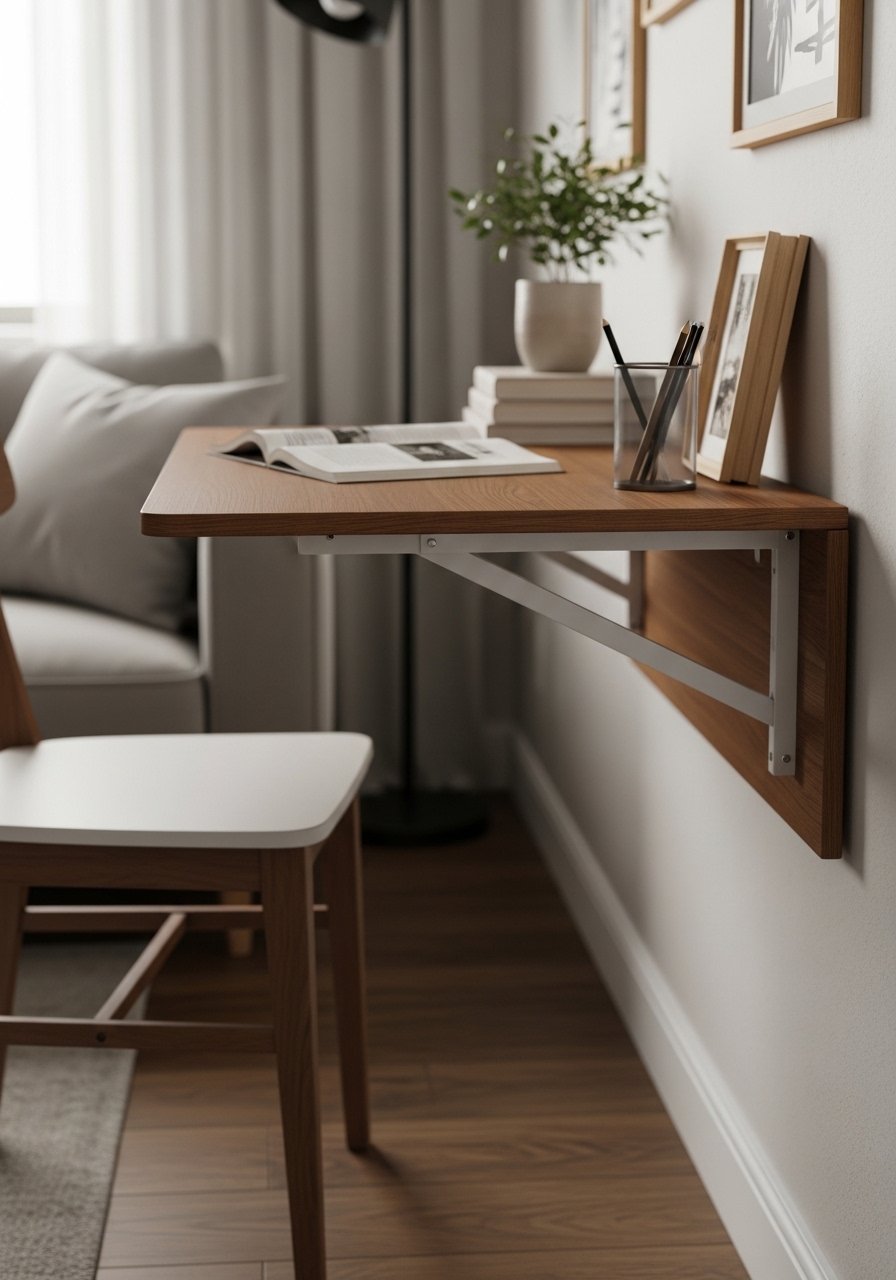
I needed workspace but not a full desk. A folding wall-mounted desk folds up and disappears when not in use. It keeps the room uncluttered.
My first desk was heavy and permanent. Folding saves space and keeps the living area usable.
Ensure the bracket is rated for the weight you’ll use.
What You’ll Need for This Look
26. Neutral Palette with One Deep Accent Color
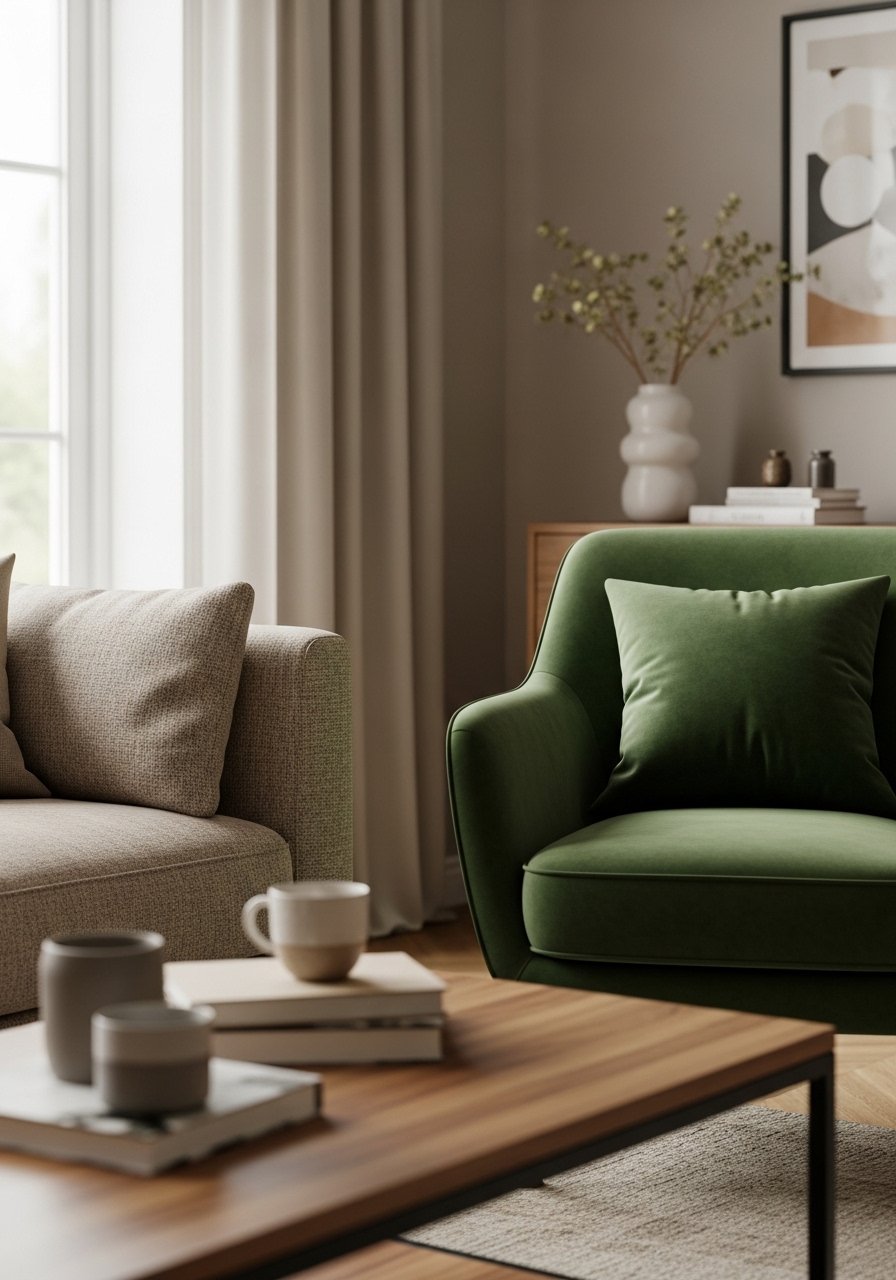
I learned a neutral base with one deep accent color reads calm and intentional. On a small scale, the accent becomes a focal point without noise.
I once painted a whole wall bold and regretted it. One piece of color feels easier to live with.
Pick an accent you love and repeat it in small doses.
What You’ll Need for This Look
27. Slim Ceiling Fixture to Free Floor Lamps
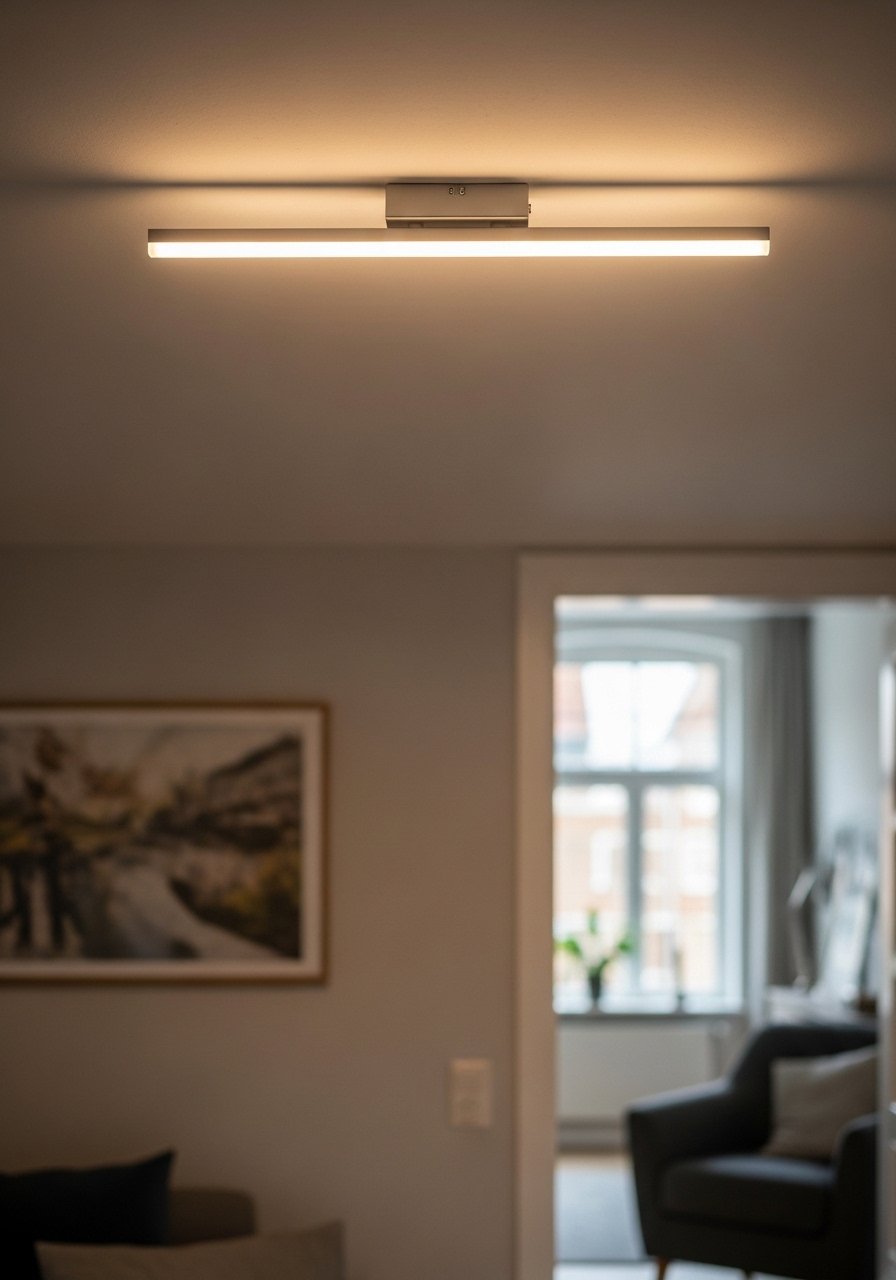
I replaced clunky floor lamps with a slim ceiling fixture. It frees floor space and provides even light. The room reads neater and more intentional.
I once stacked plug-in lamps and it felt messy. A central fixture simplifies everything.
Choose a dimmable option to set mood without multiple lamps.
What You’ll Need for This Look
Final Thoughts
I’ve pared rooms down slowly, often by fixing one mistake at a time. You don’t need to do every idea.
Pick one change, try it, and live with it for a month. Small choices add up to a calm, clean room you’ll actually use.
Leave a Reply