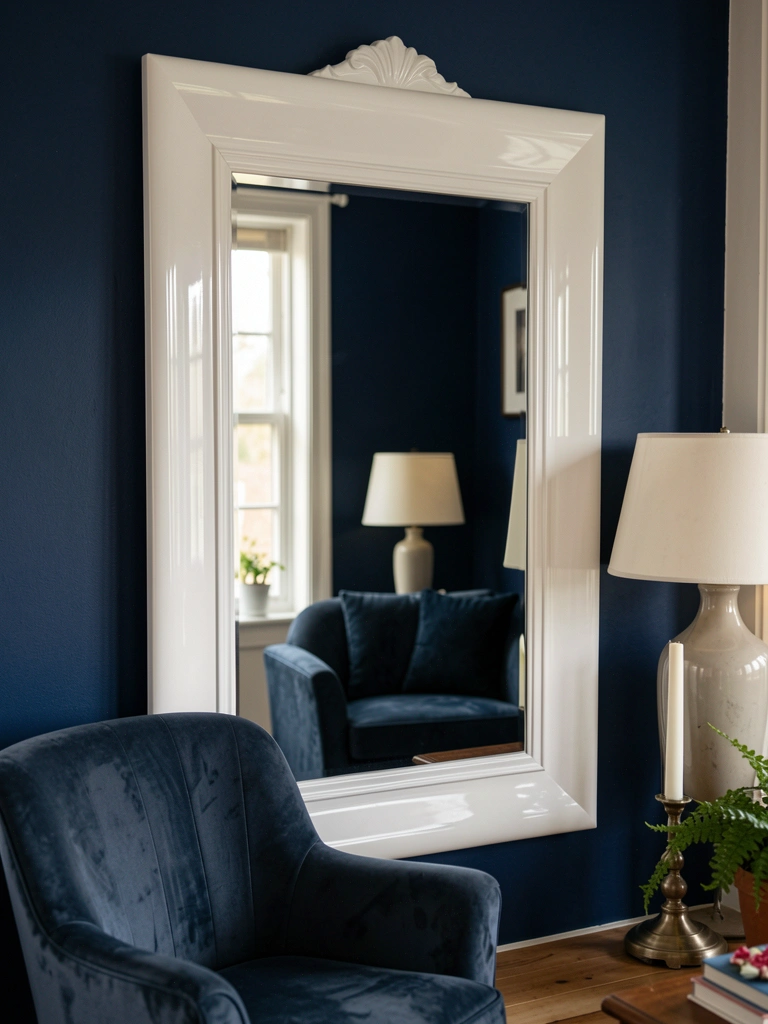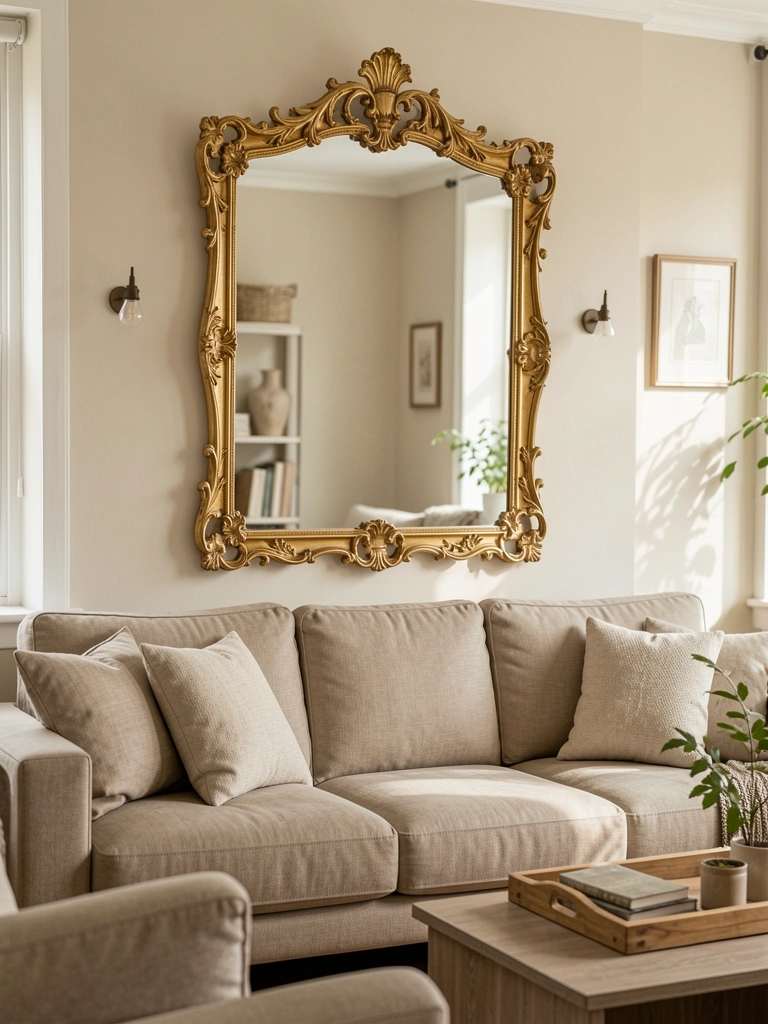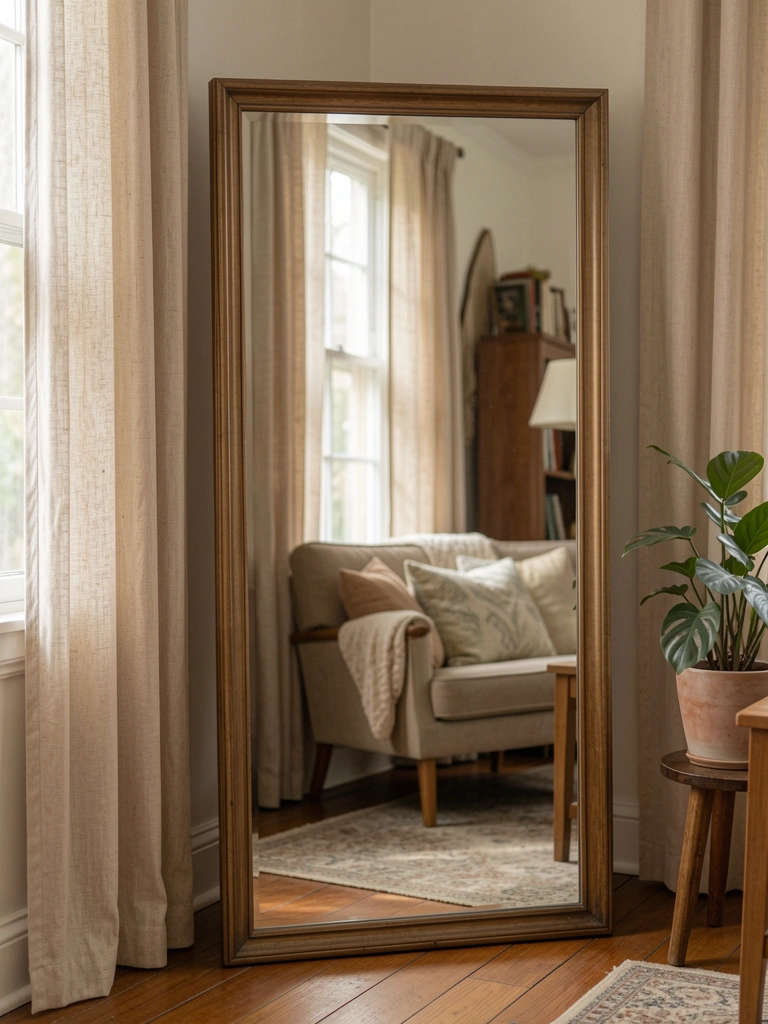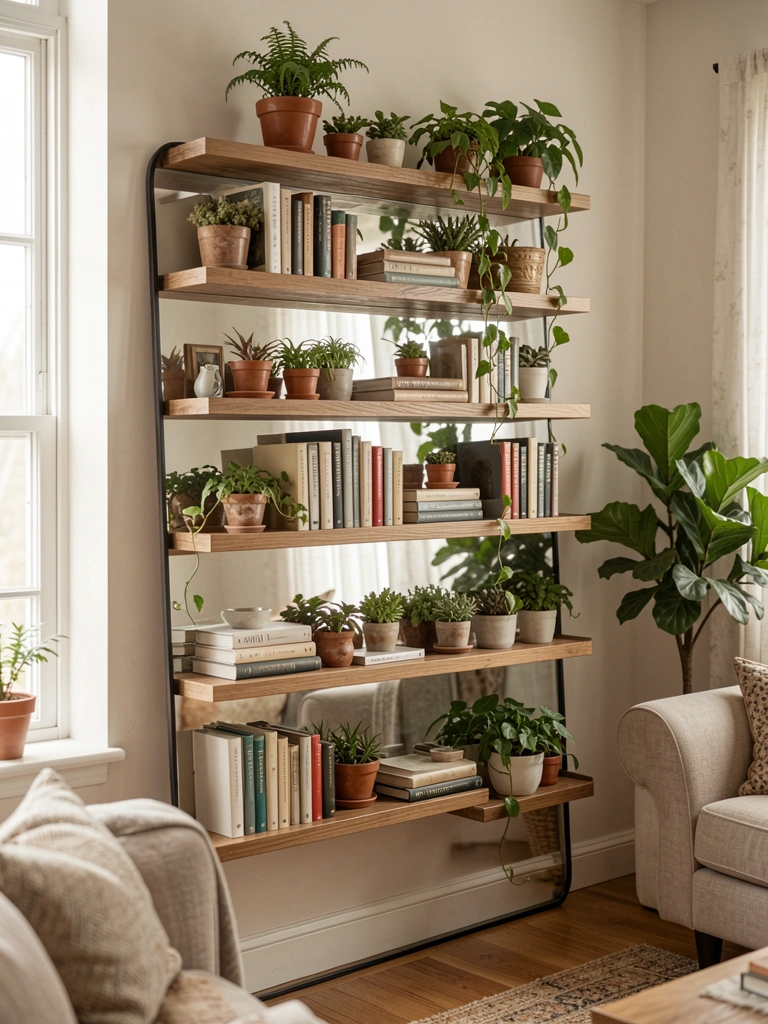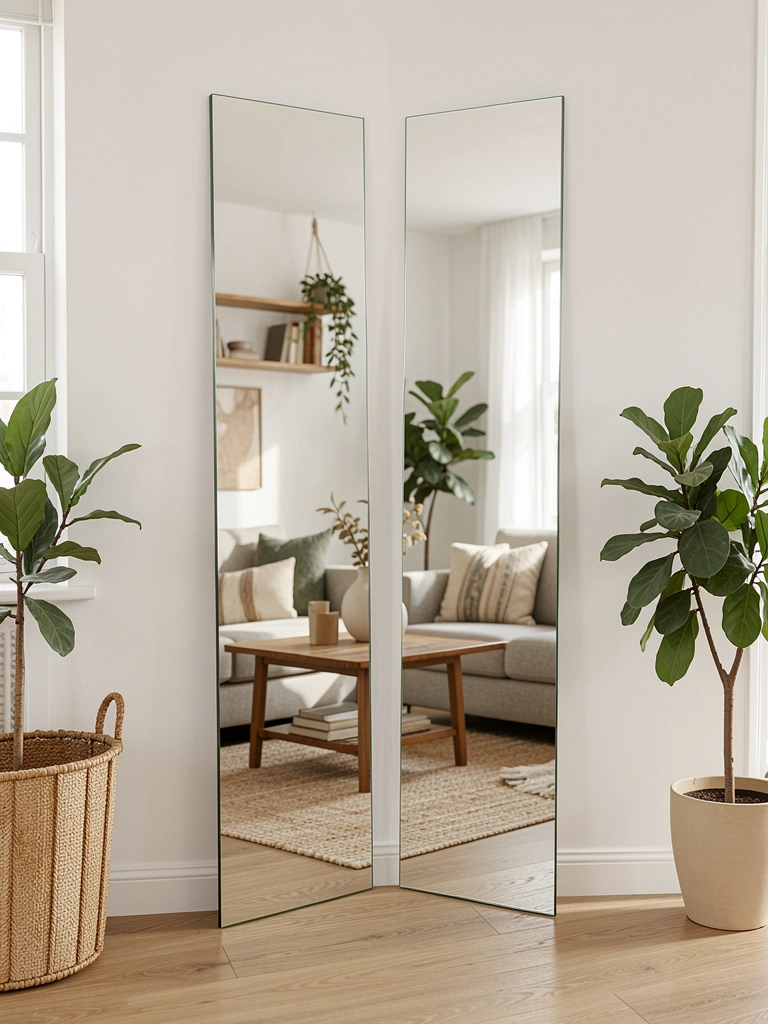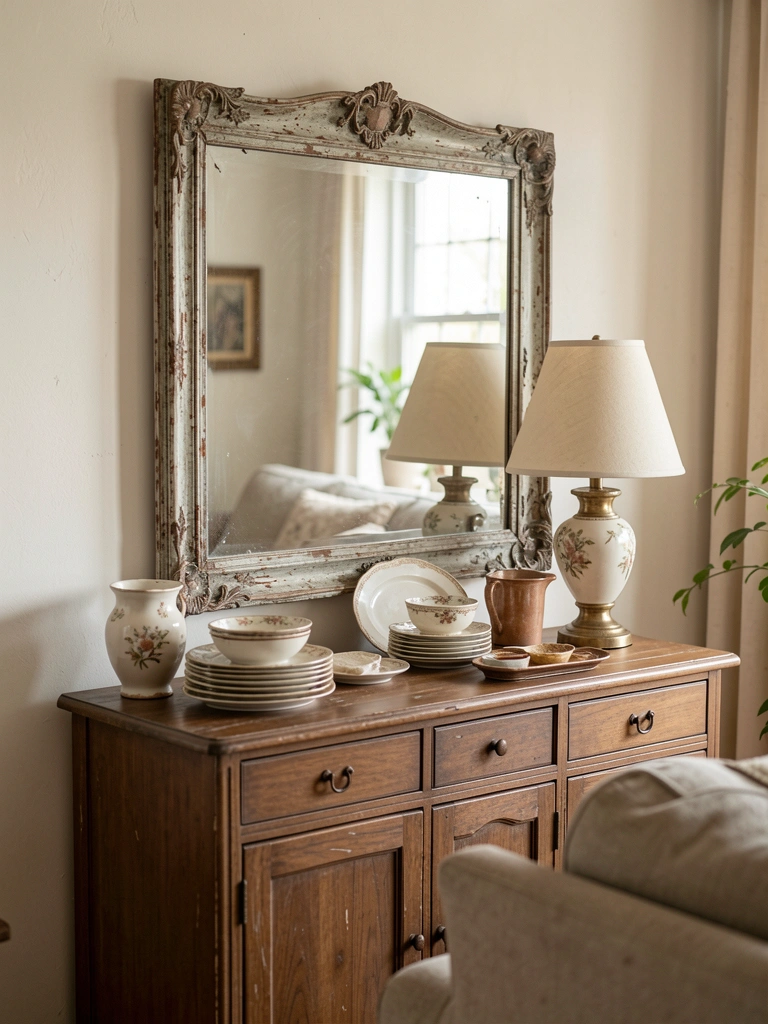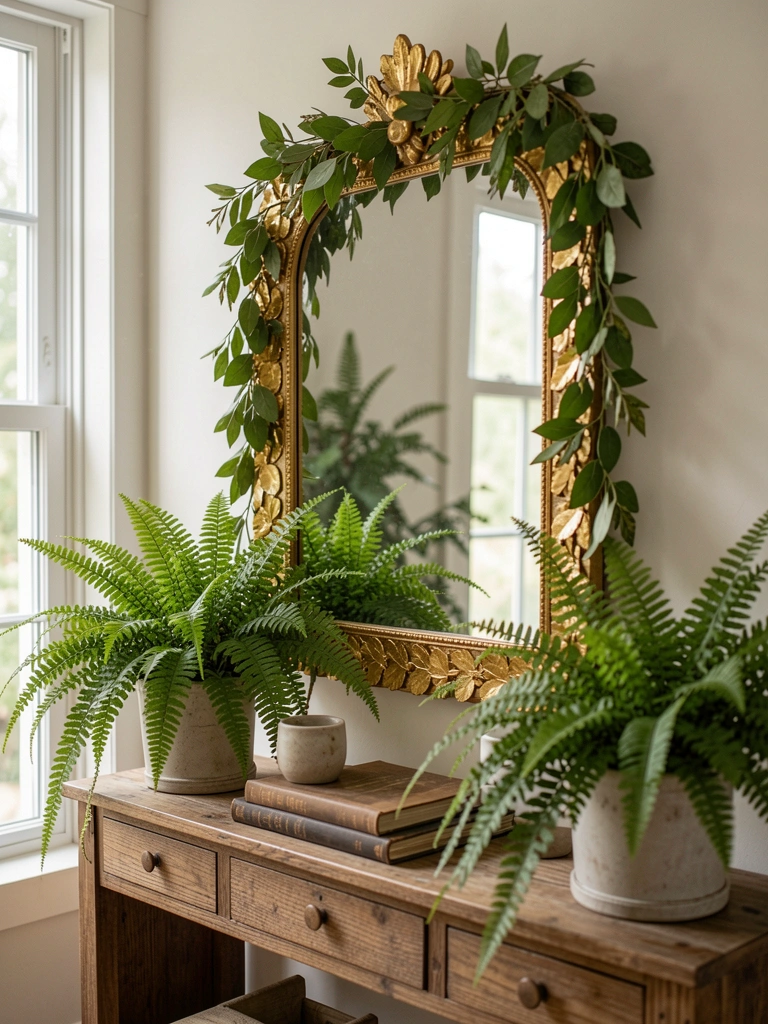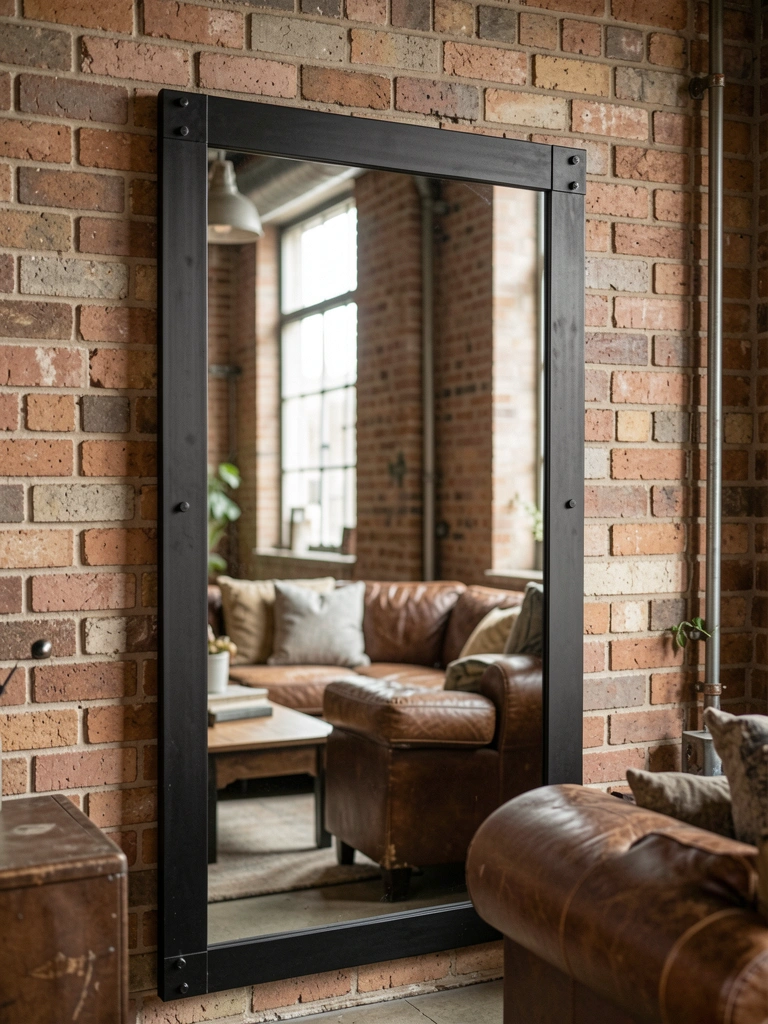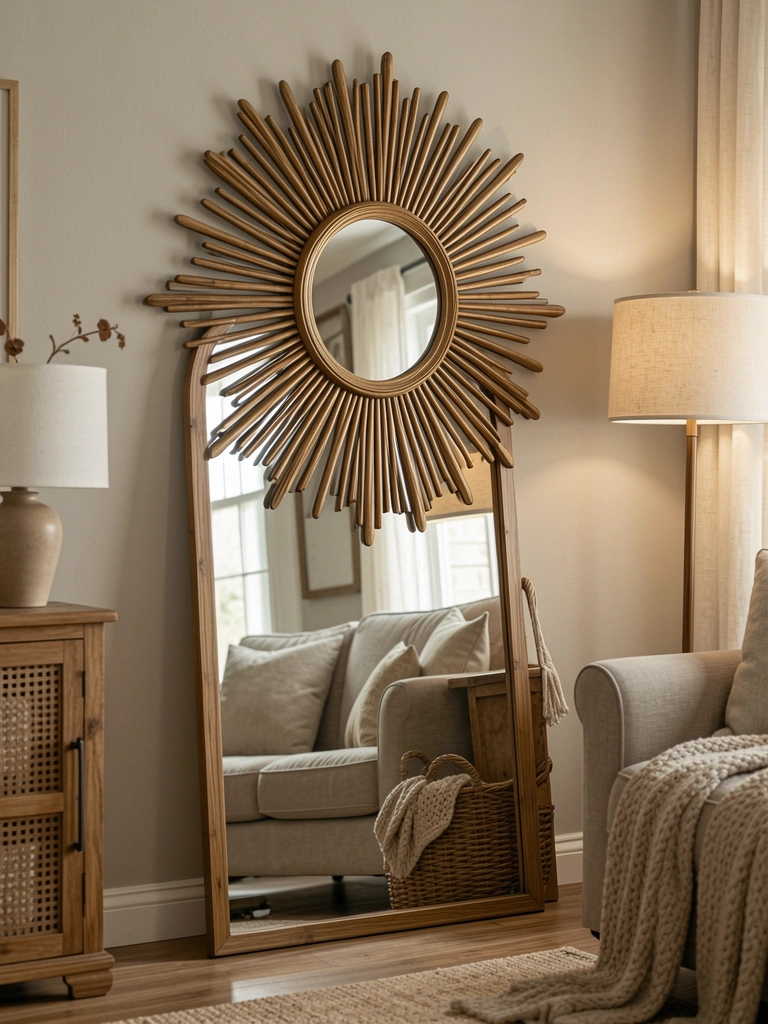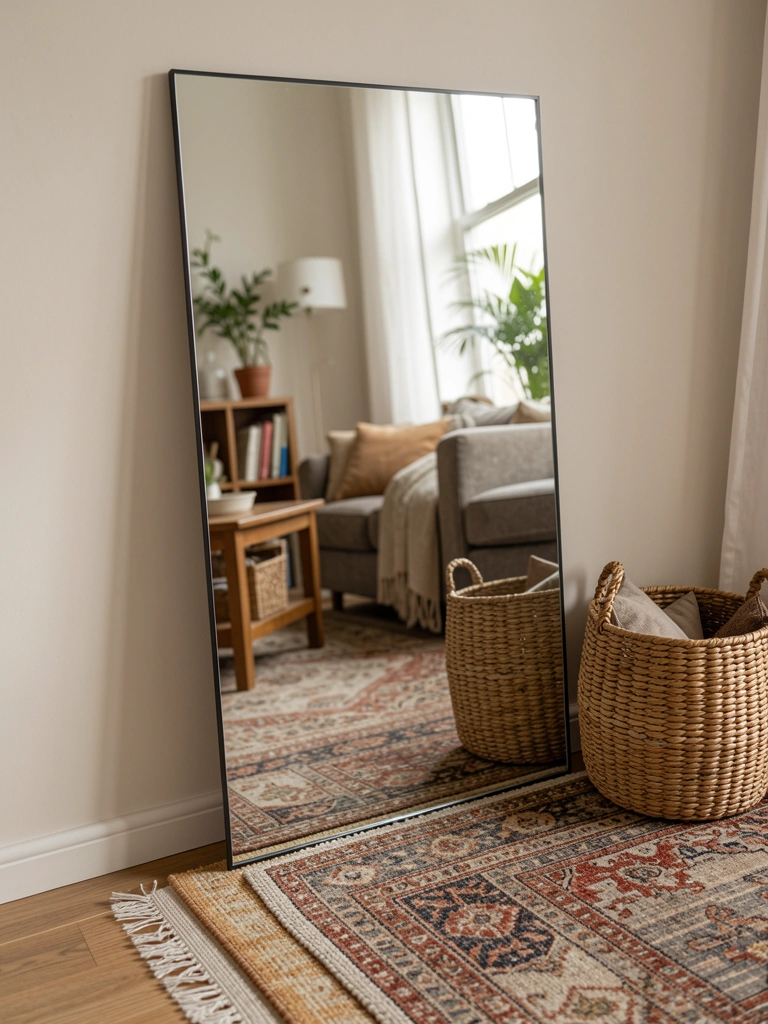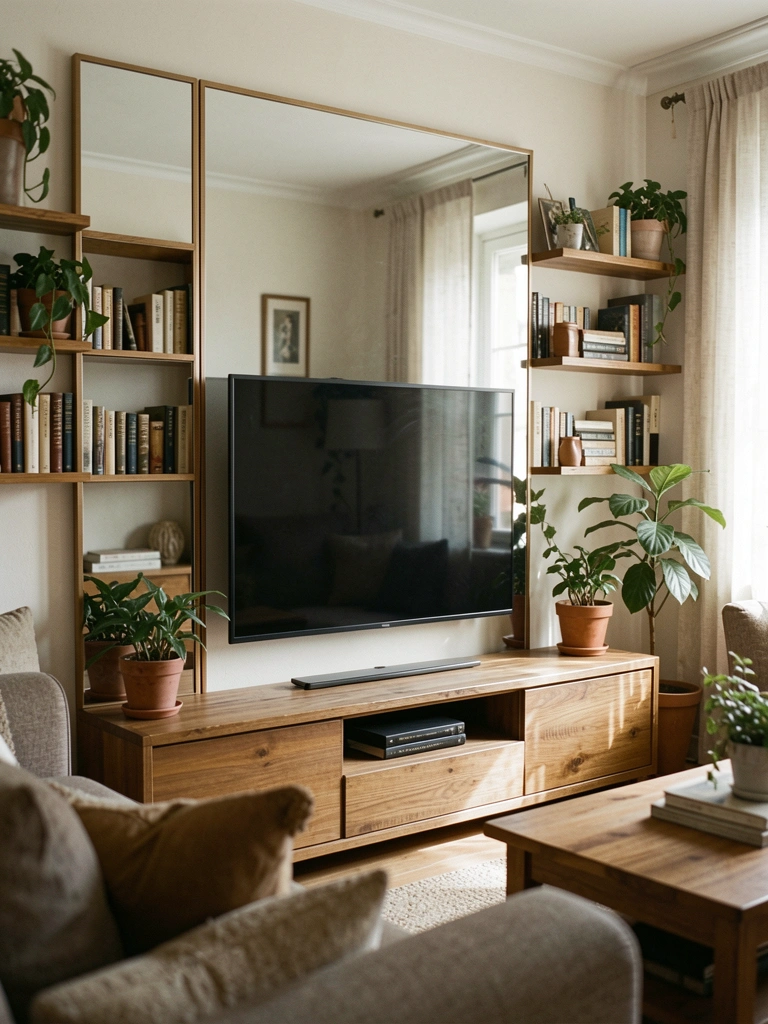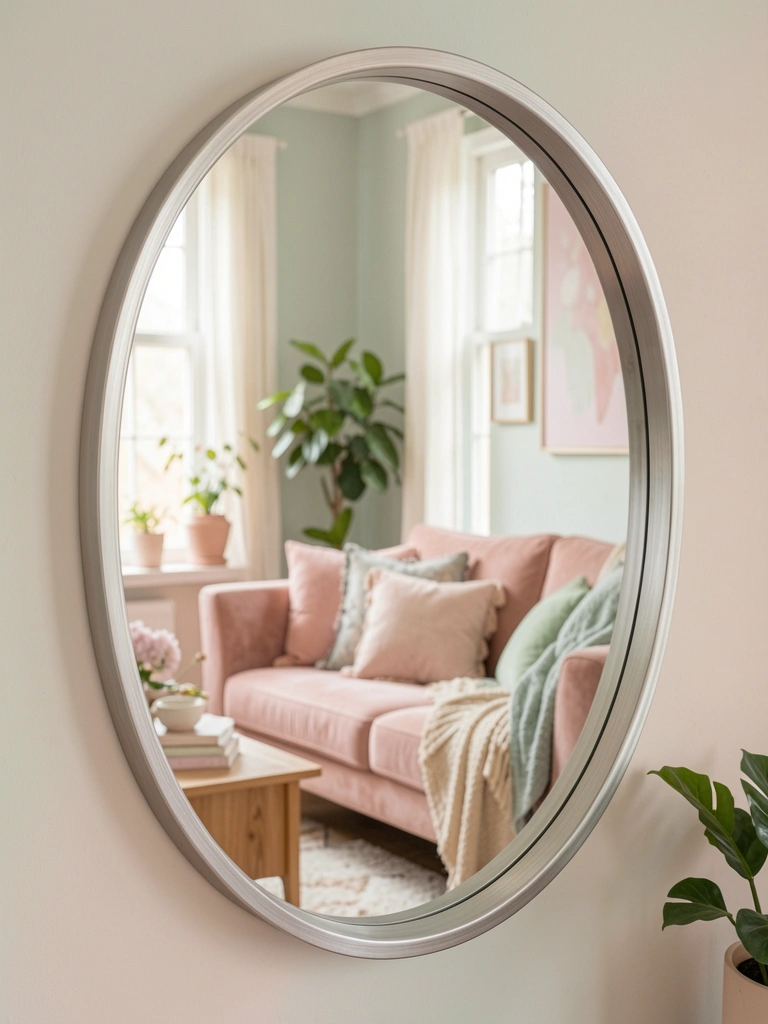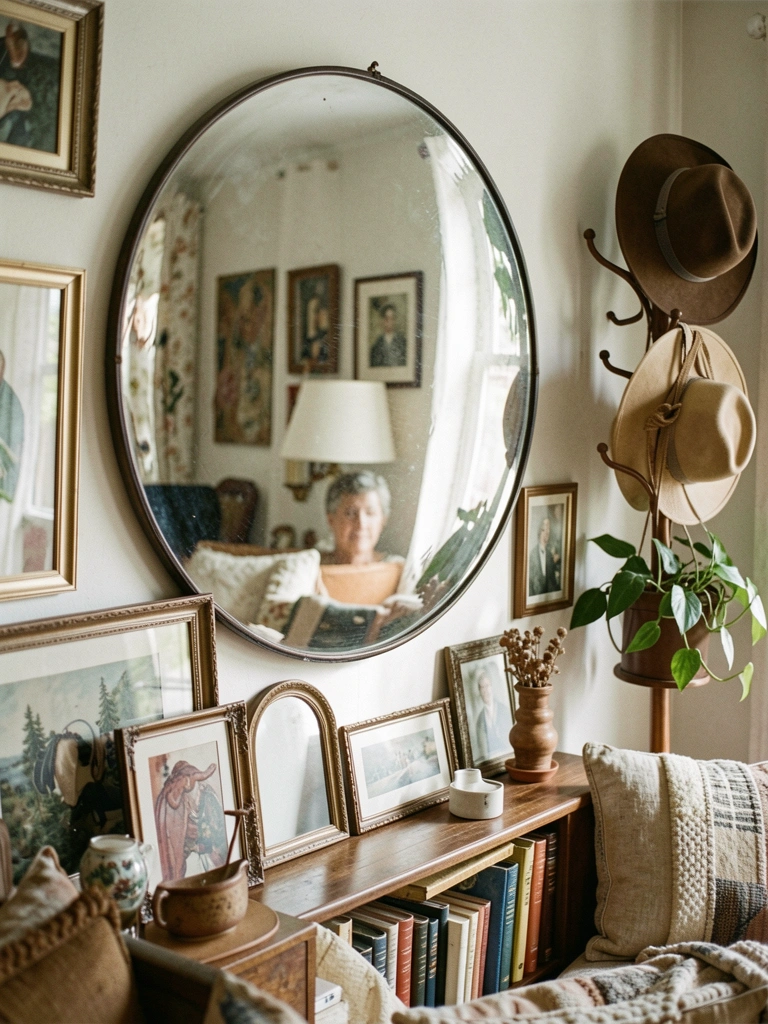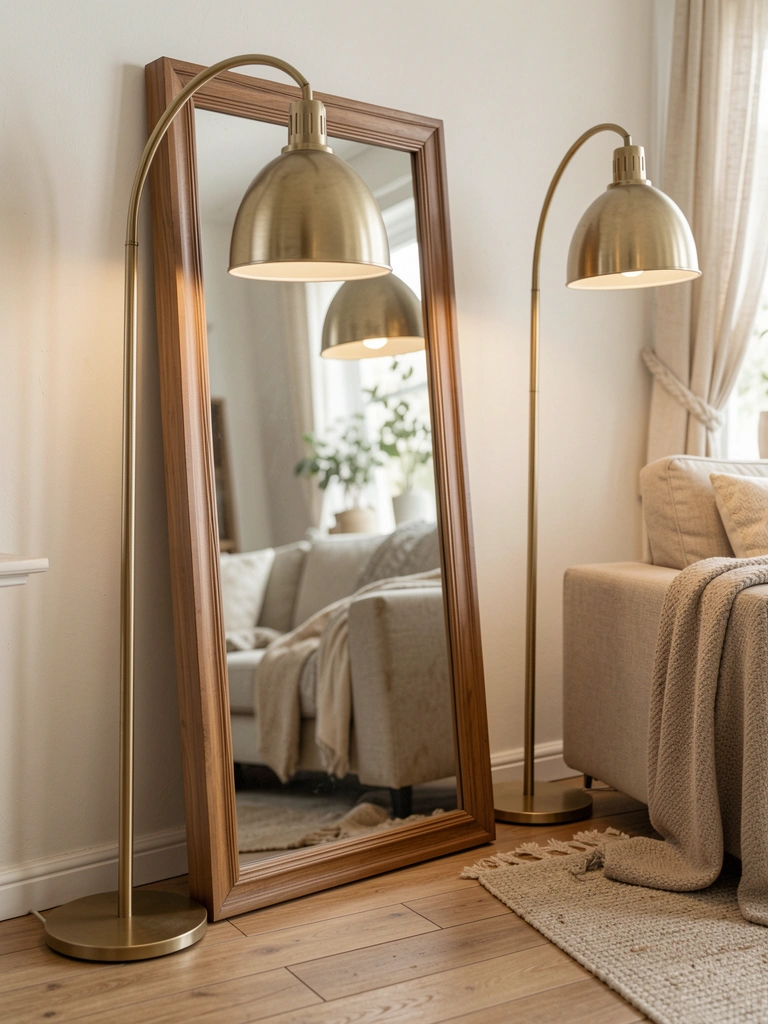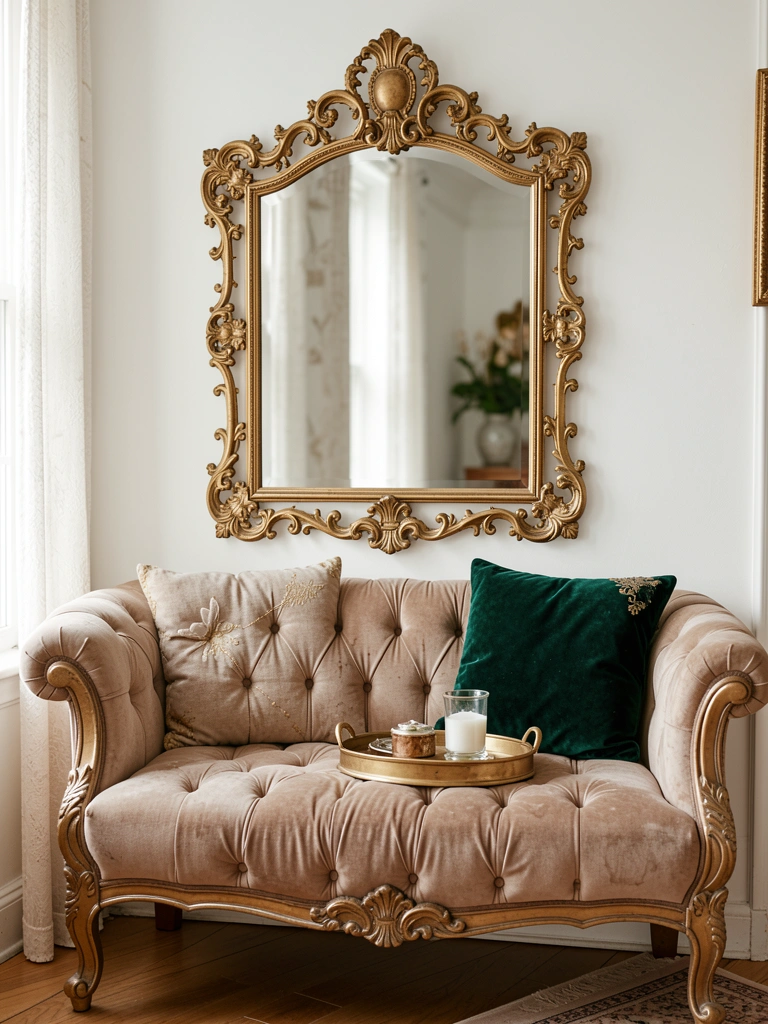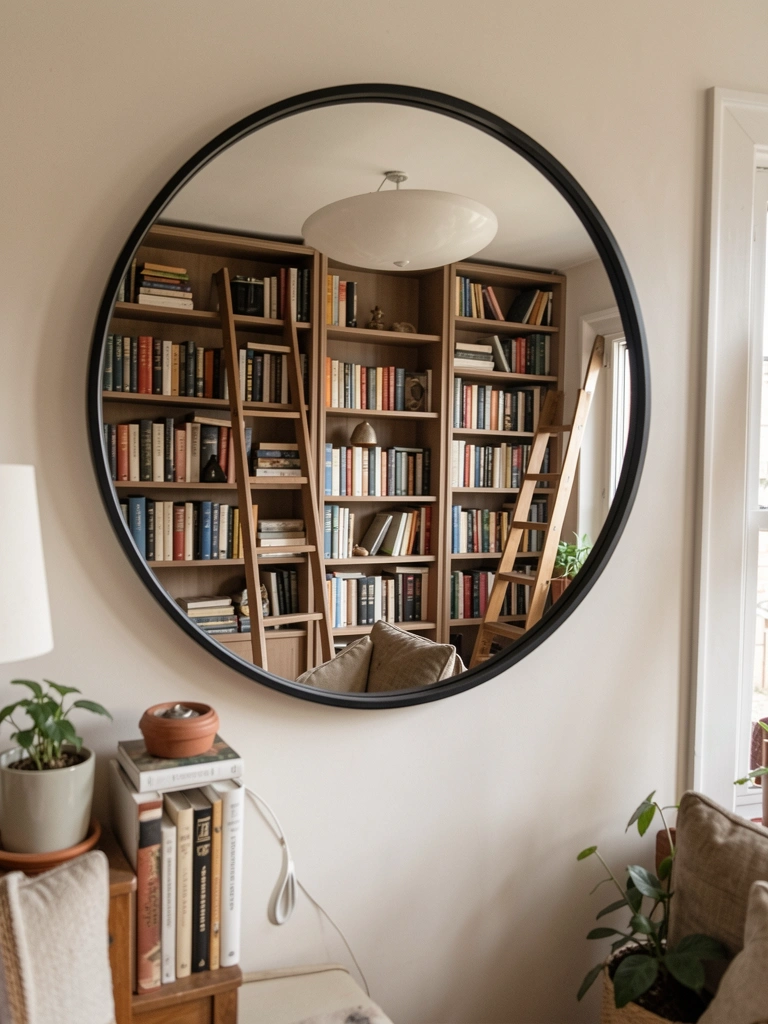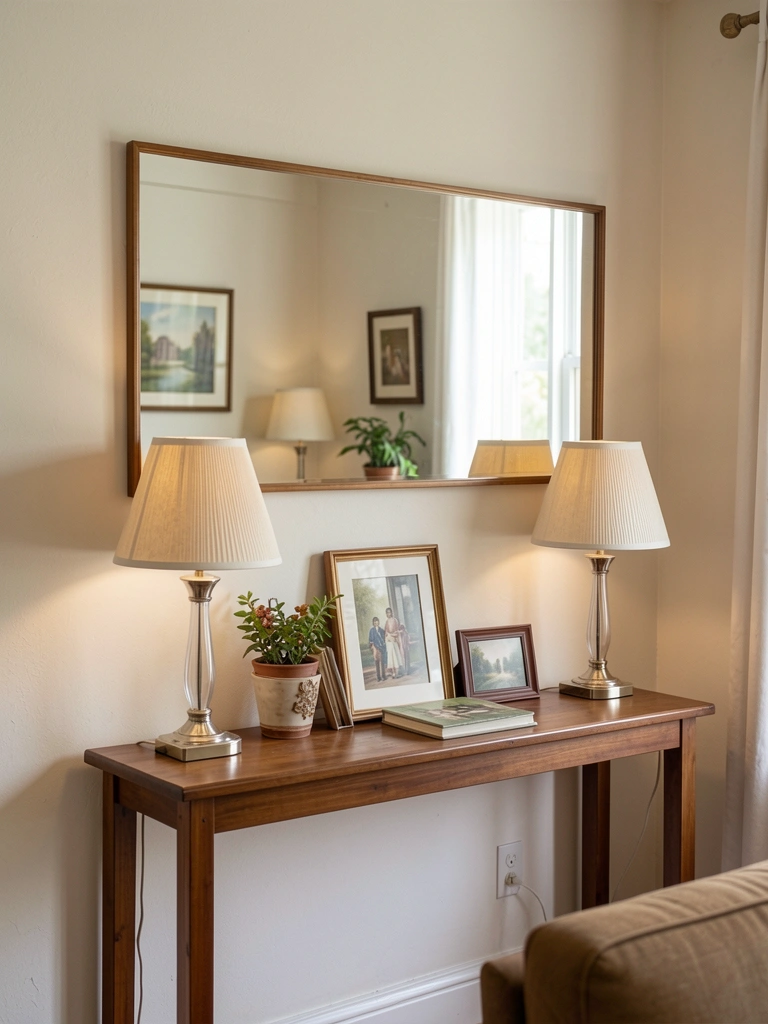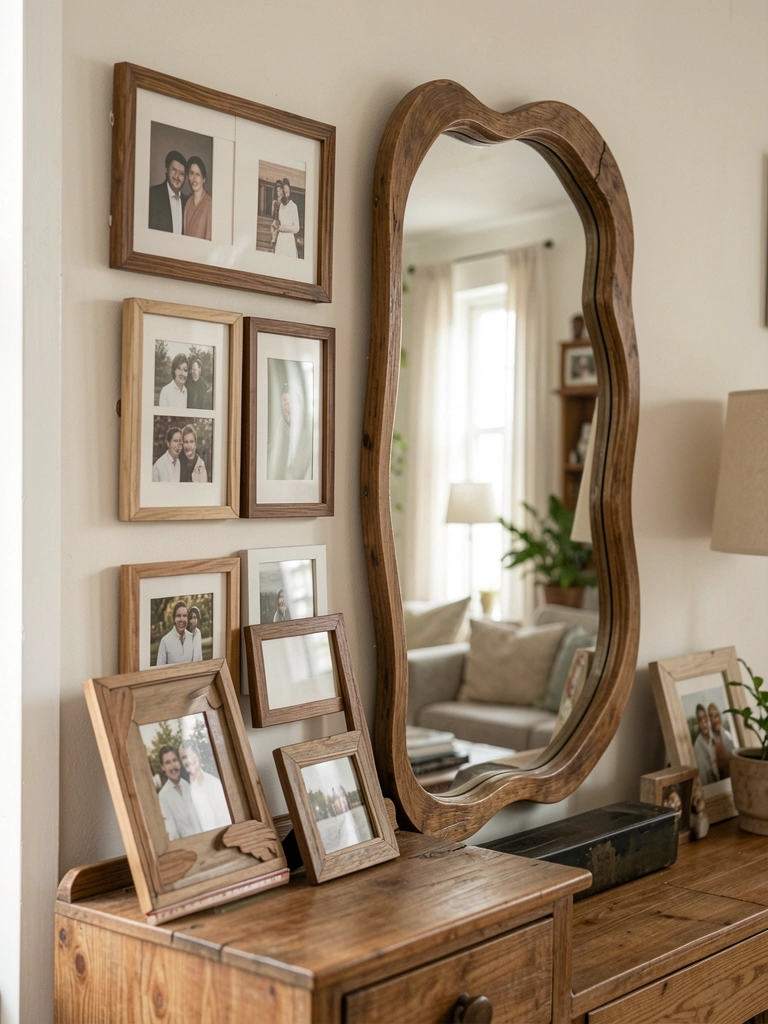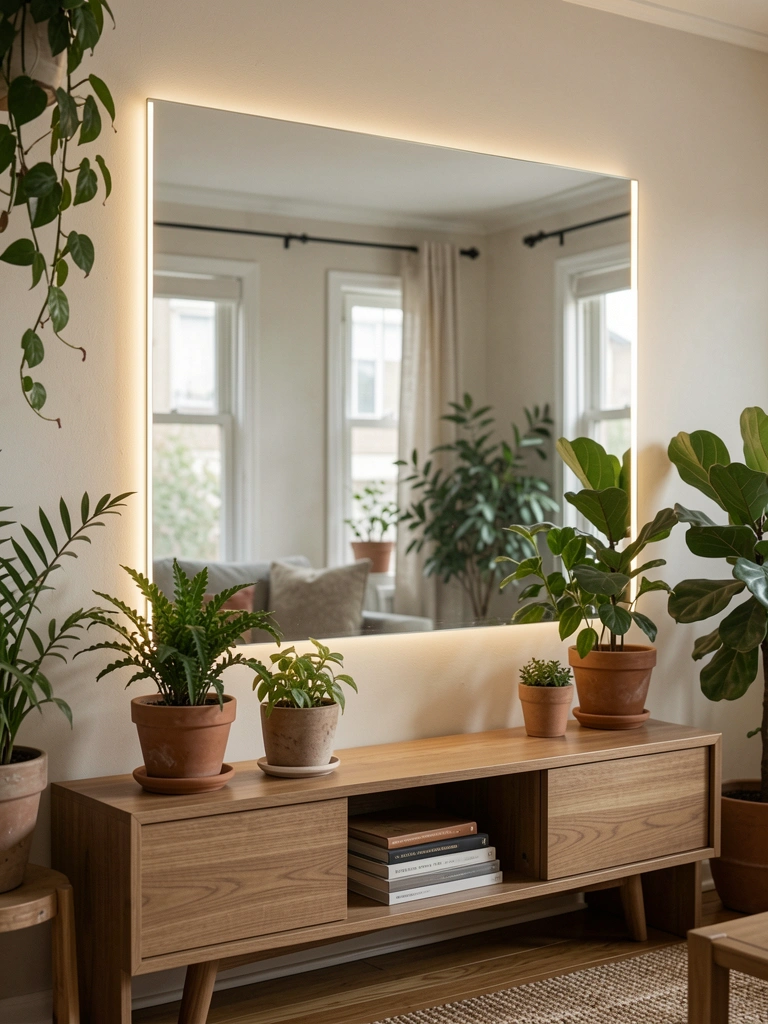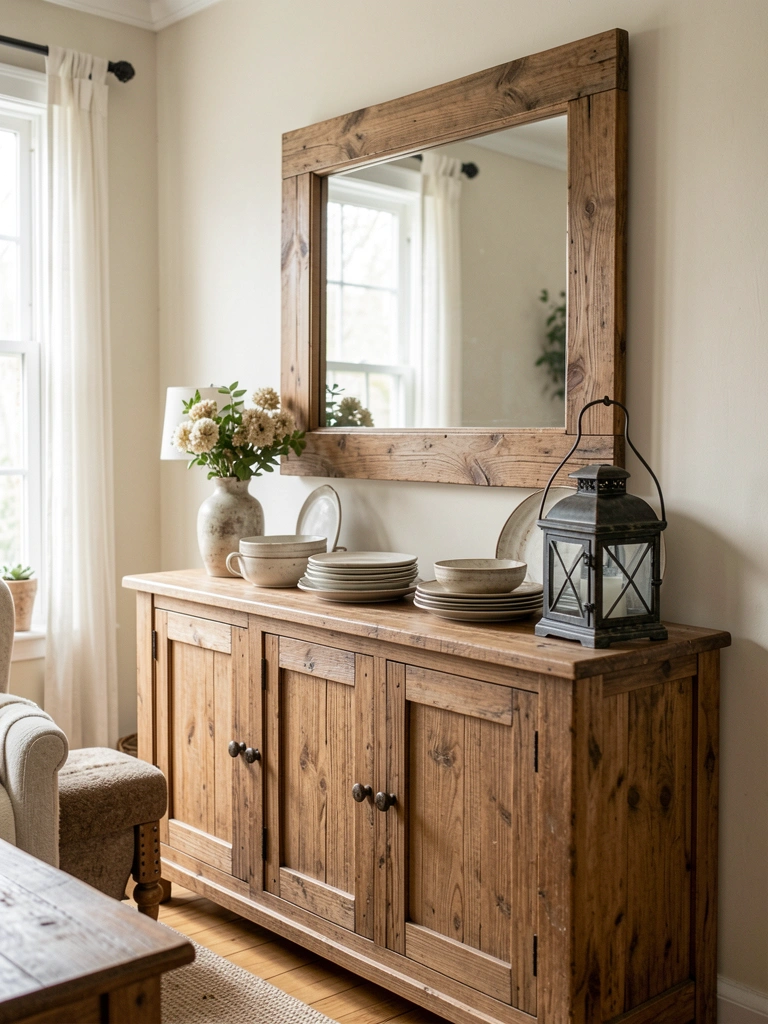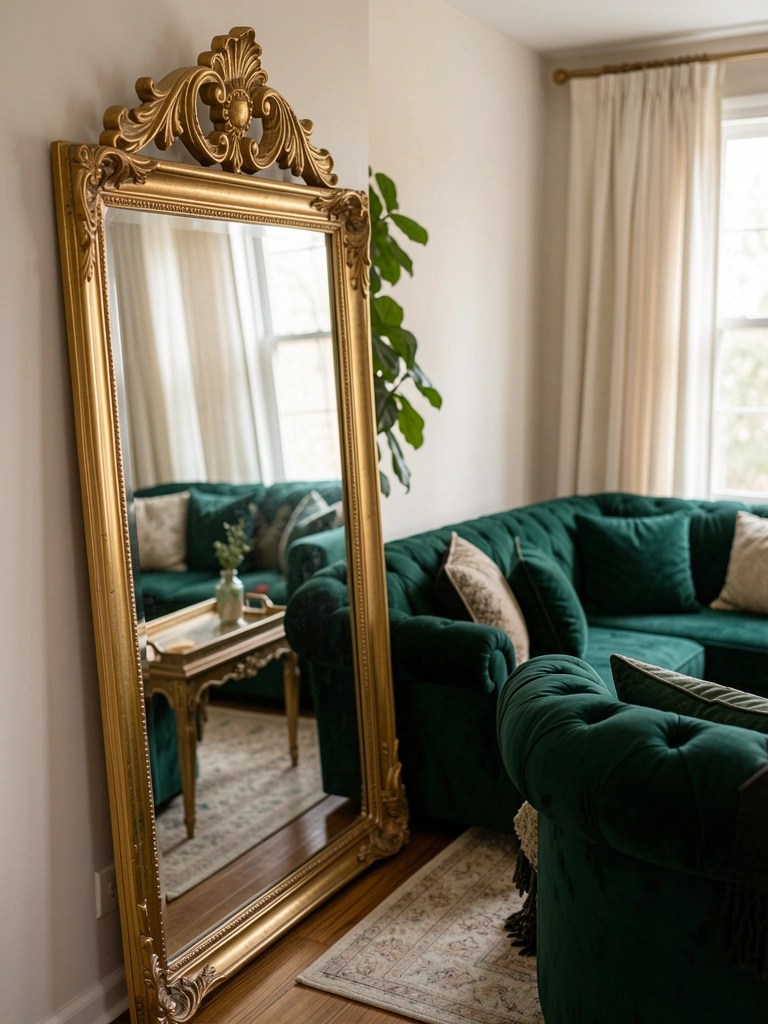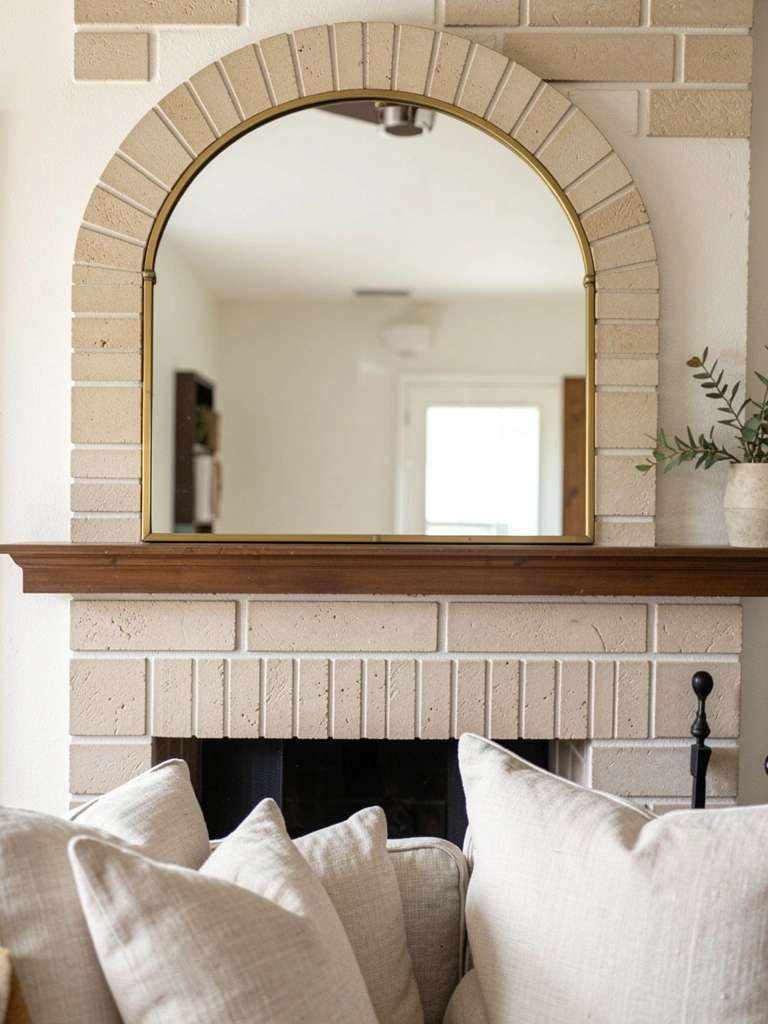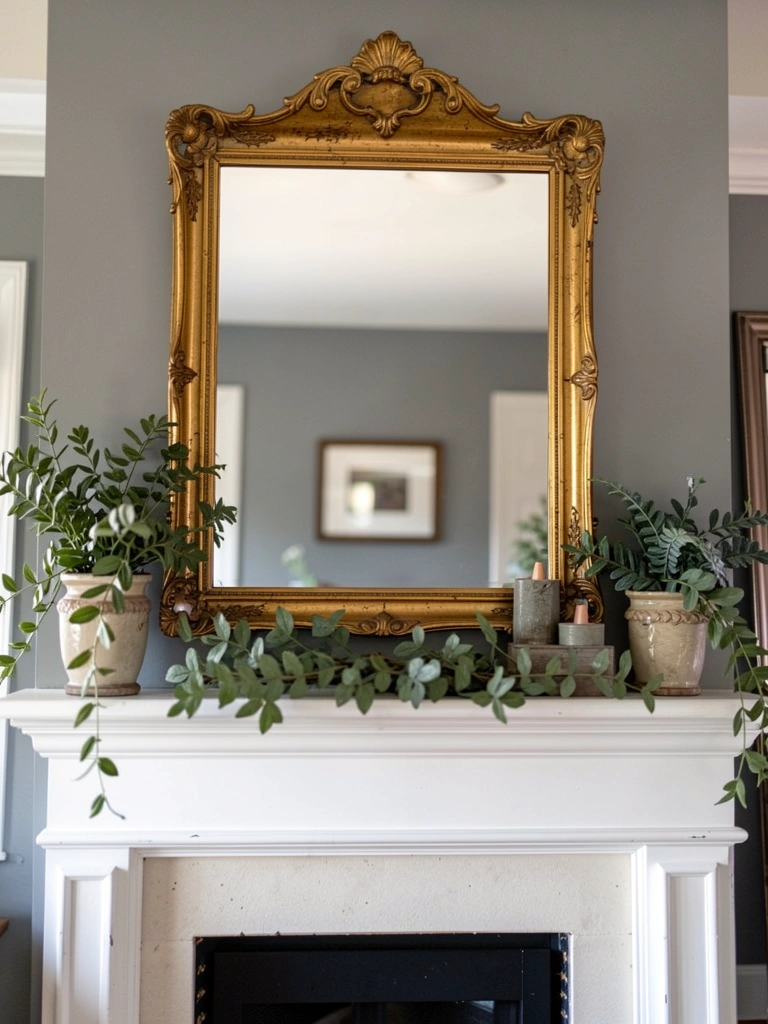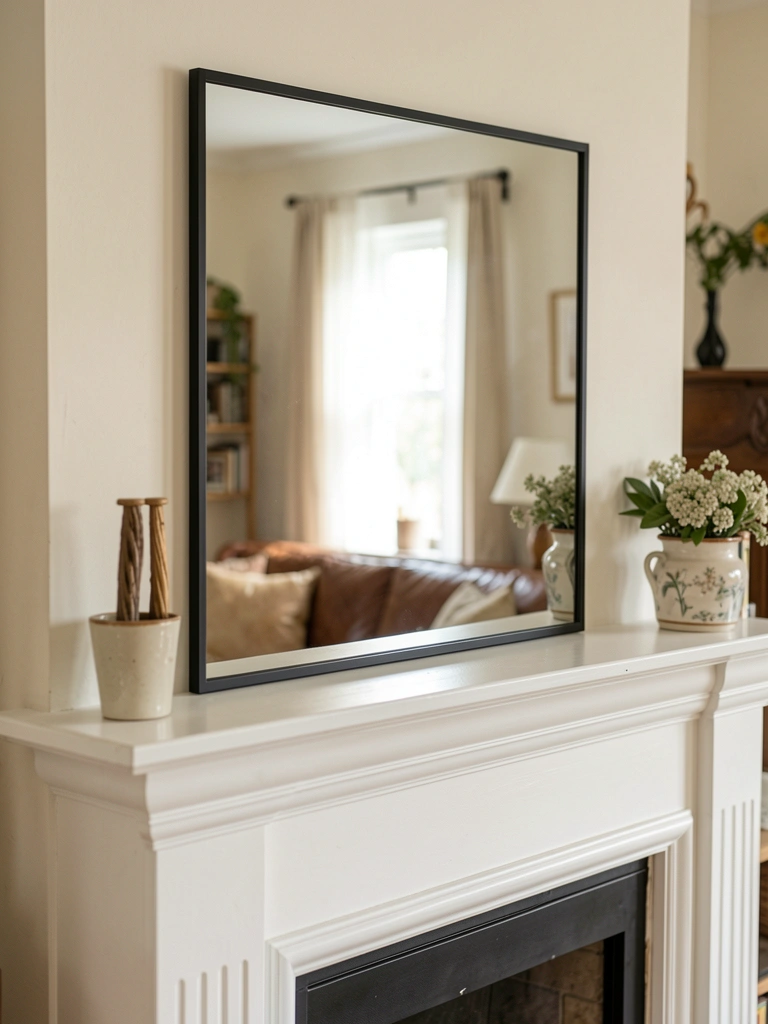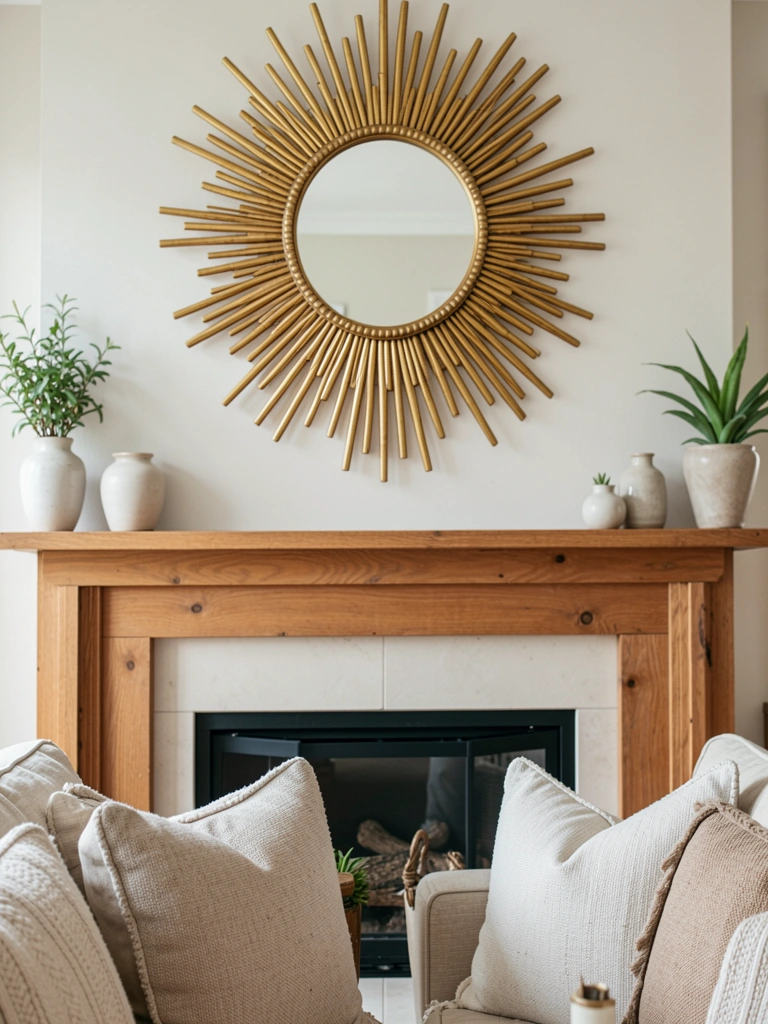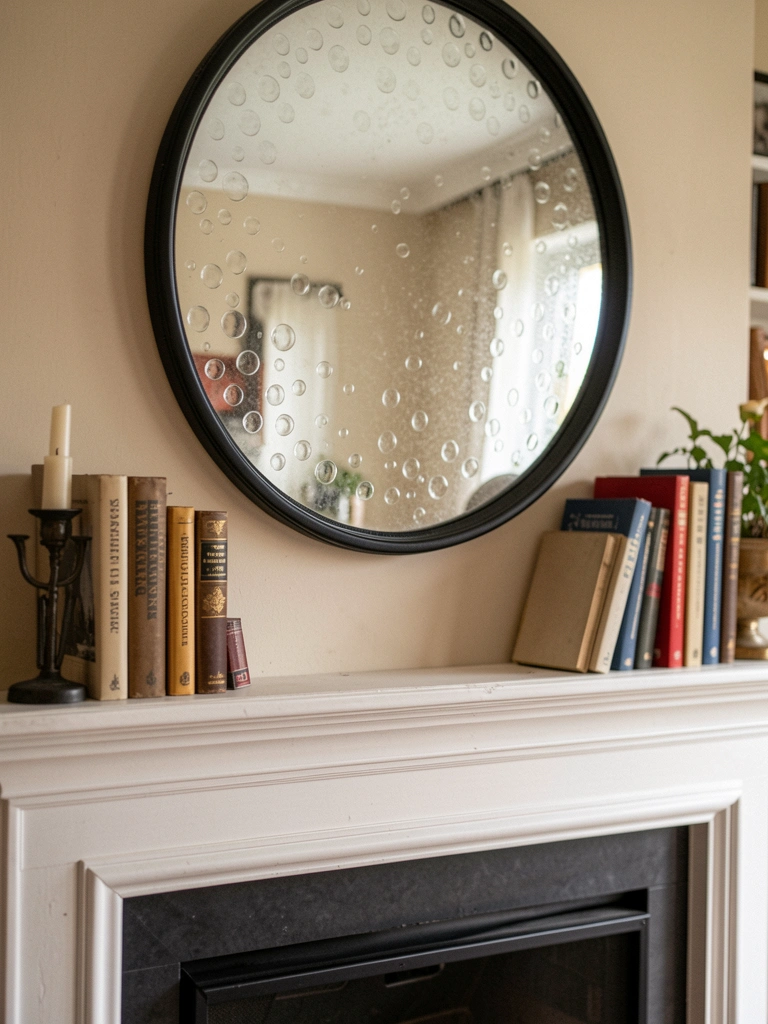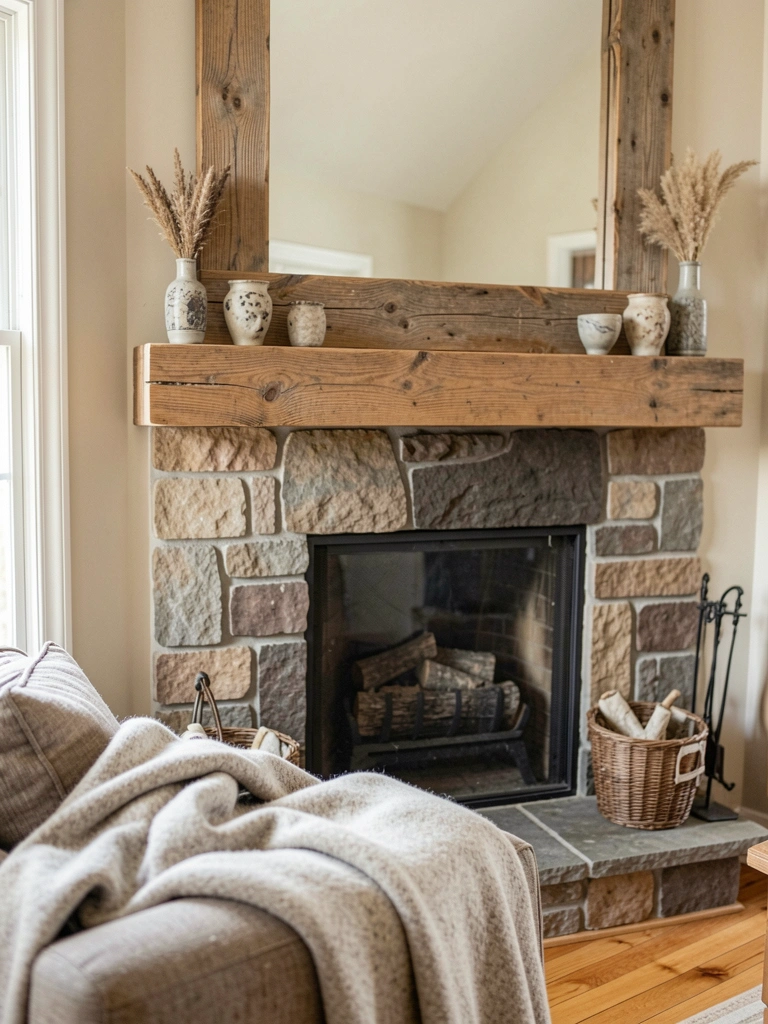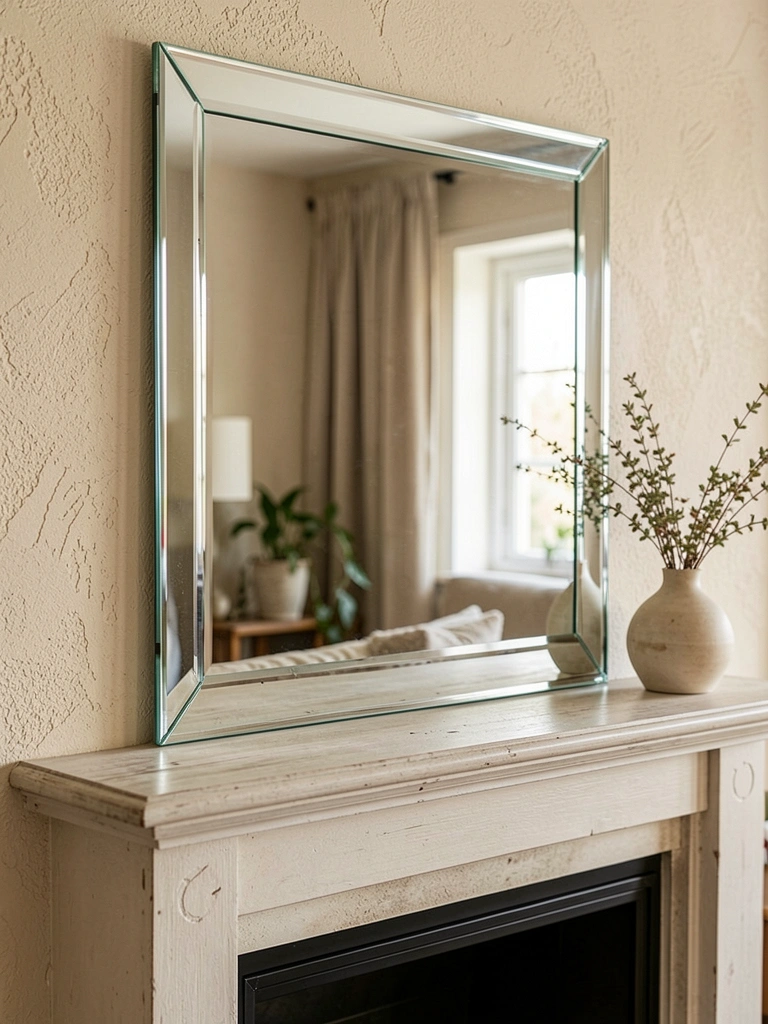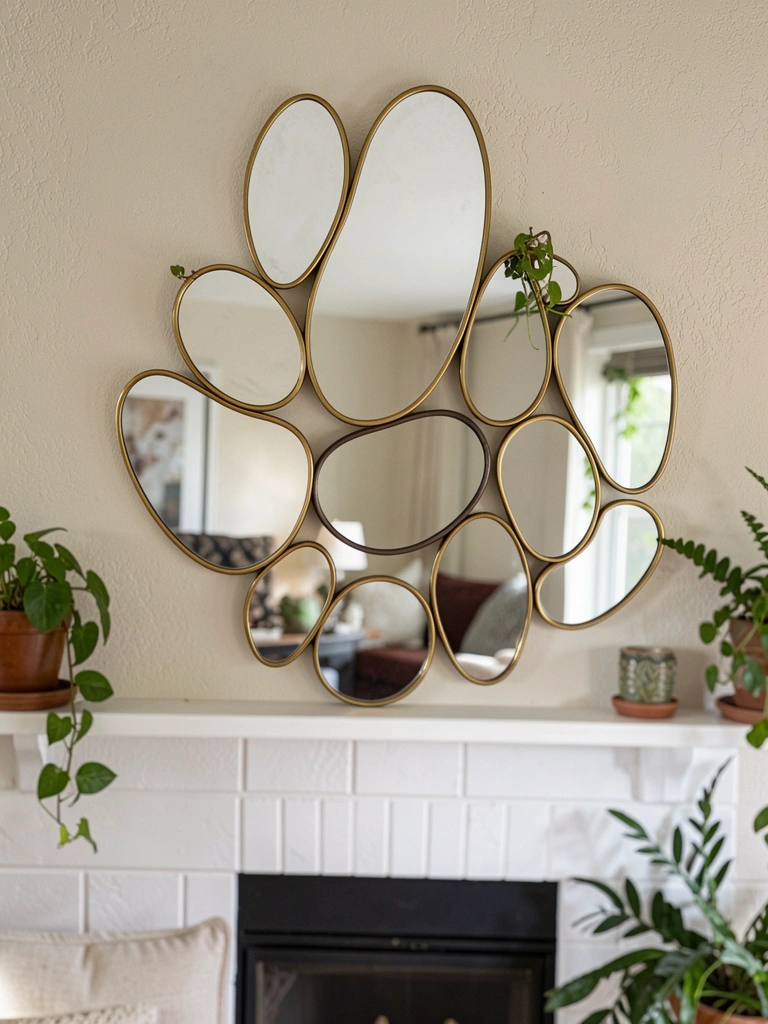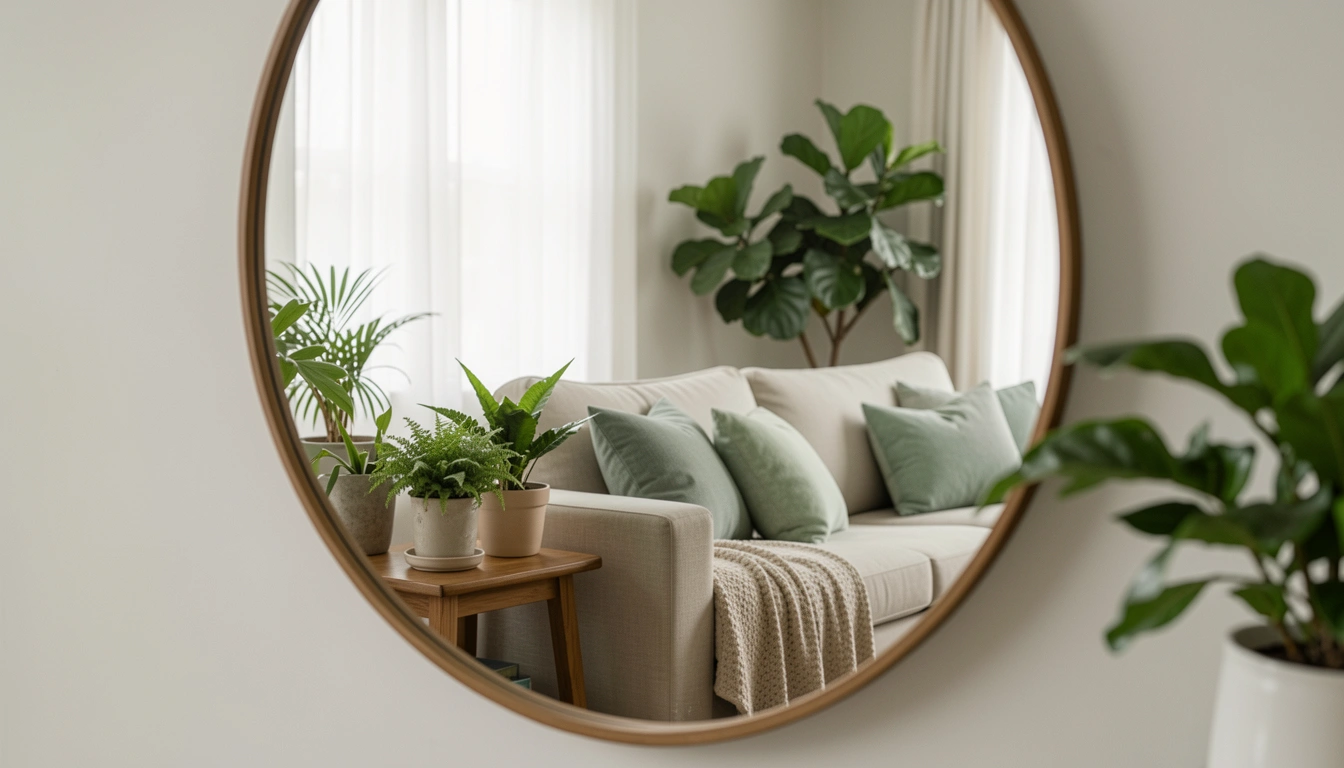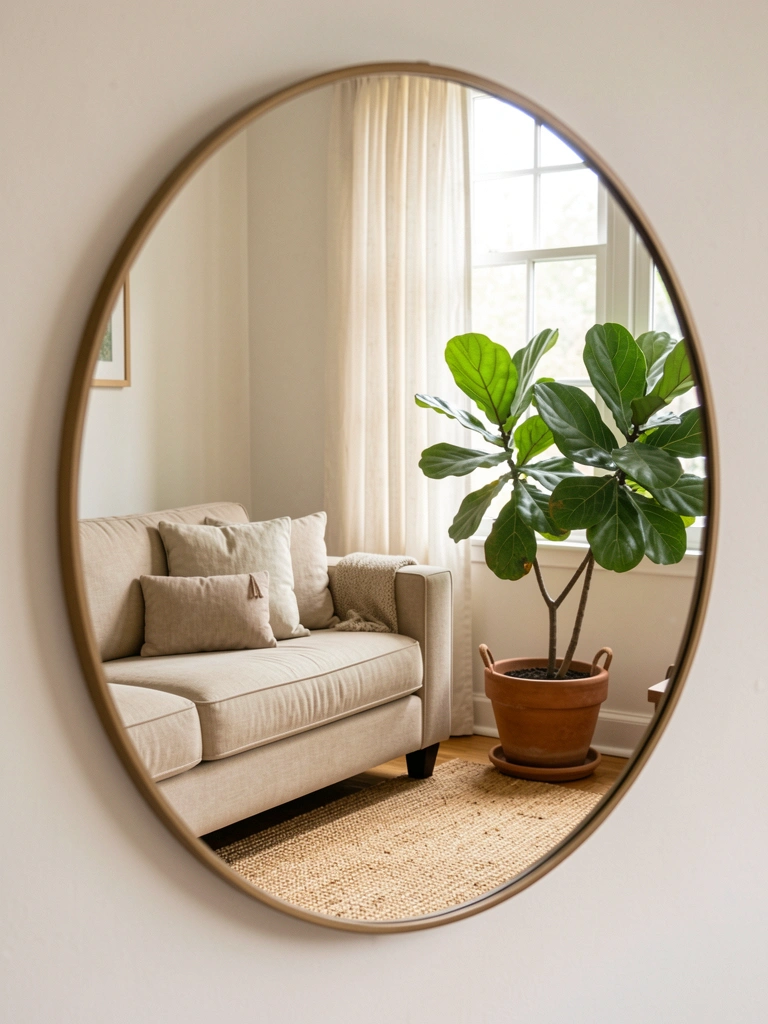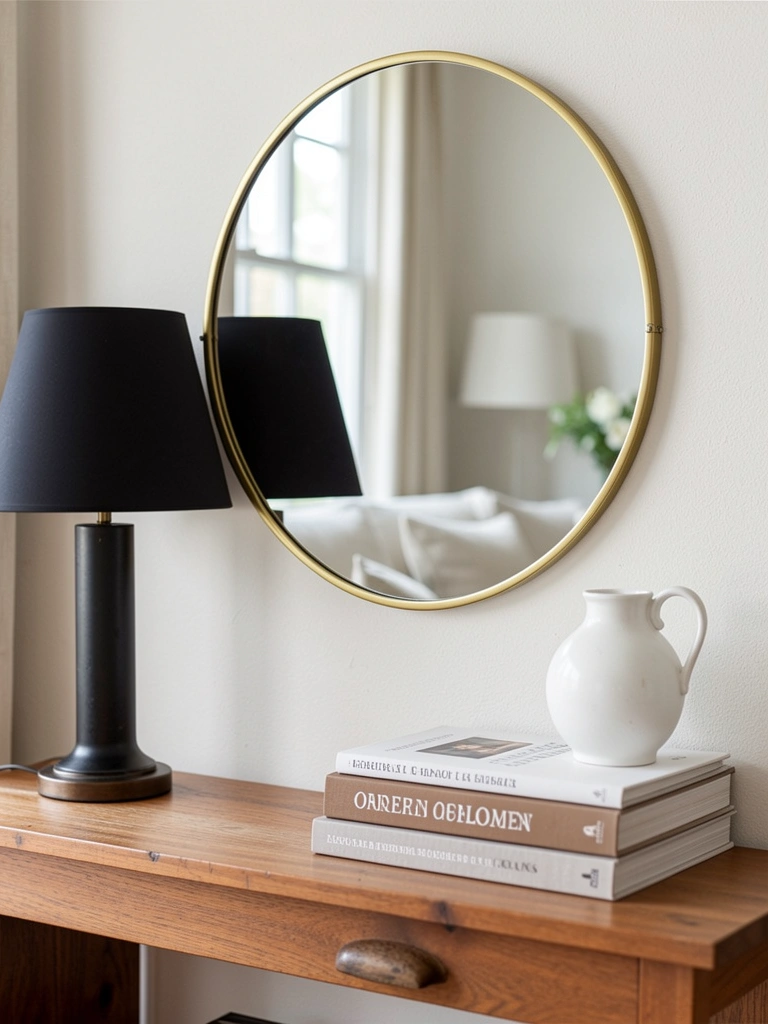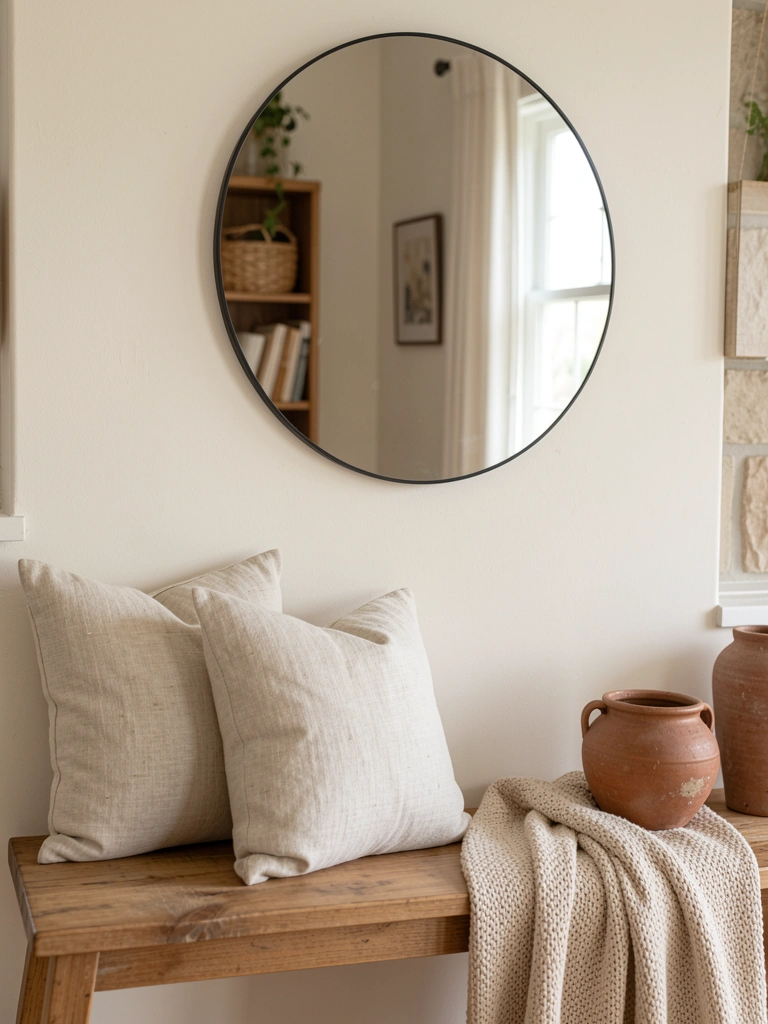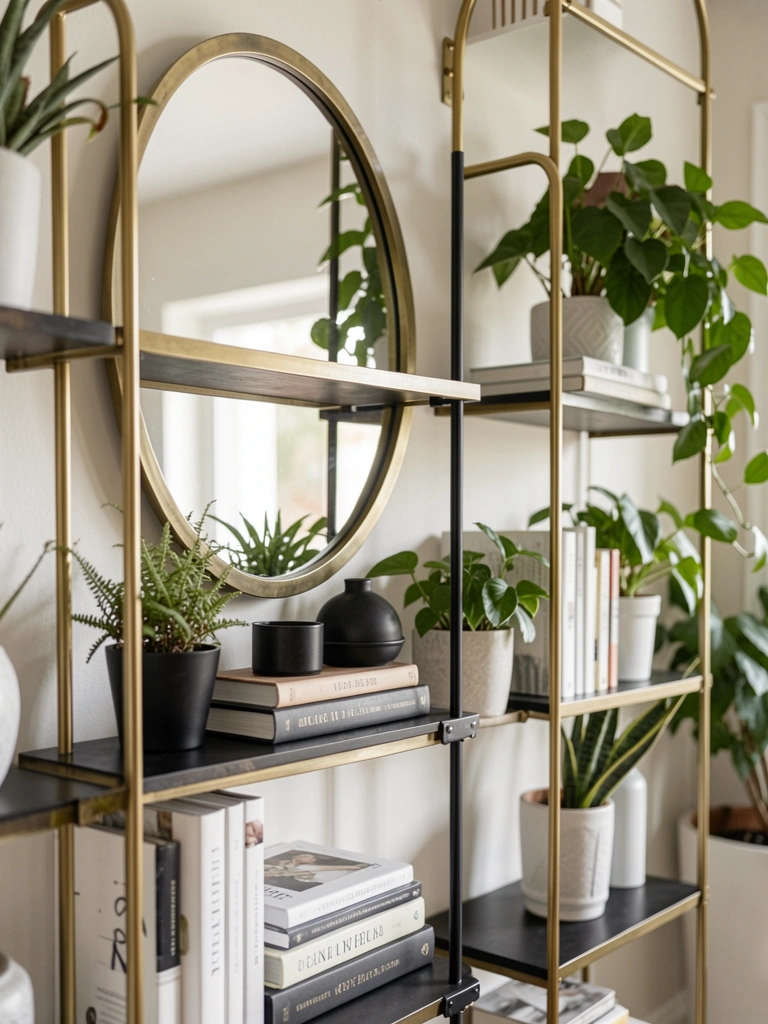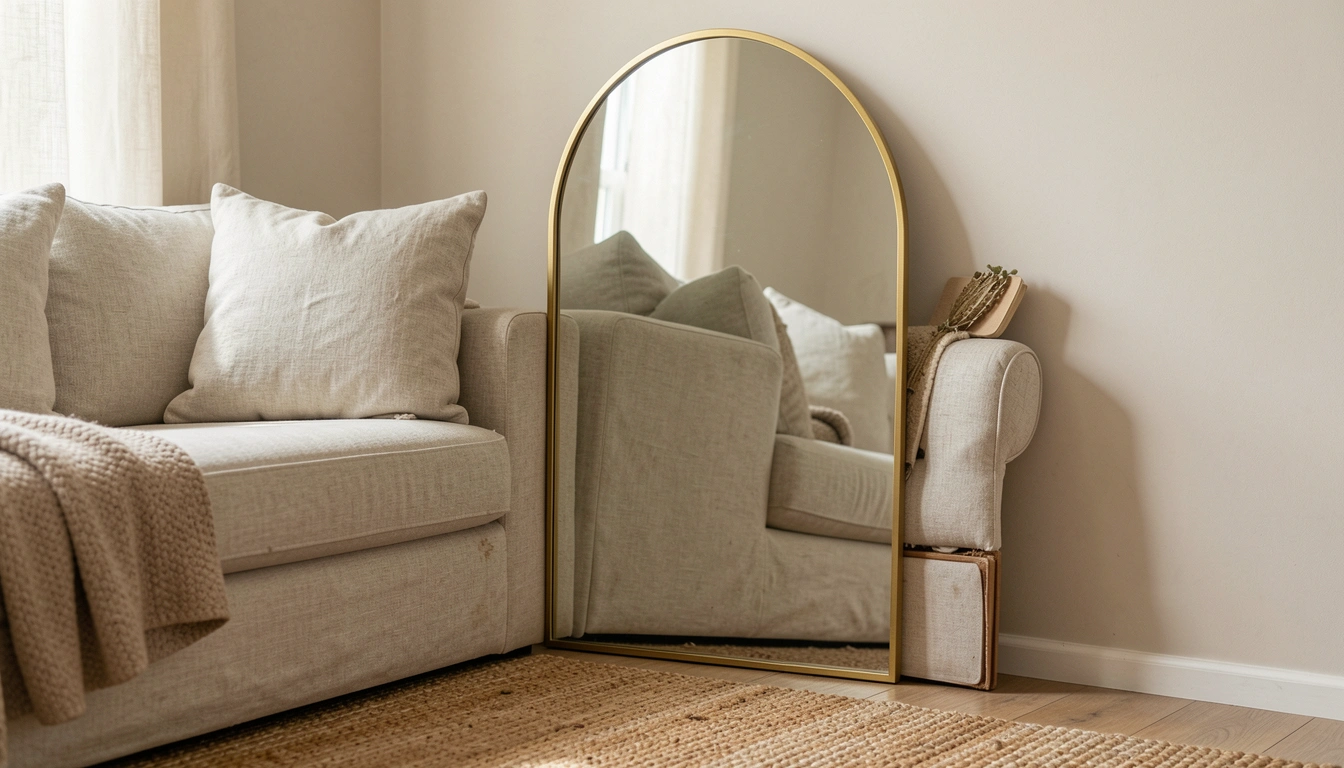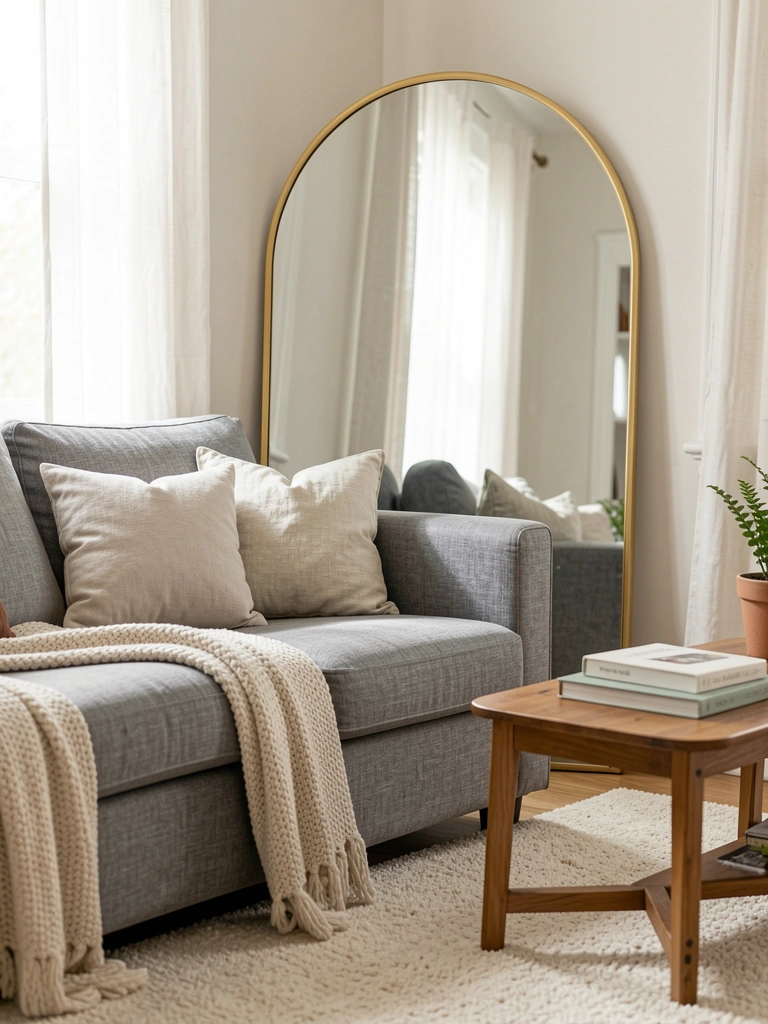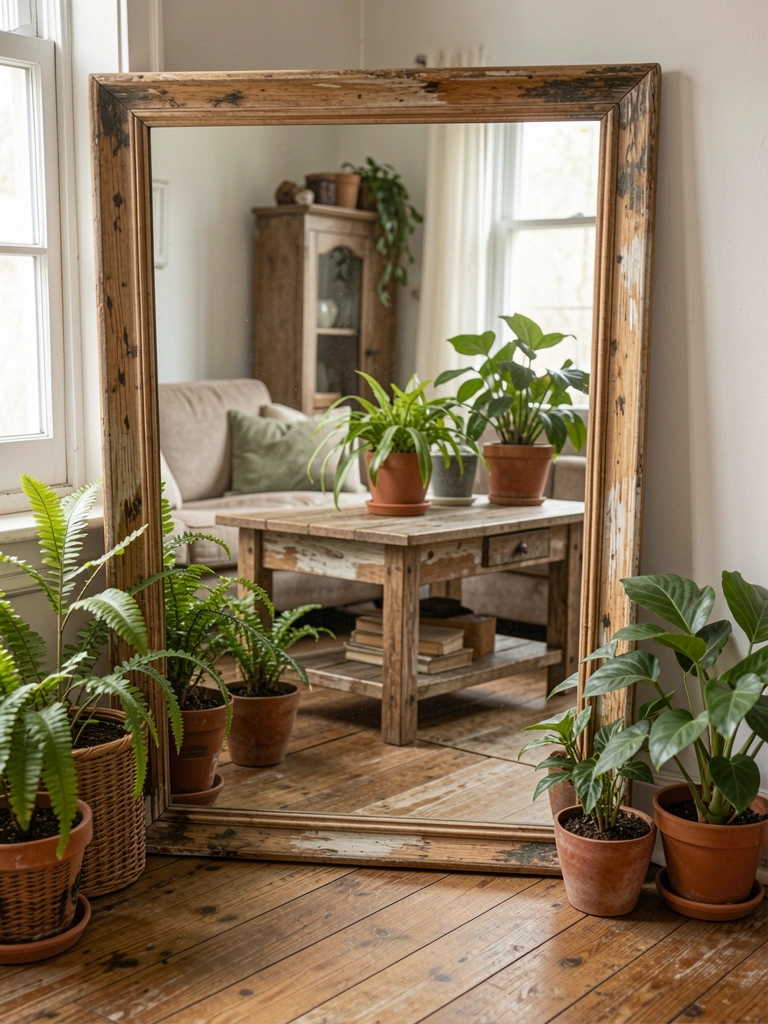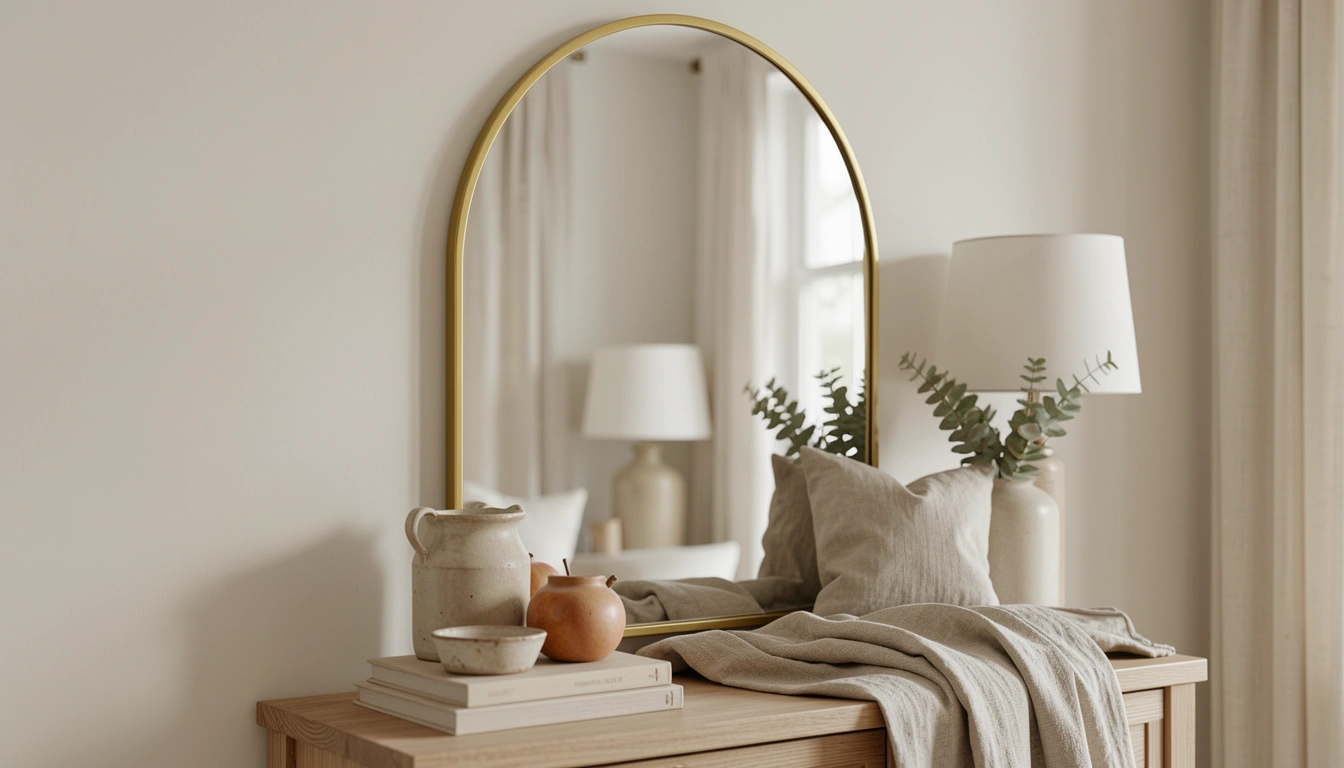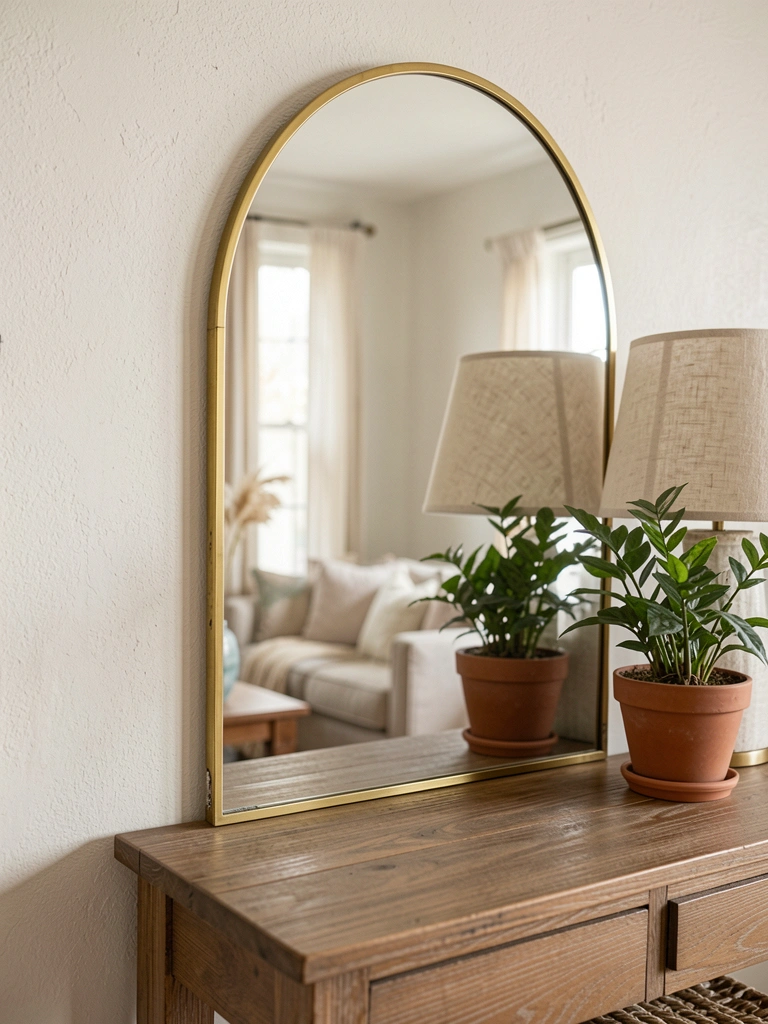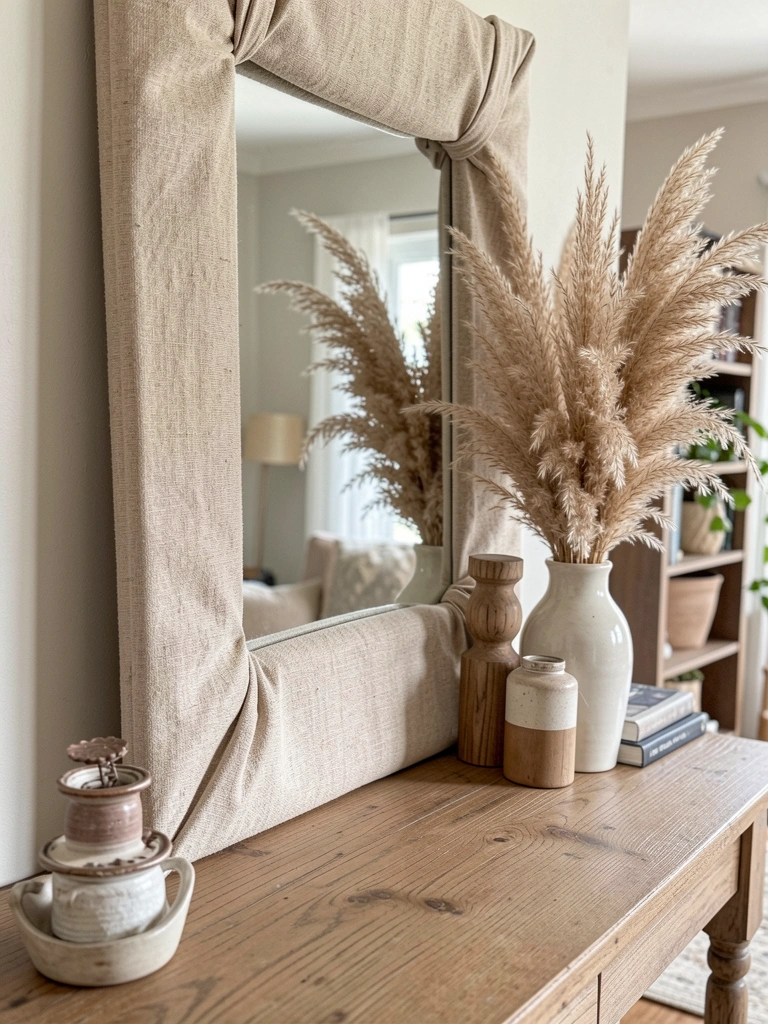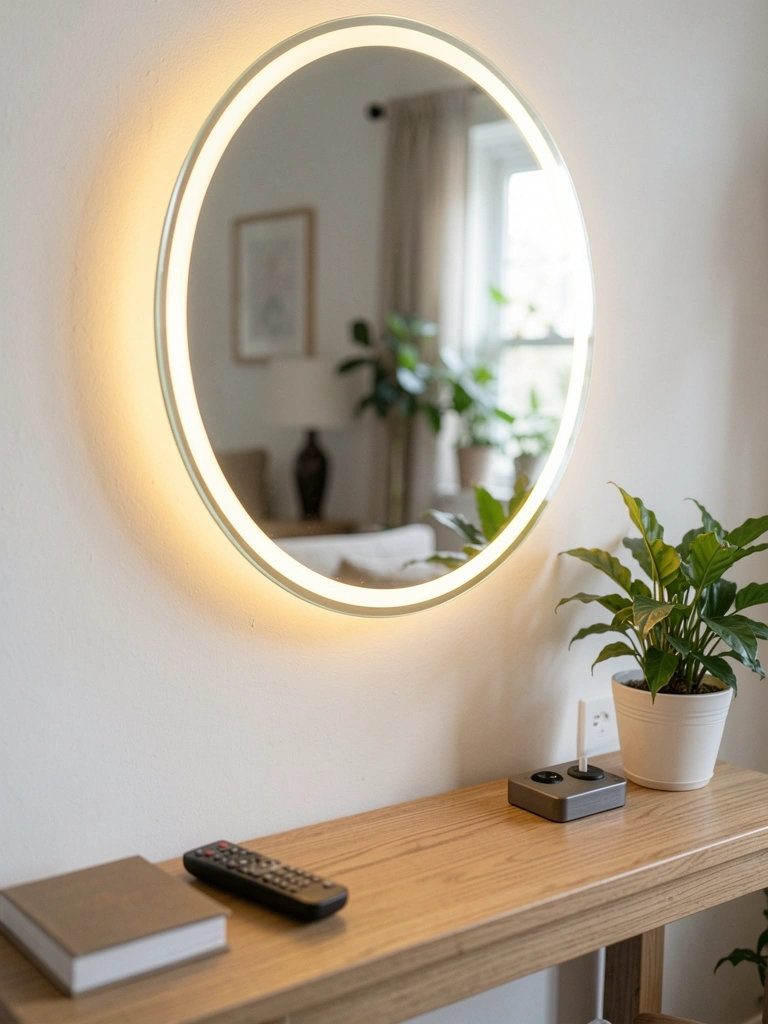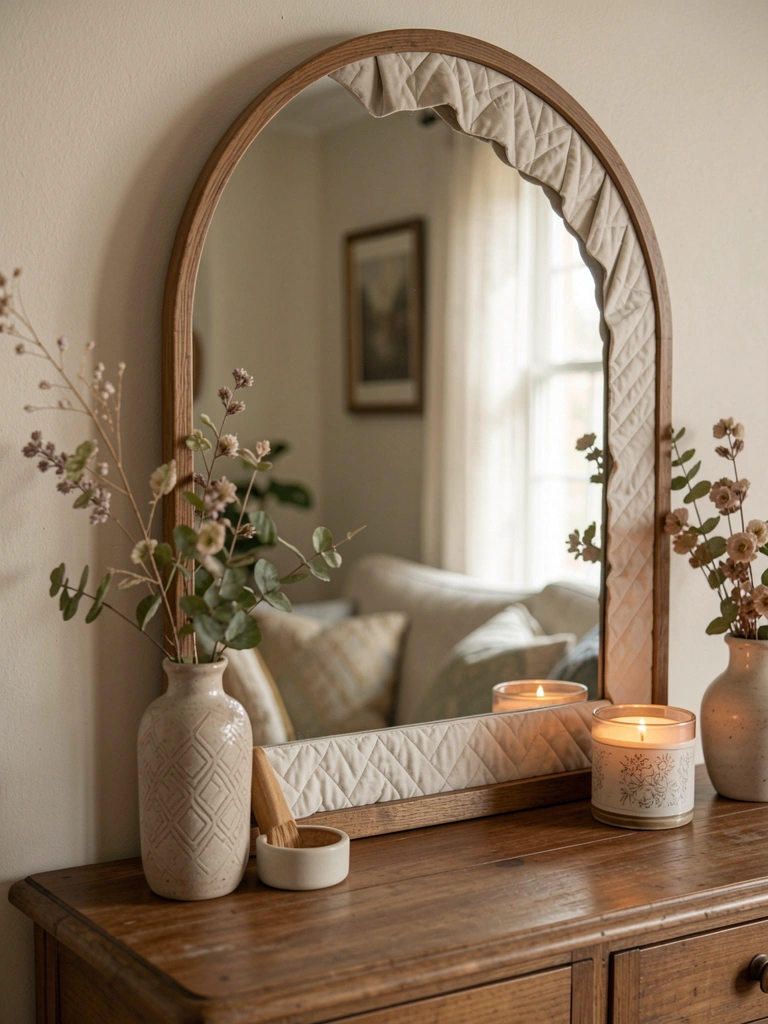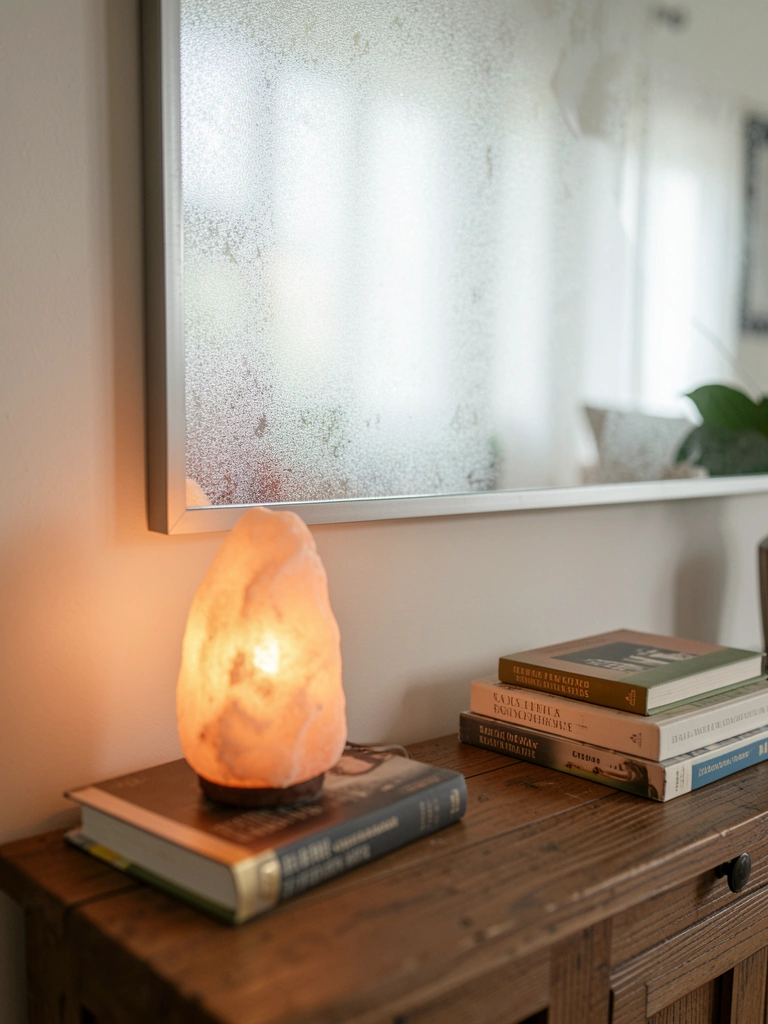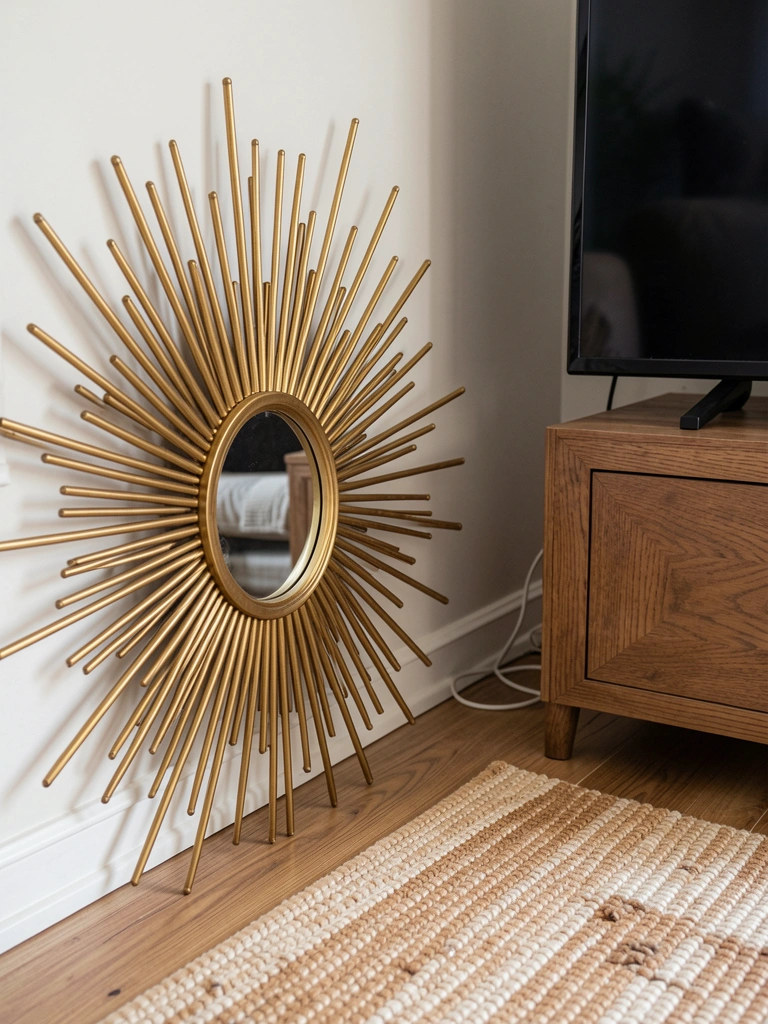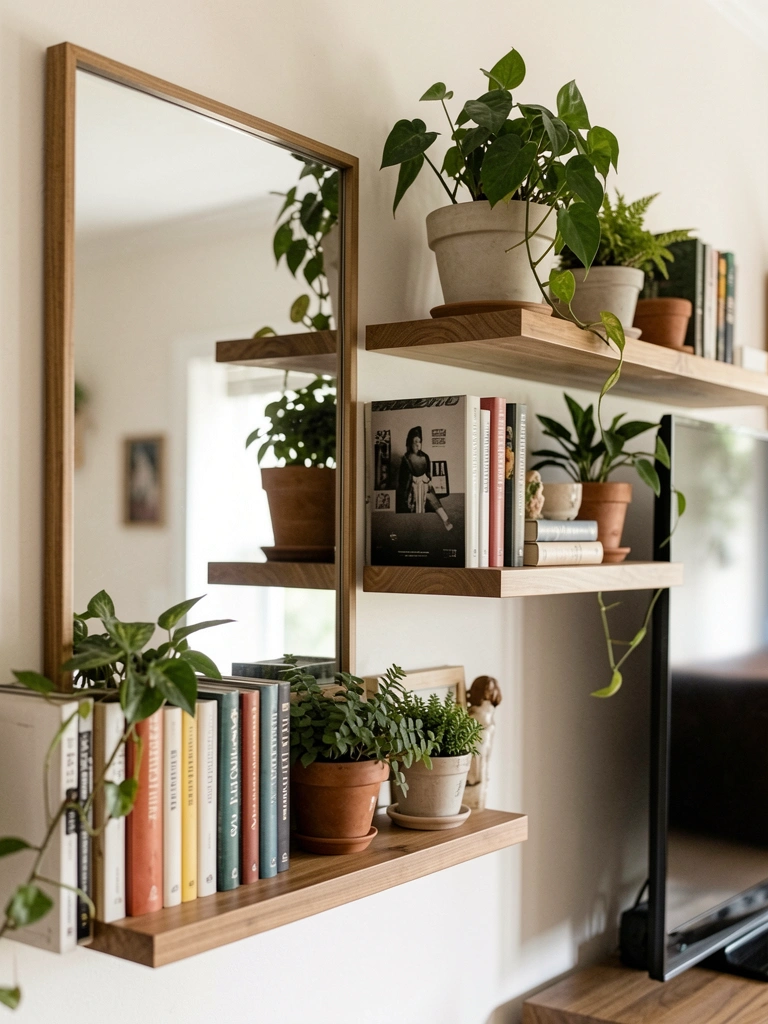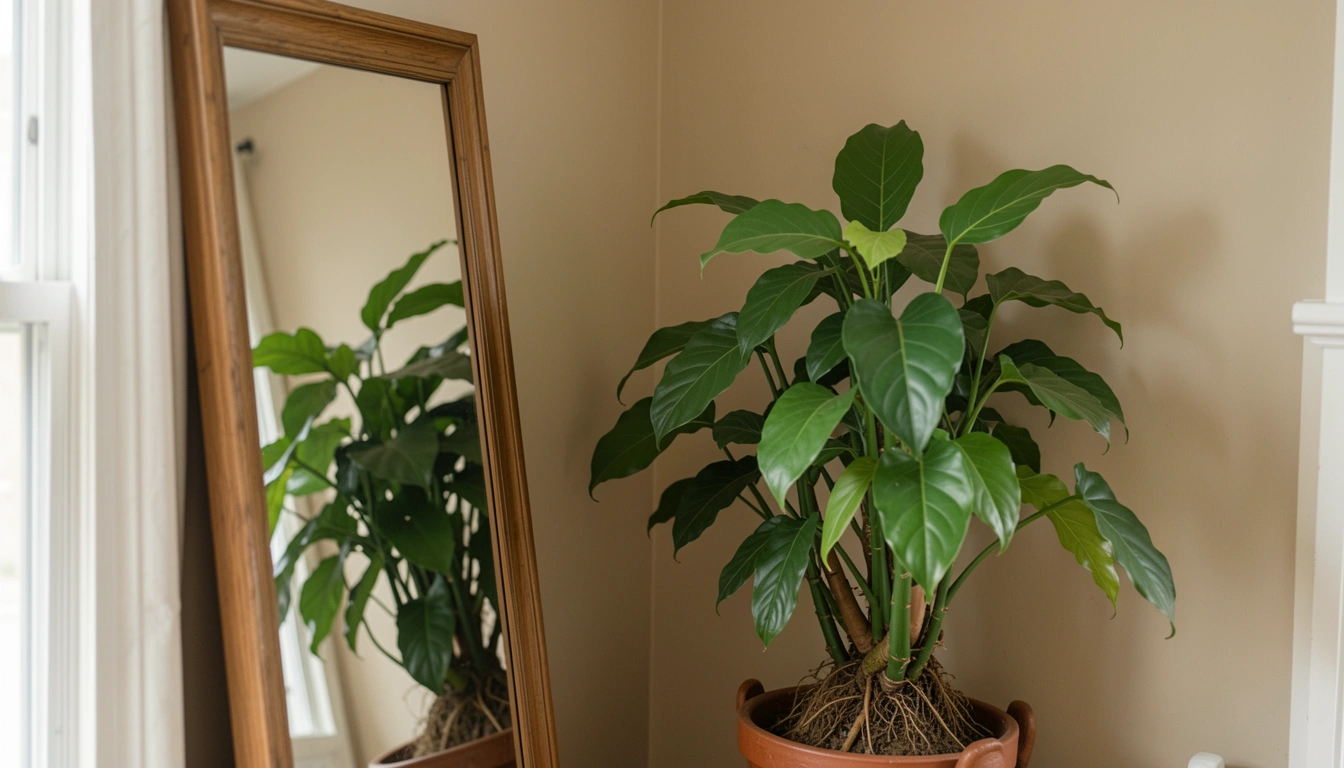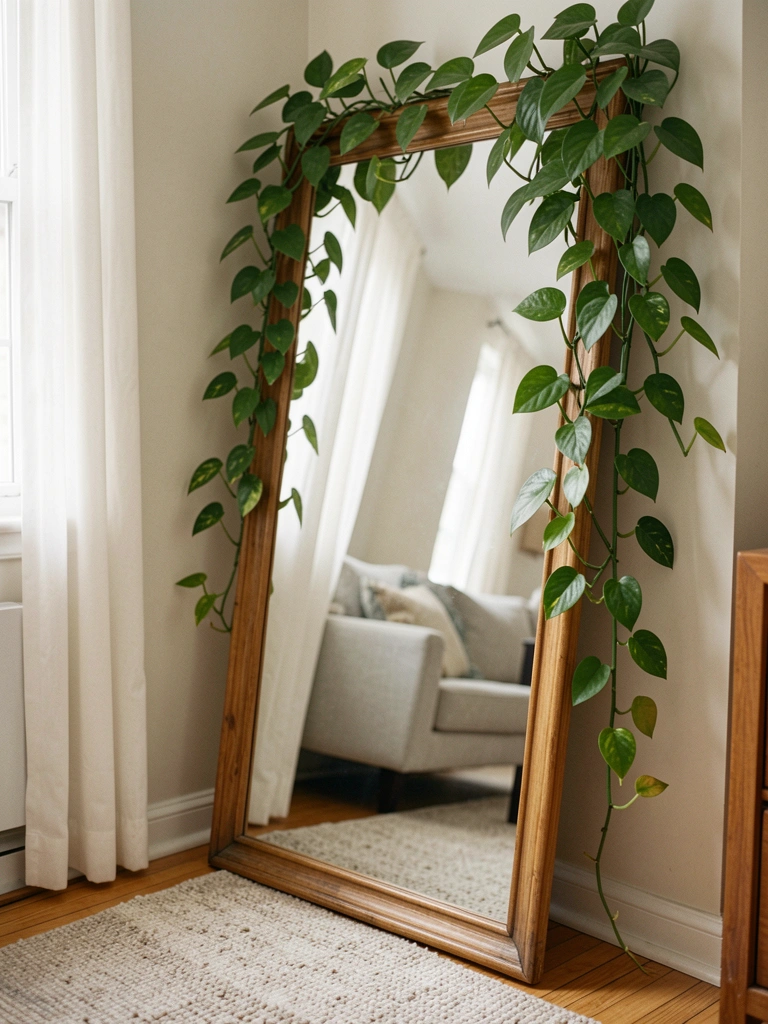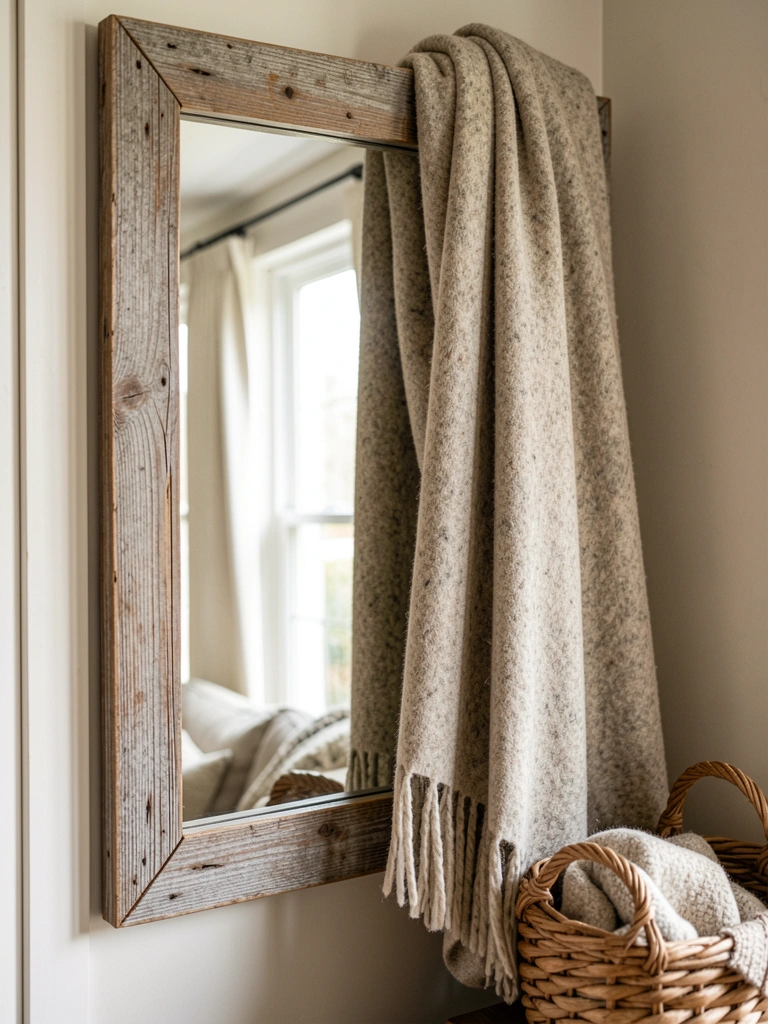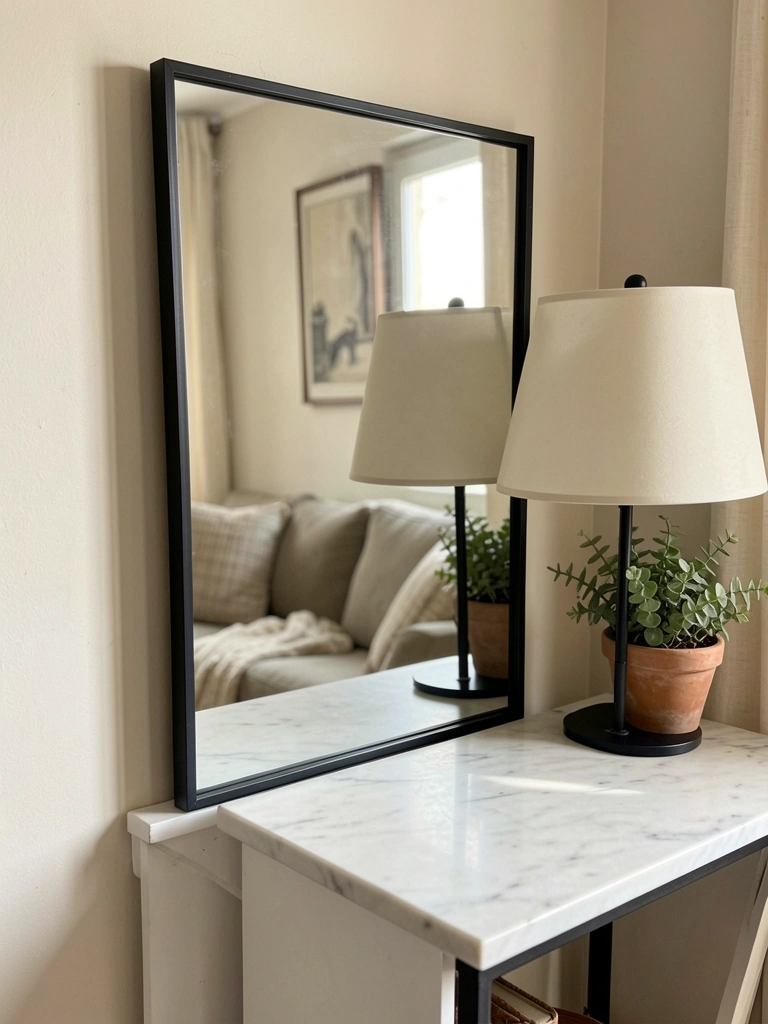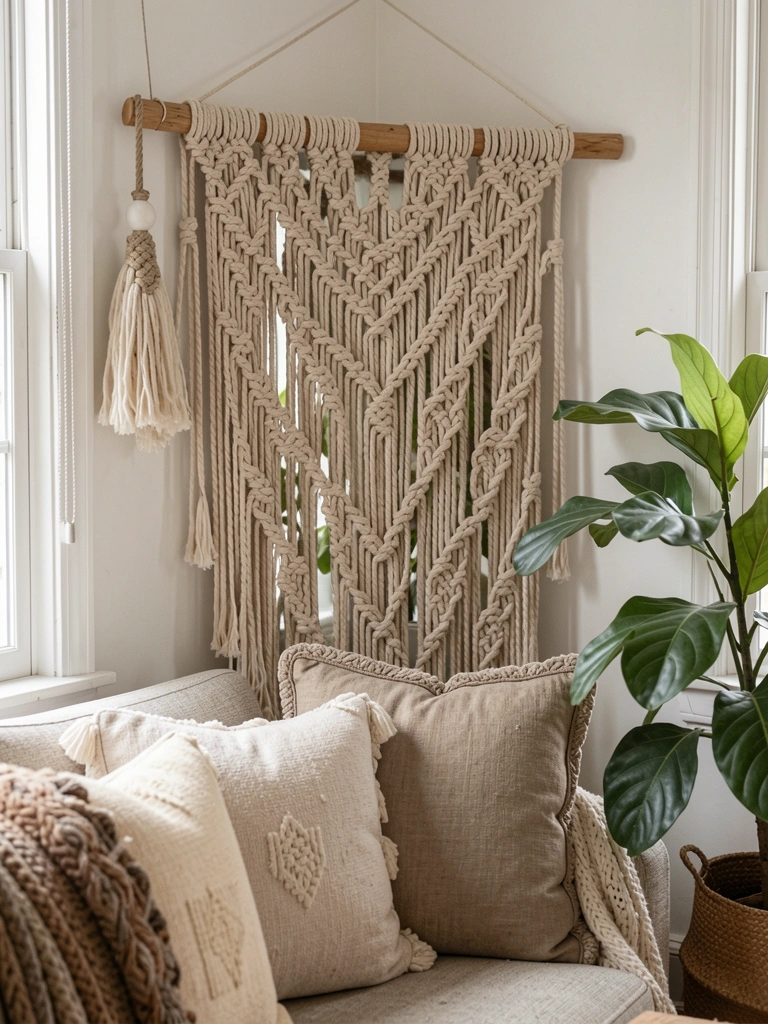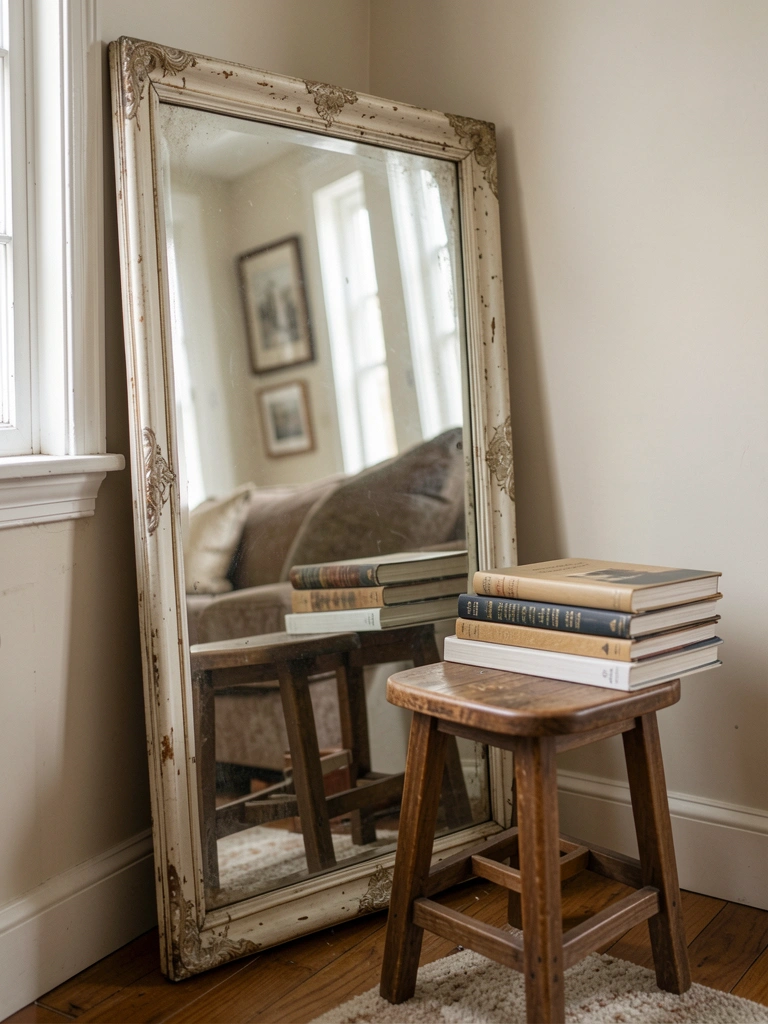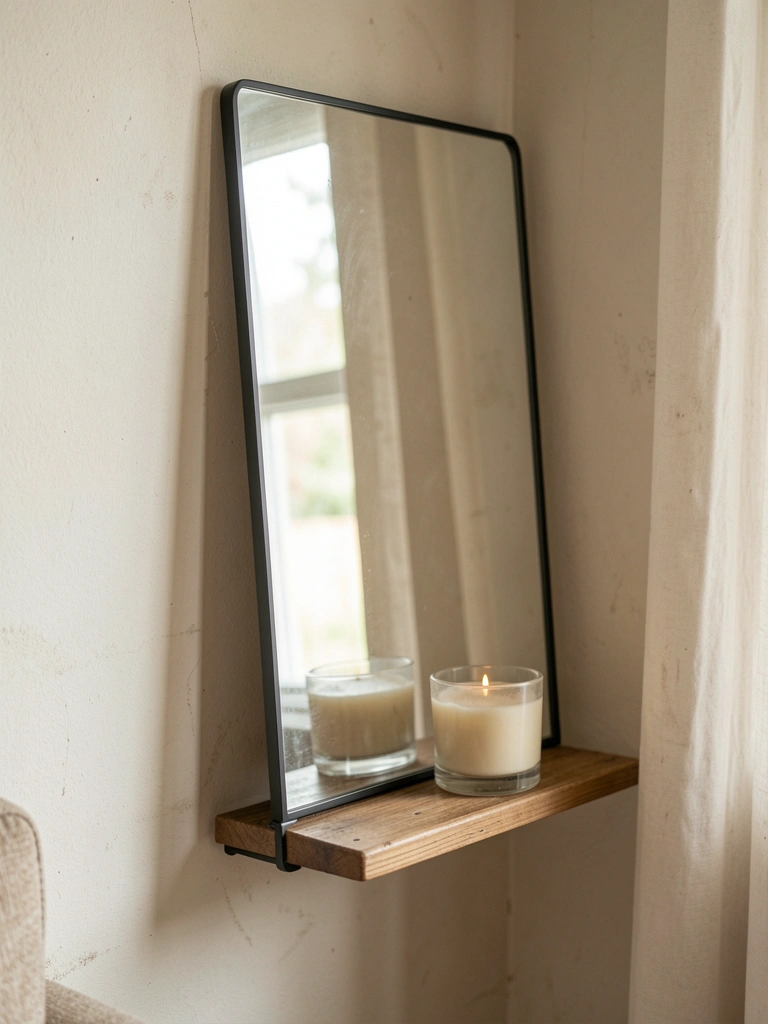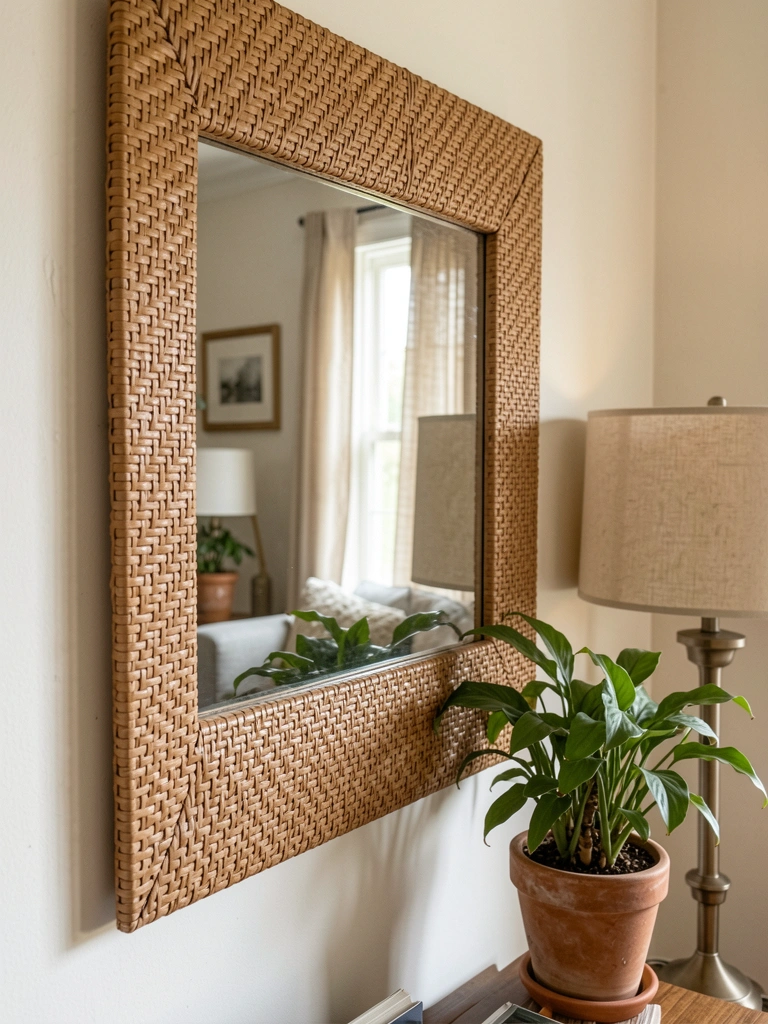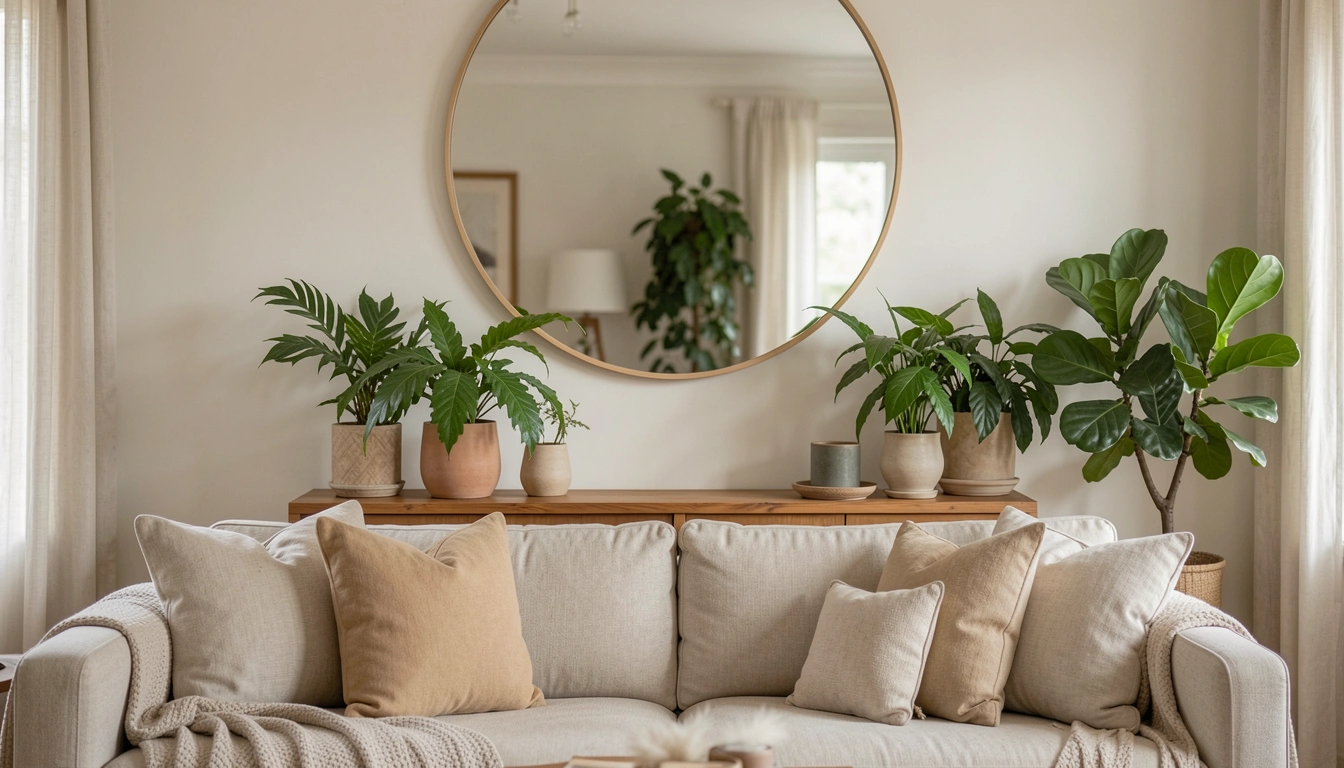
I hung my first circle mirror in a cramped living room years ago. It felt wrong at first—too big, too bold. But once I shifted it above the console, light bounced everywhere. The room grew.
Suddenly, it didn't feel small anymore. Walls breathed. I learned circles soften edges, pull eyes up.
If you're staring at blank walls like I was, these ideas will click. Real fixes from my spaces.
21 Circle Mirror In Living Room Ideas That Stand Out
I've gathered 21 circle mirror in living room ideas from homes I've shaped. These 21 ideas fit real life—cozy corners, busy families. Pick one, tweak it, and watch your room shift.
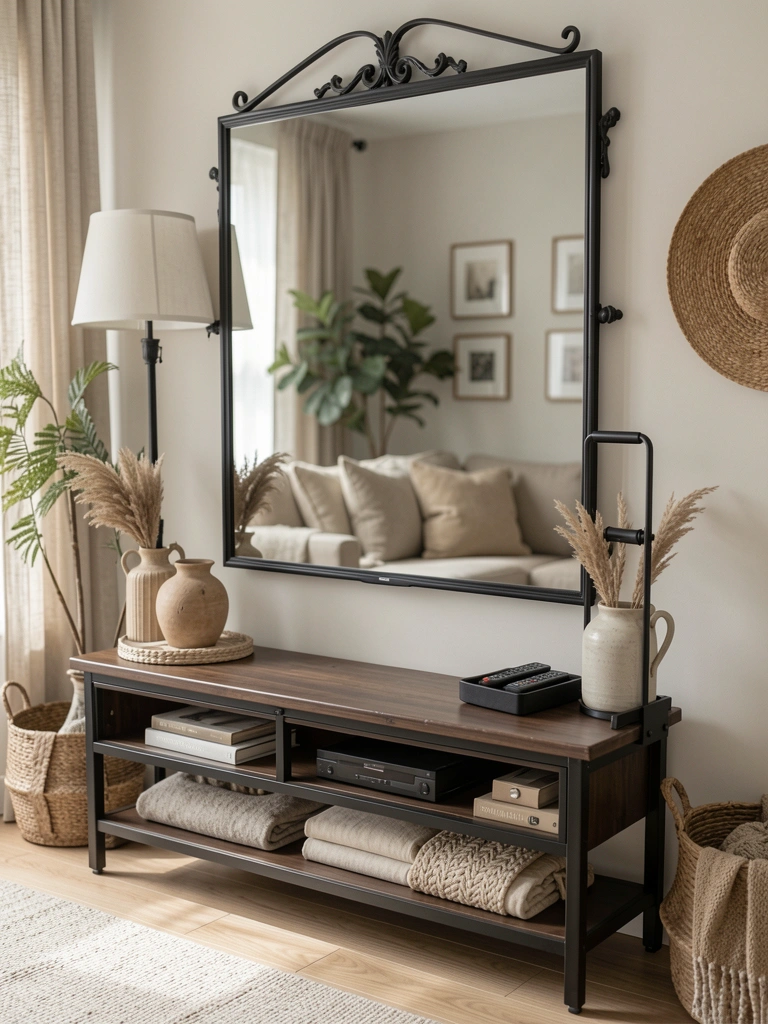
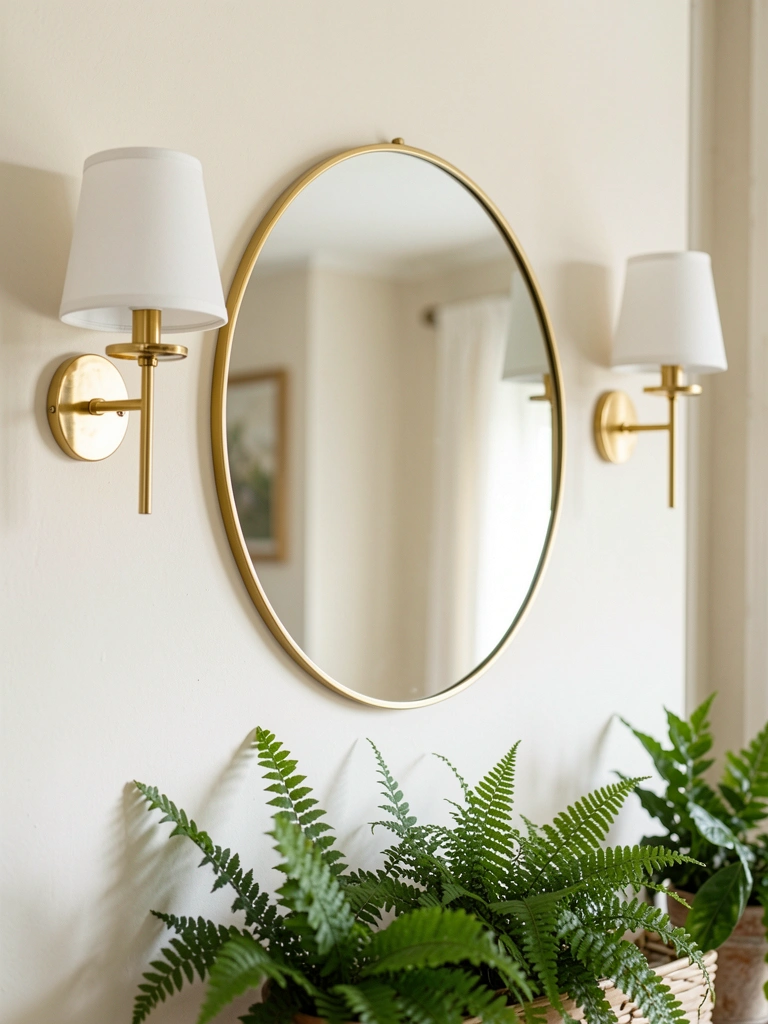
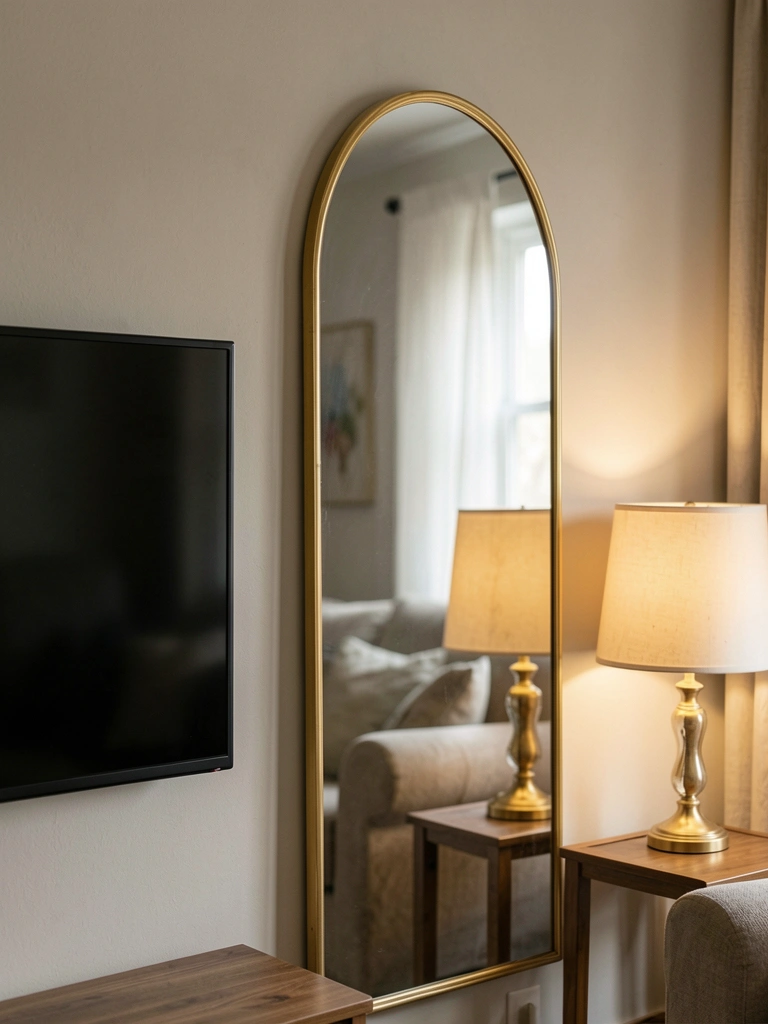
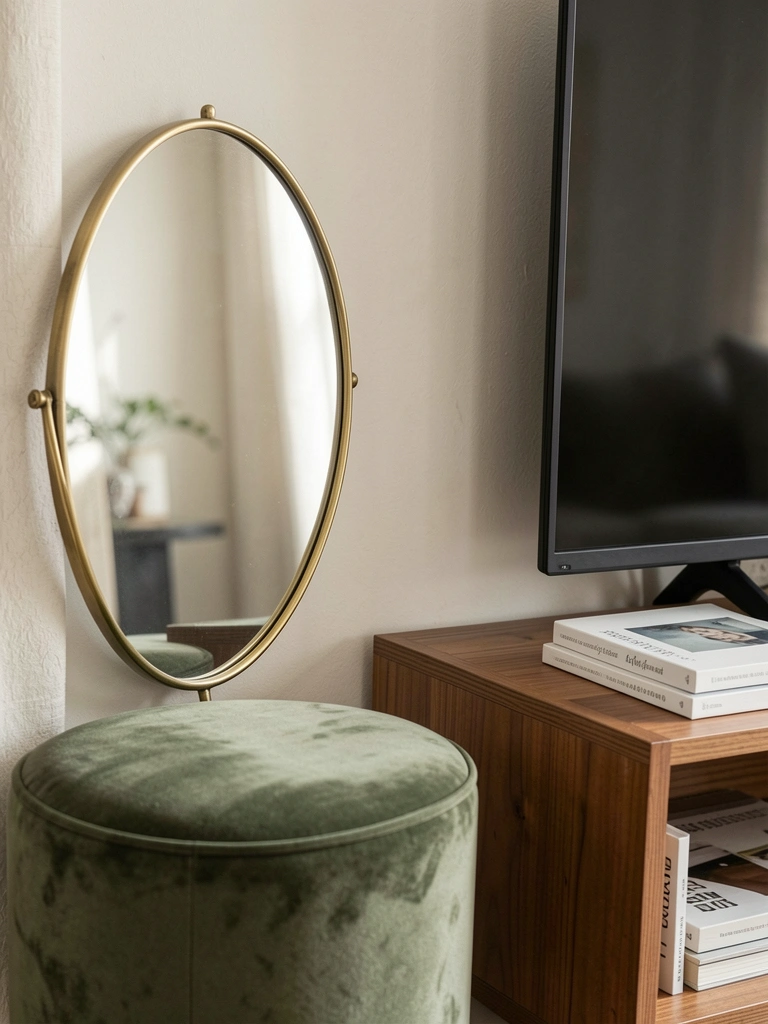
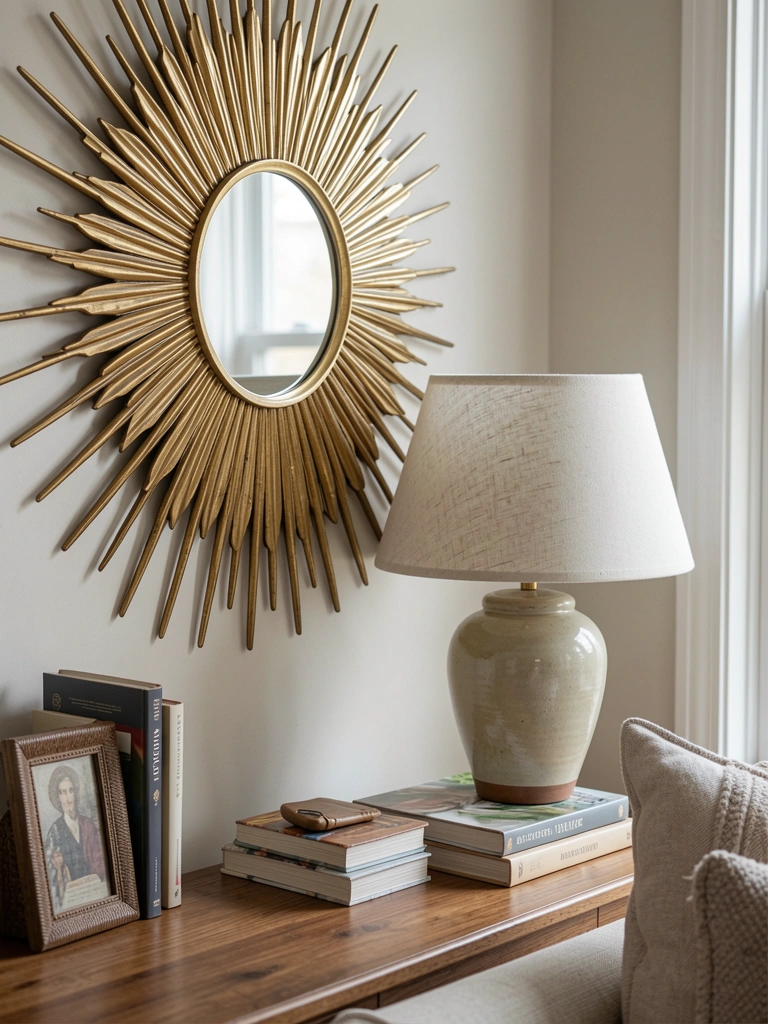
1. Oversized Brass Circle Above the Console for Light Bounce
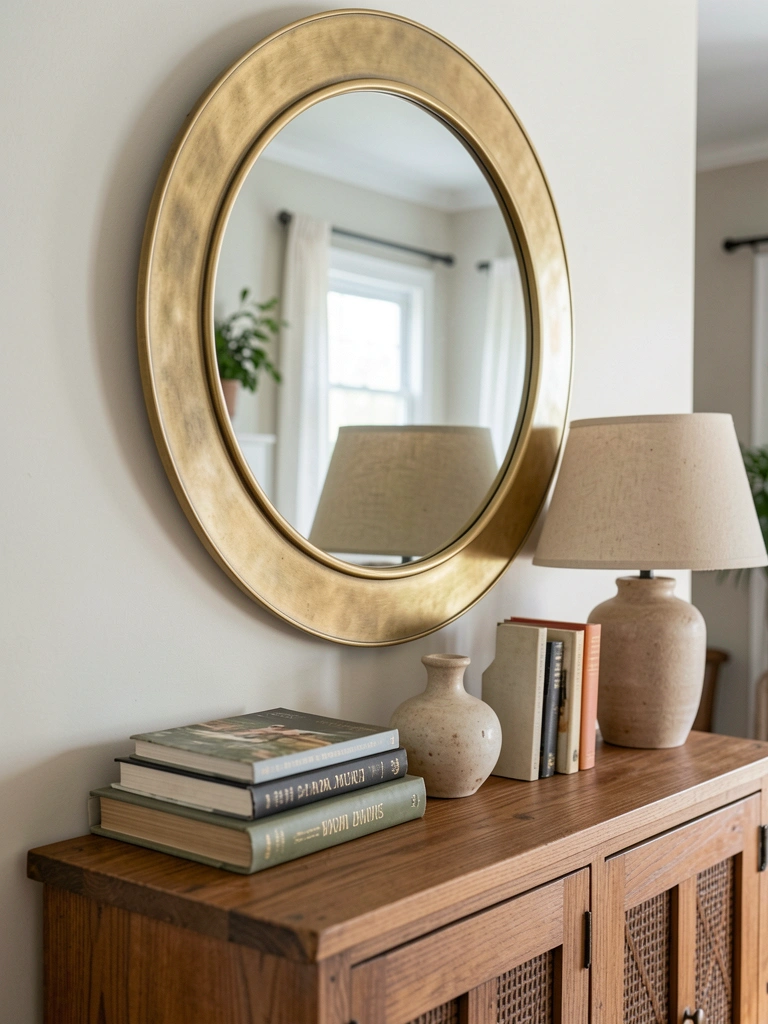
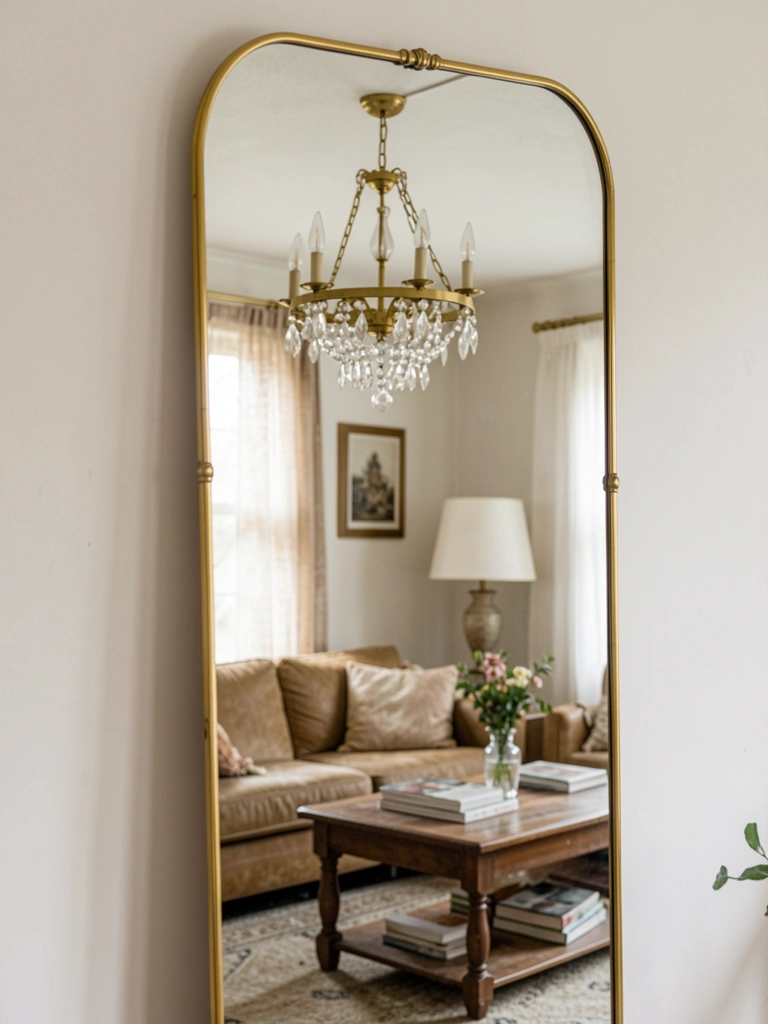
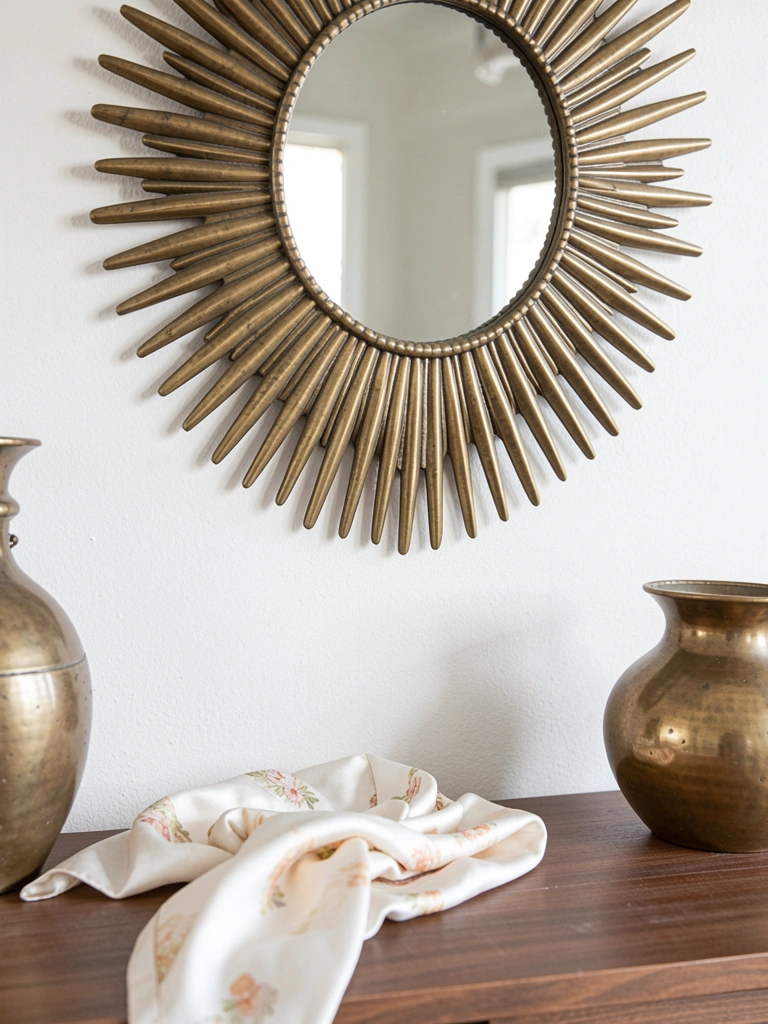
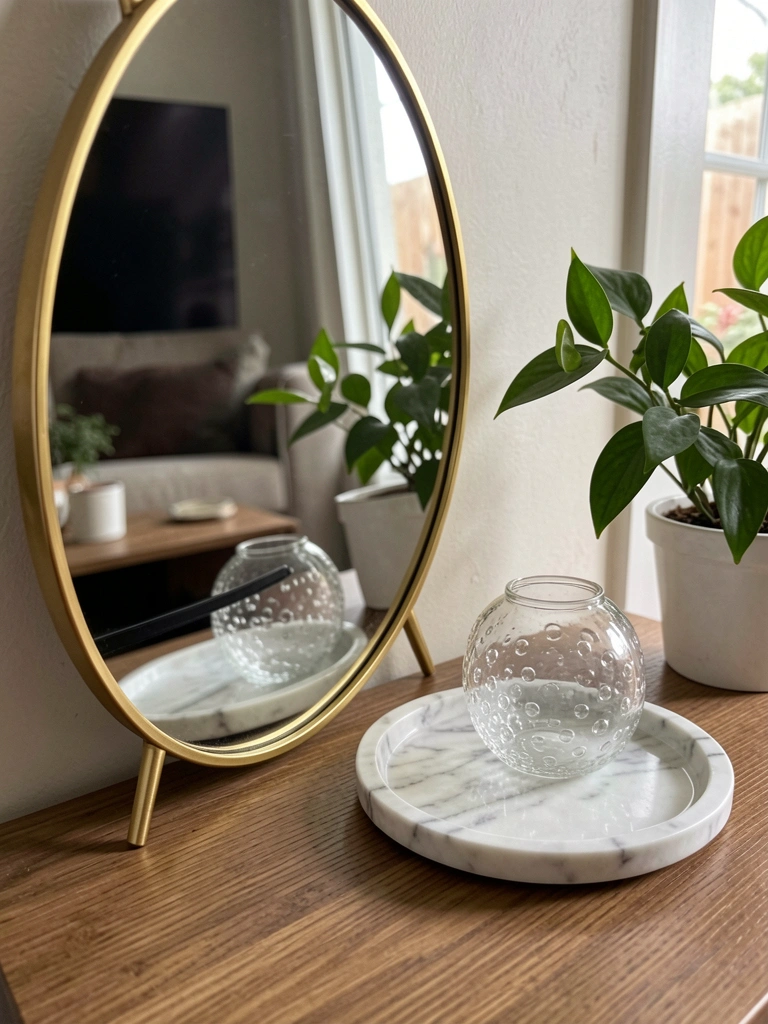
I placed a big brass circle mirror over my entry console last fall. Light from the window hit it just right, scattering across the room like morning sun. The space felt twice as open without adding lamps.
Before, that wall was dead. Now, it draws you in. Brass warms up cool grays I love.
Size matters—go 30 inches or more. Hang it 4-6 inches above the table so reflections catch eyes, not your head.
One tip: Wipe fingerprints weekly; brass shows them fast.
What You’ll Need for This Look
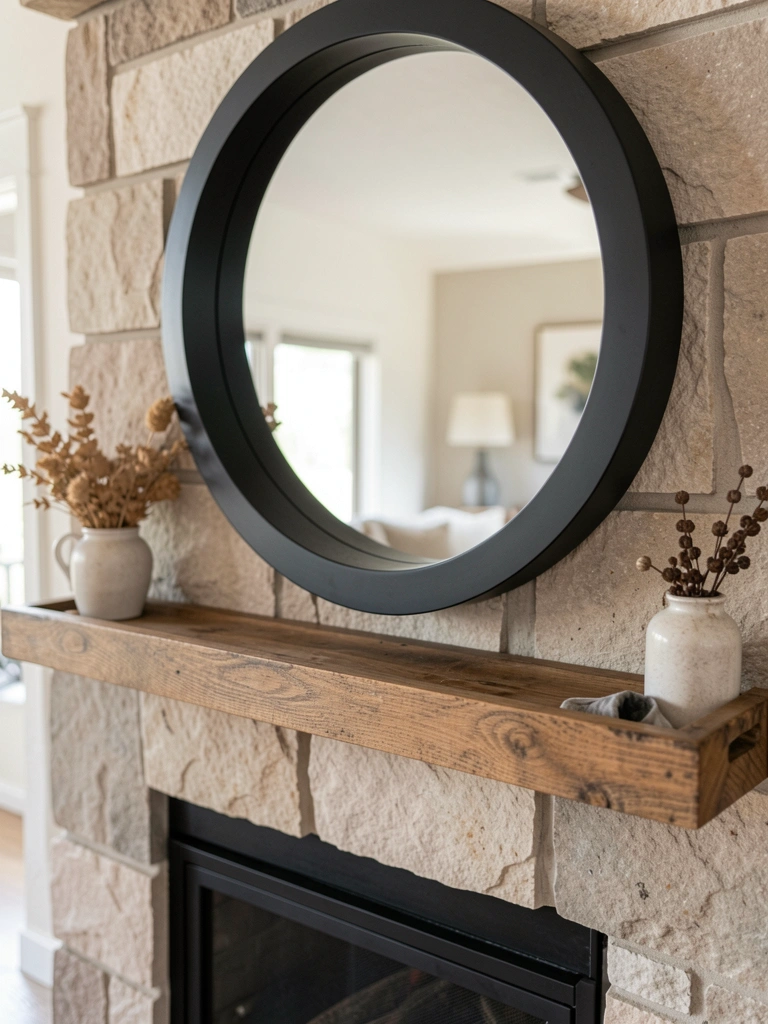
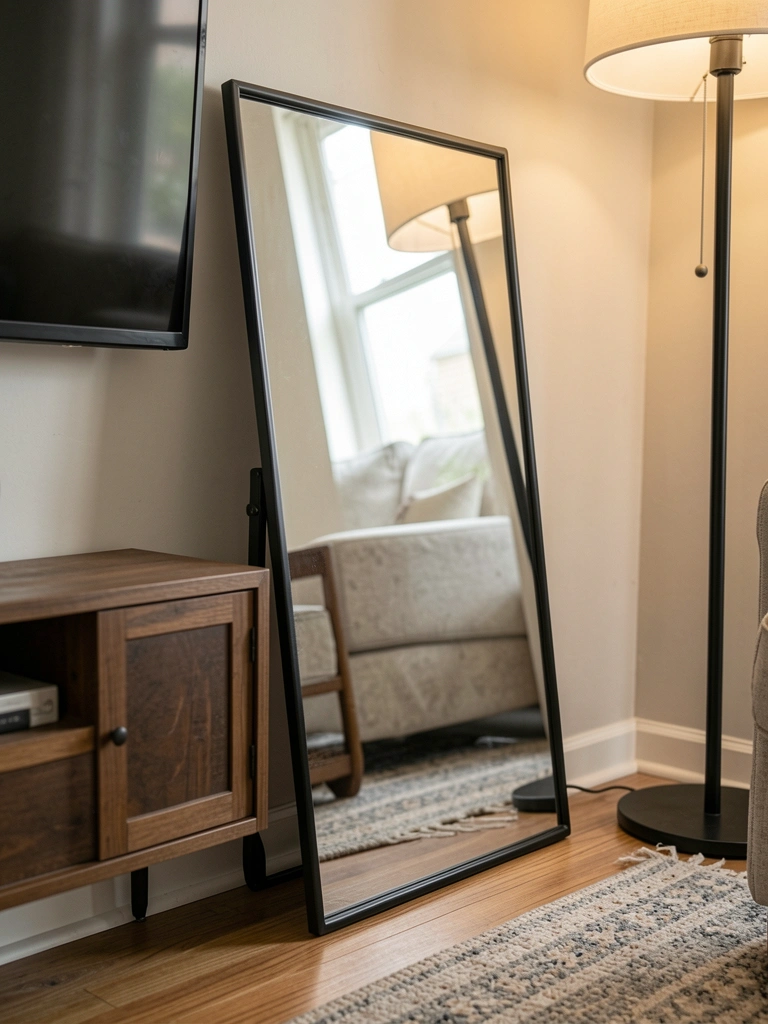
2. Black Framed Circle in a Minimalist Nook
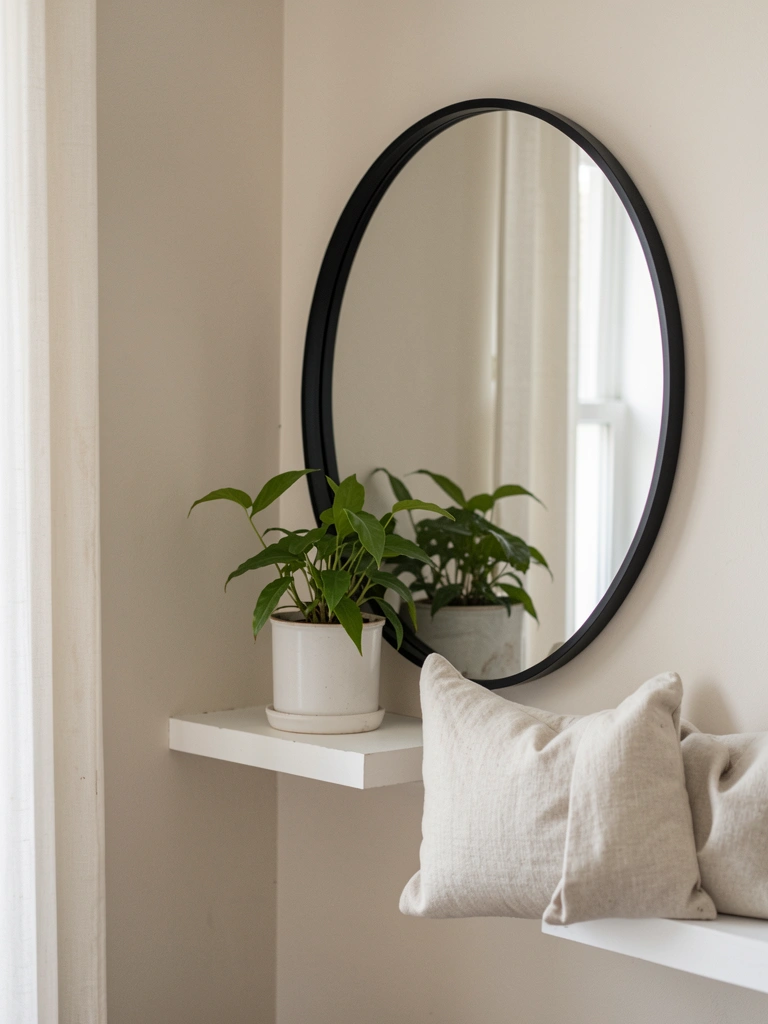
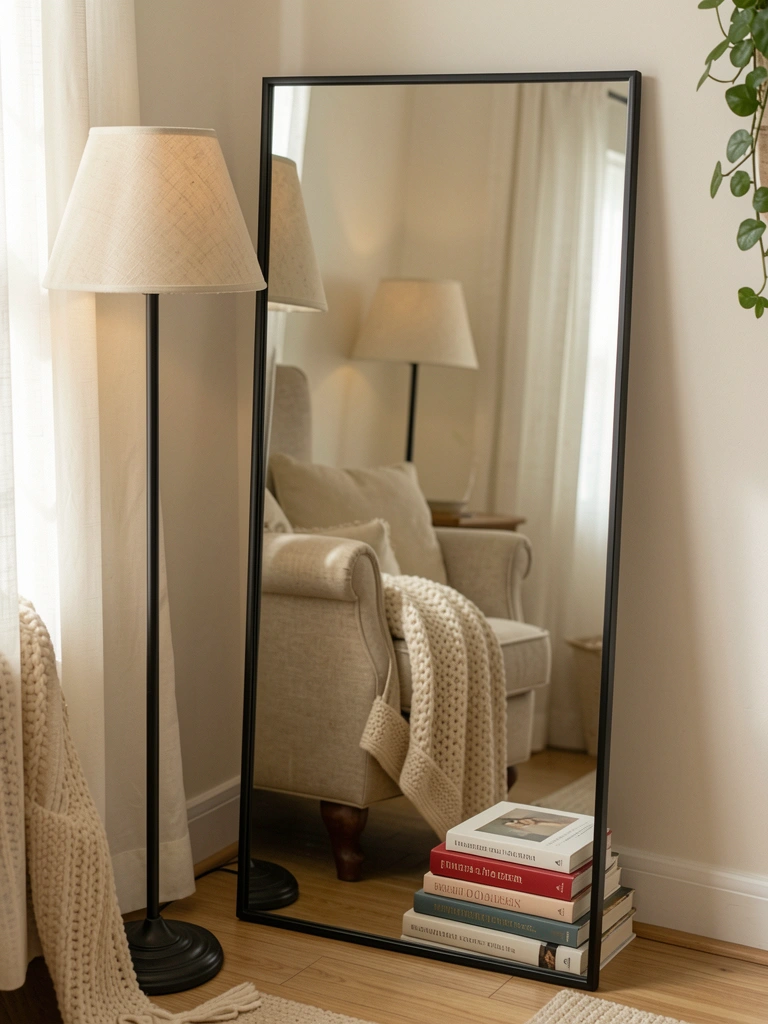
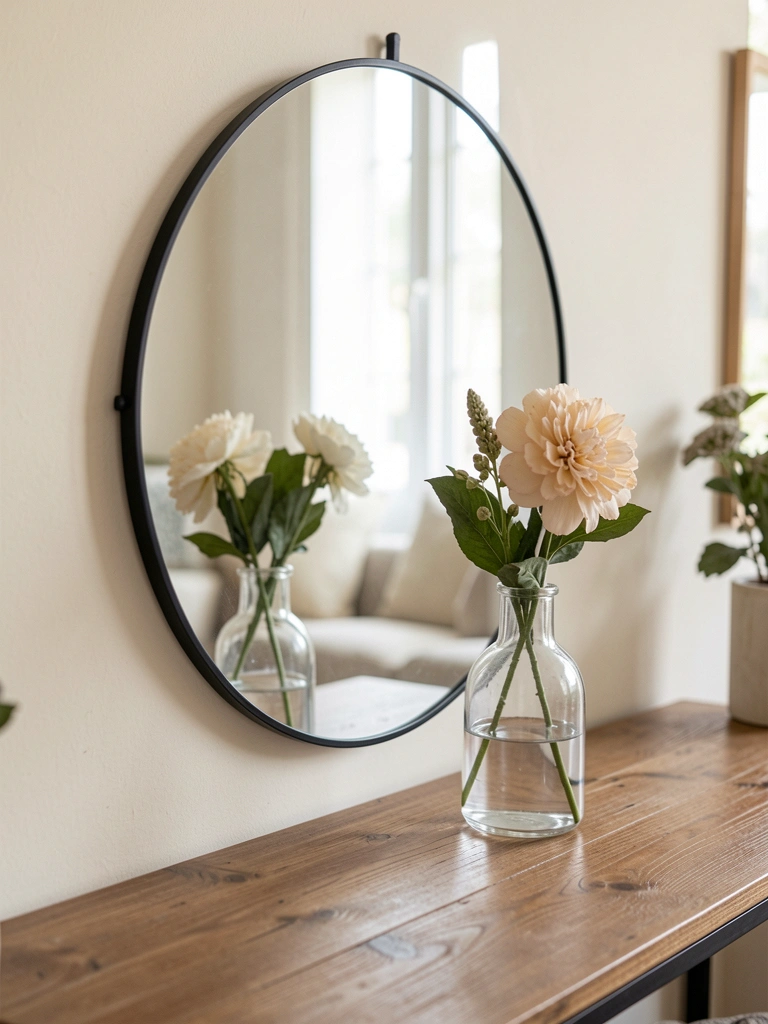
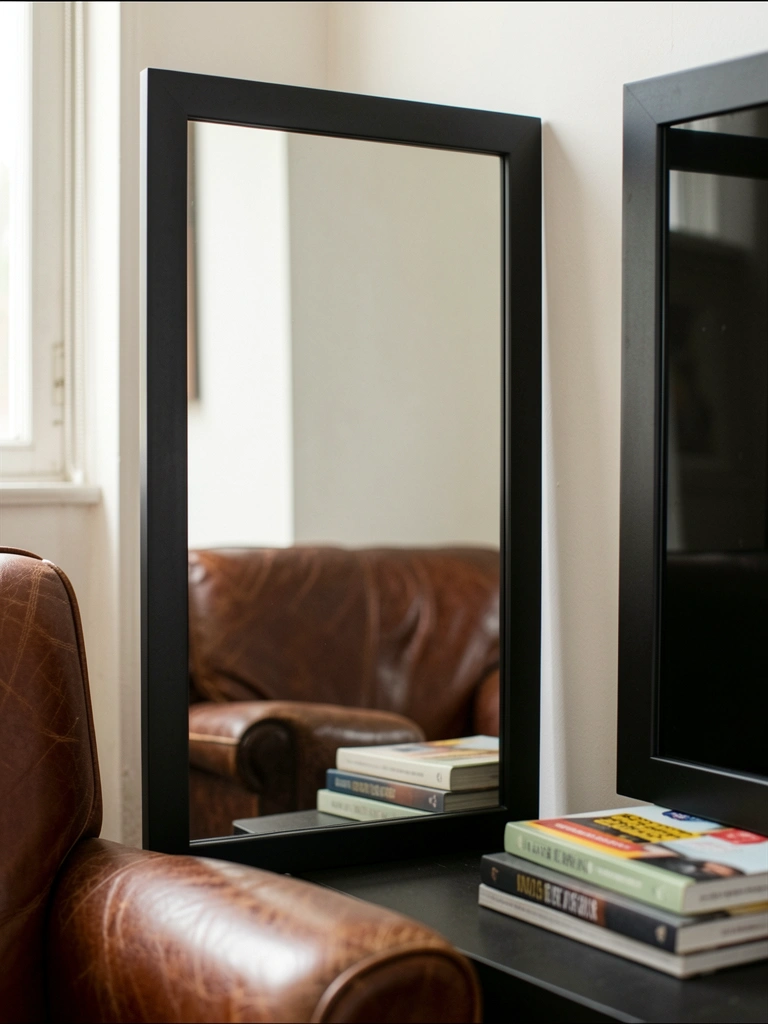
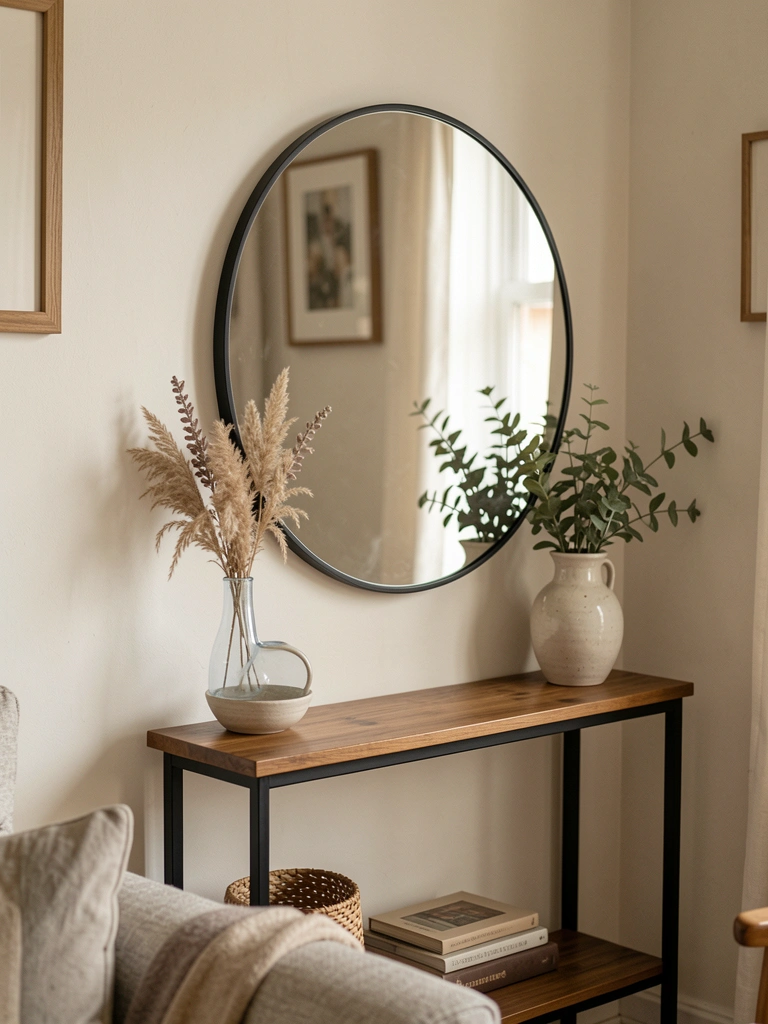
My minimalist phase needed focus. I added a slim black circle mirror to the reading nook. It mirrors the floor lamp, making the corner feel deeper without clutter.
Walls stayed clean, but the mirror grounded it. No more empty vibe.
Aim for a 24-inch frame. Center it at eye level against white or light gray.
Black hides dust better than gold ever did.
What You’ll Need for This Look
24-inch black metal circle mirror
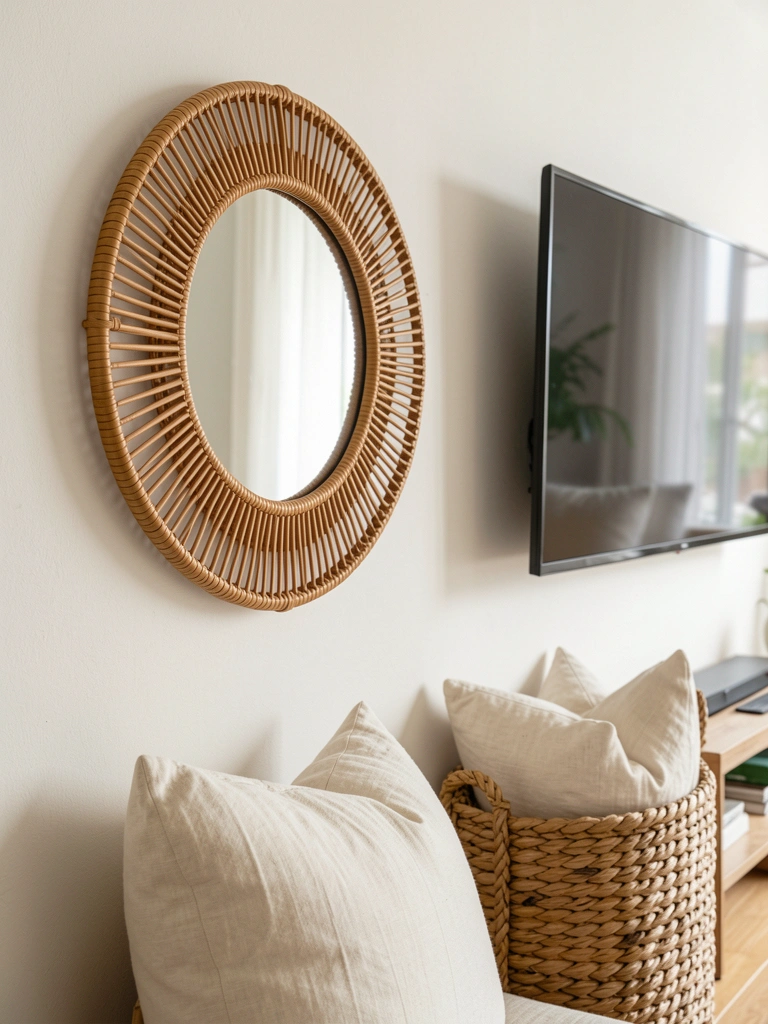
3. Woven Rattan Circle with Coastal Layers
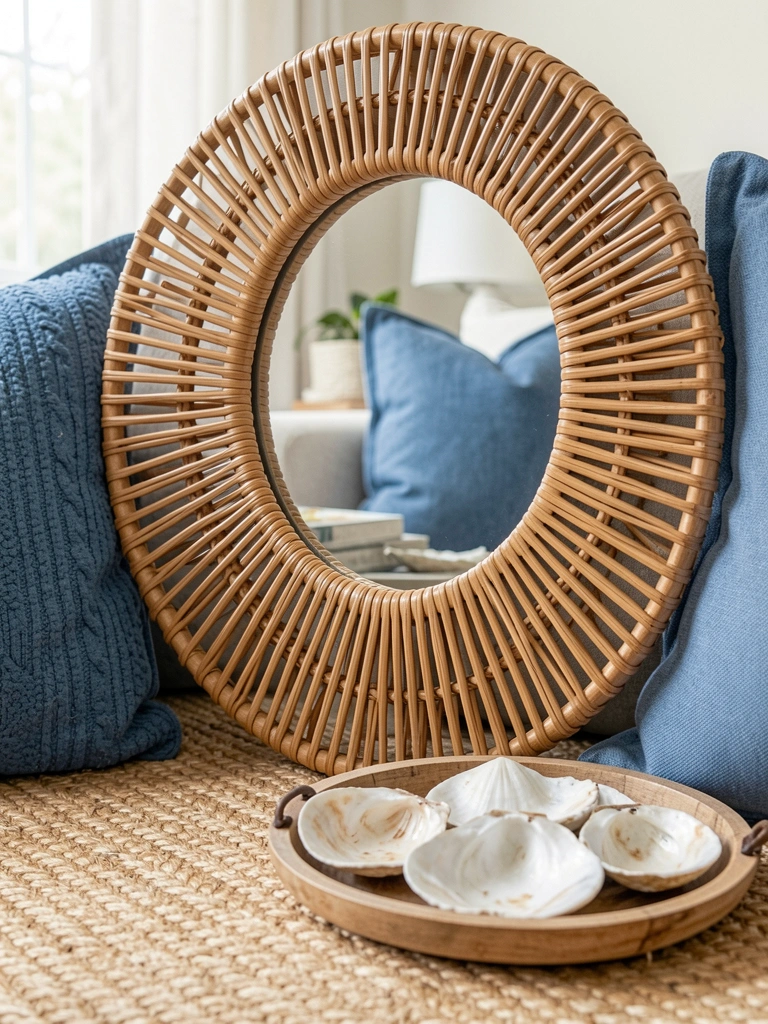
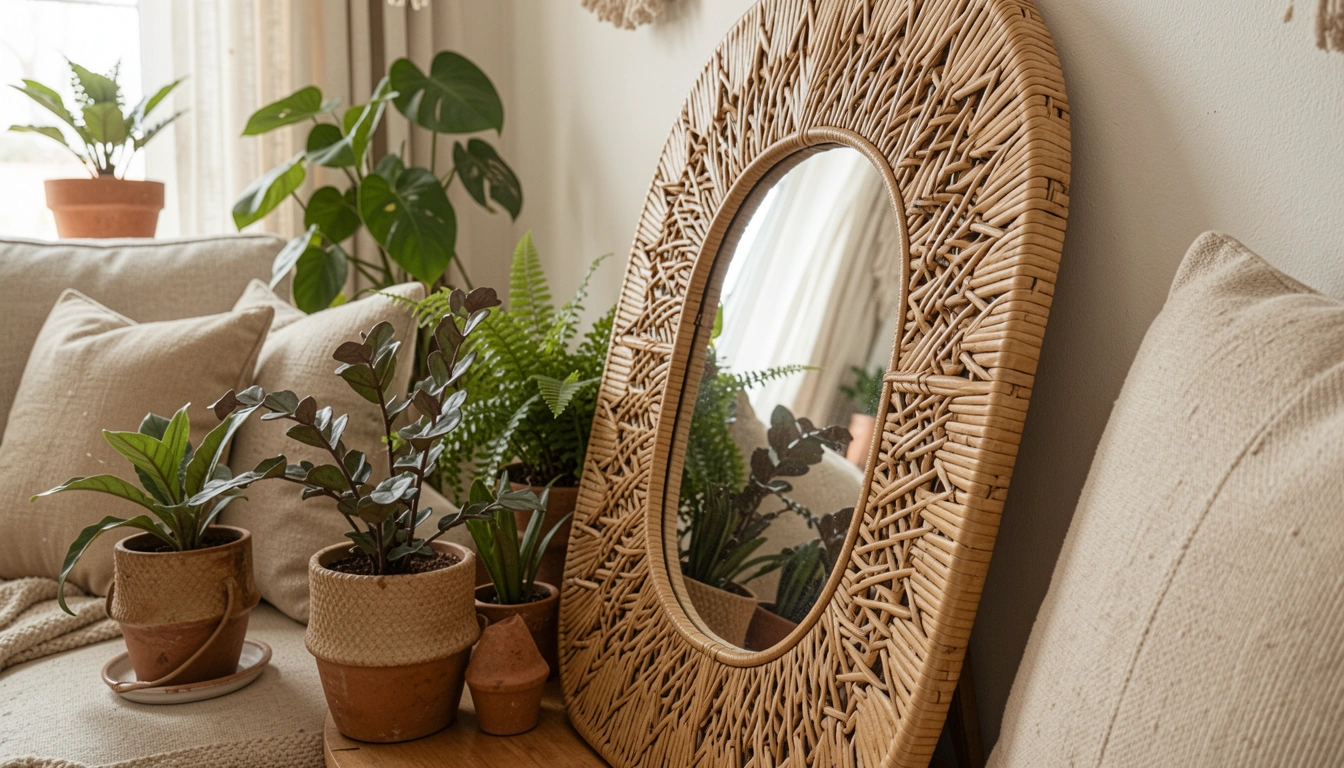
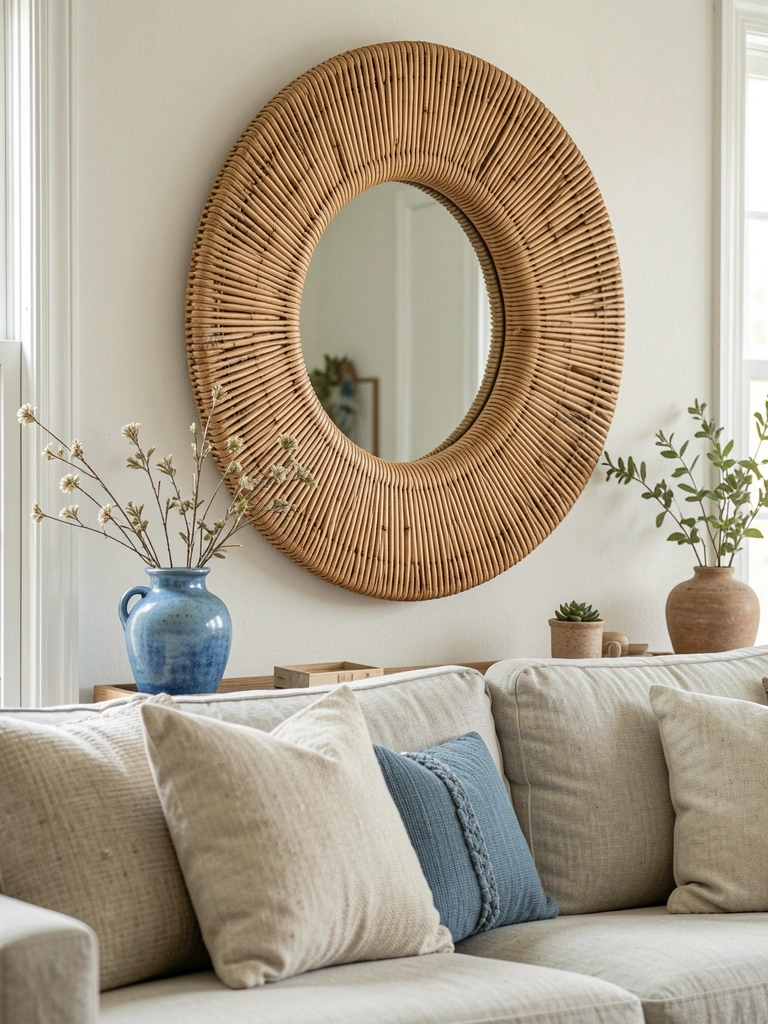
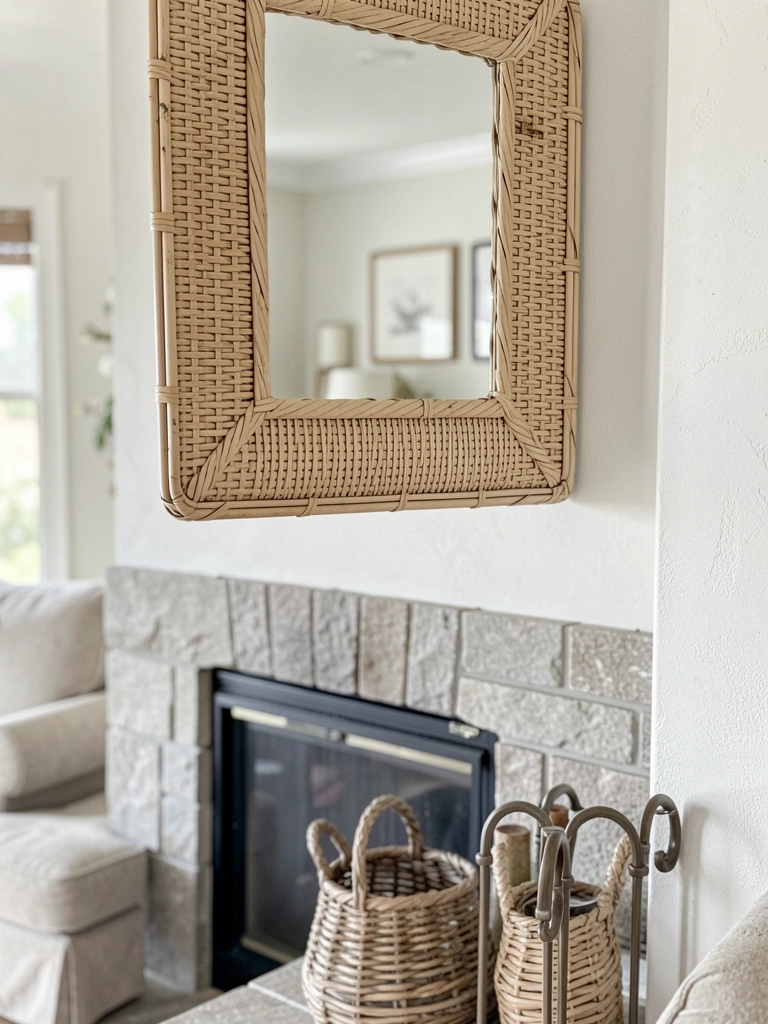
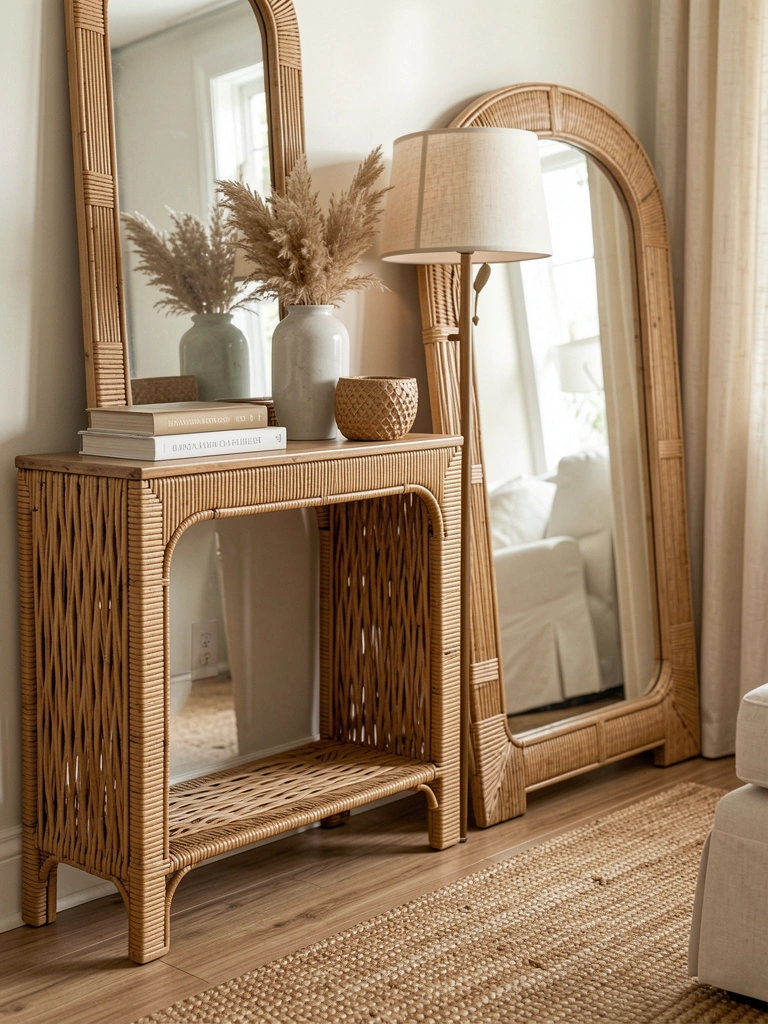
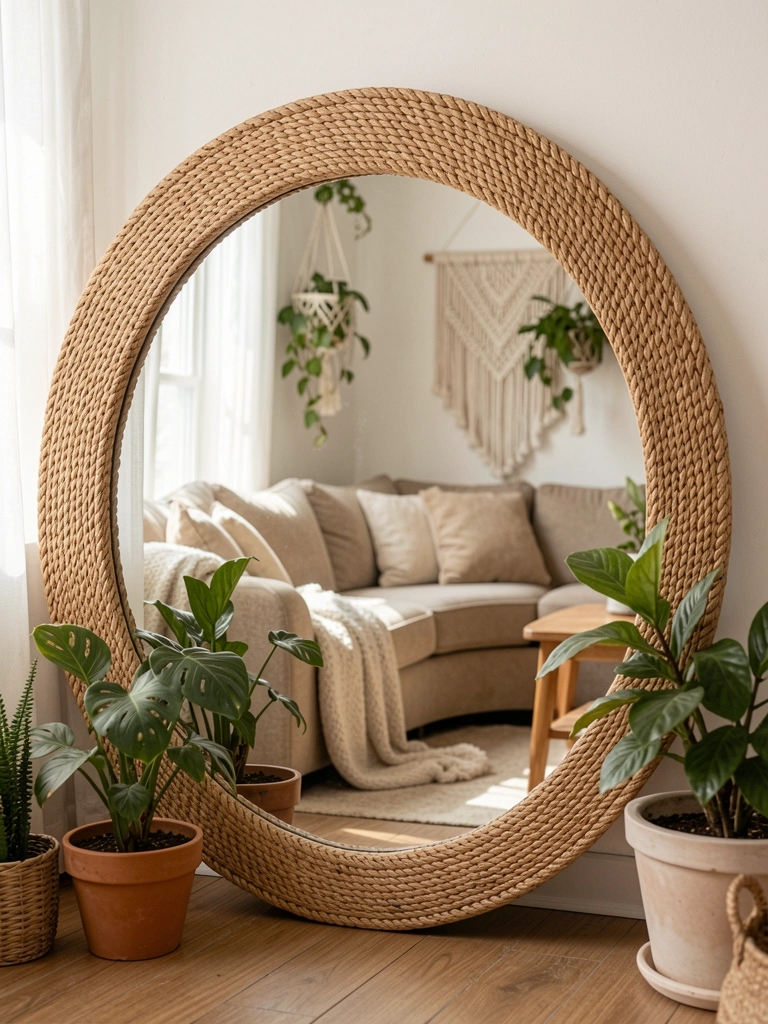
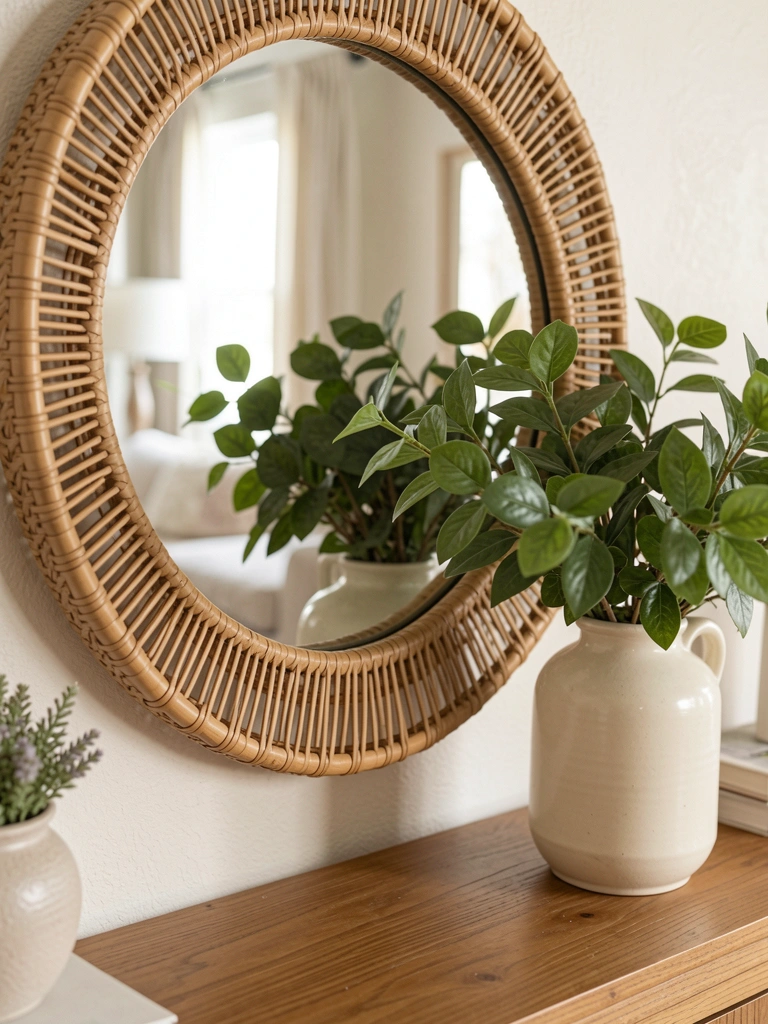
Summer remodel, I craved beach feels. Hung a rattan circle mirror over the sofa. It echoes the jute rug, softening straight lines.
Room went from stark to inviting. Light filters through weave, adds texture play.
Pick 28-inch natural rattan. Pair with blues and sands.
Hang low if ceilings are low—makes air feel light.
What You’ll Need for This Look
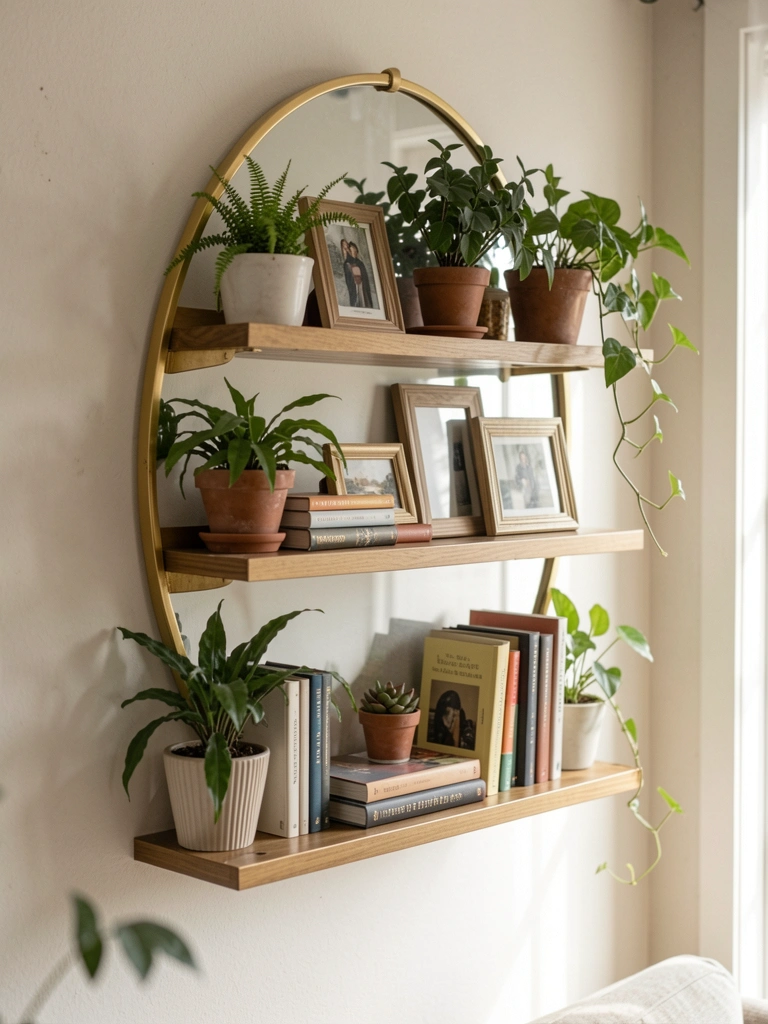
4. Gold Circle Paired with Gallery Wall Greenery
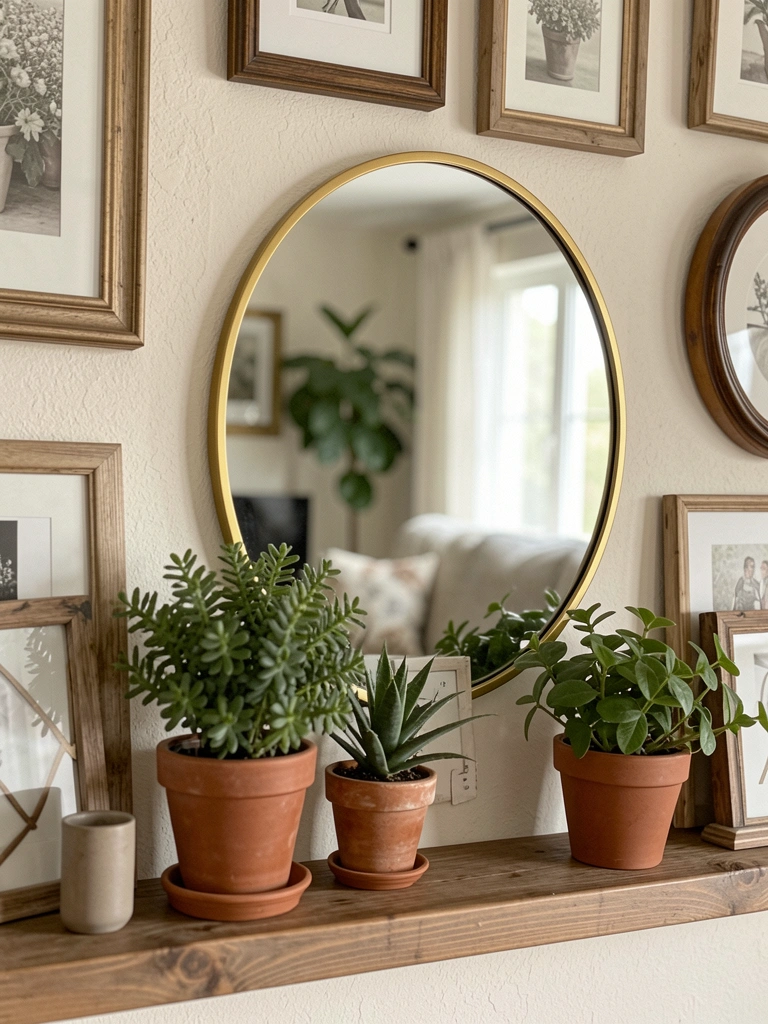
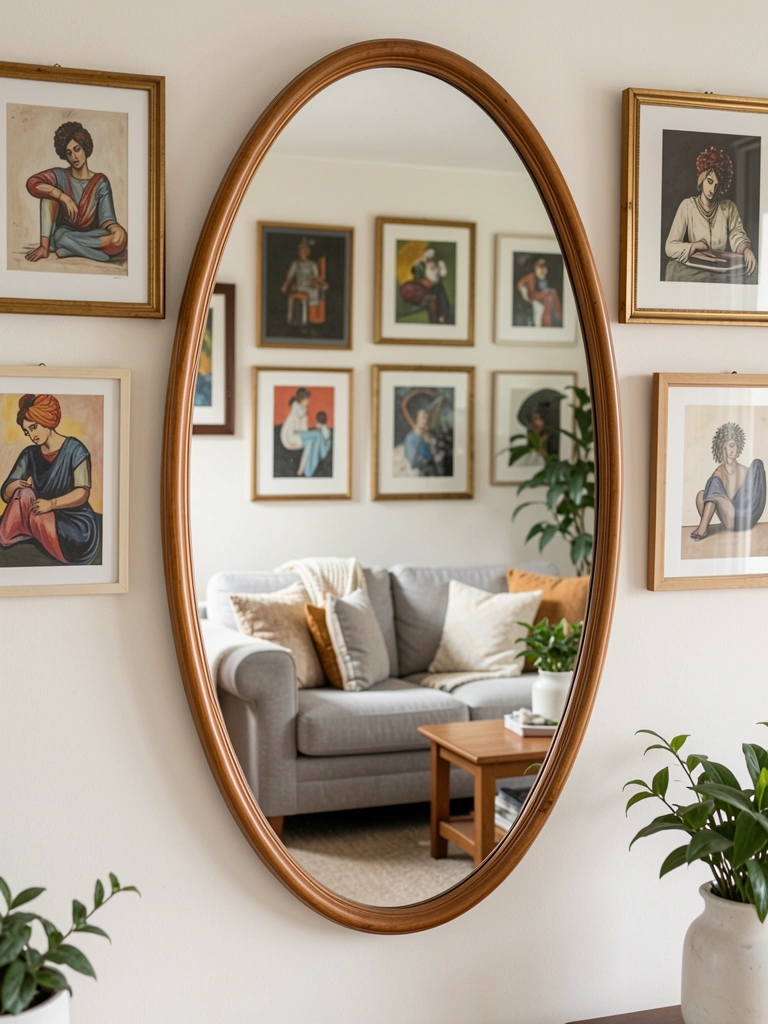
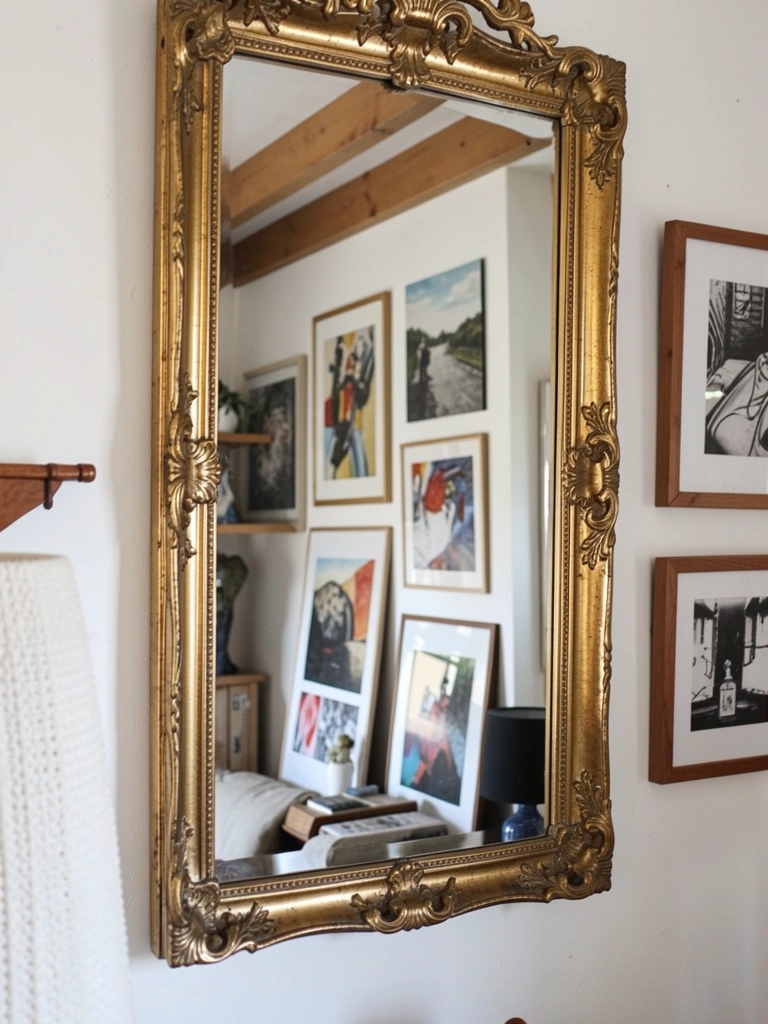
Gallery walls overwhelmed me once. I centered a gold circle mirror amid prints and plants. It ties the chaos, reflects leaves for calm motion.
Now, that wall lives. Feels curated, not crowded.
Use 20-inch gold. Surround with odd numbers—3 frames, 2 plants.
I overhung frames first; step back to check balance.
What You’ll Need for This Look
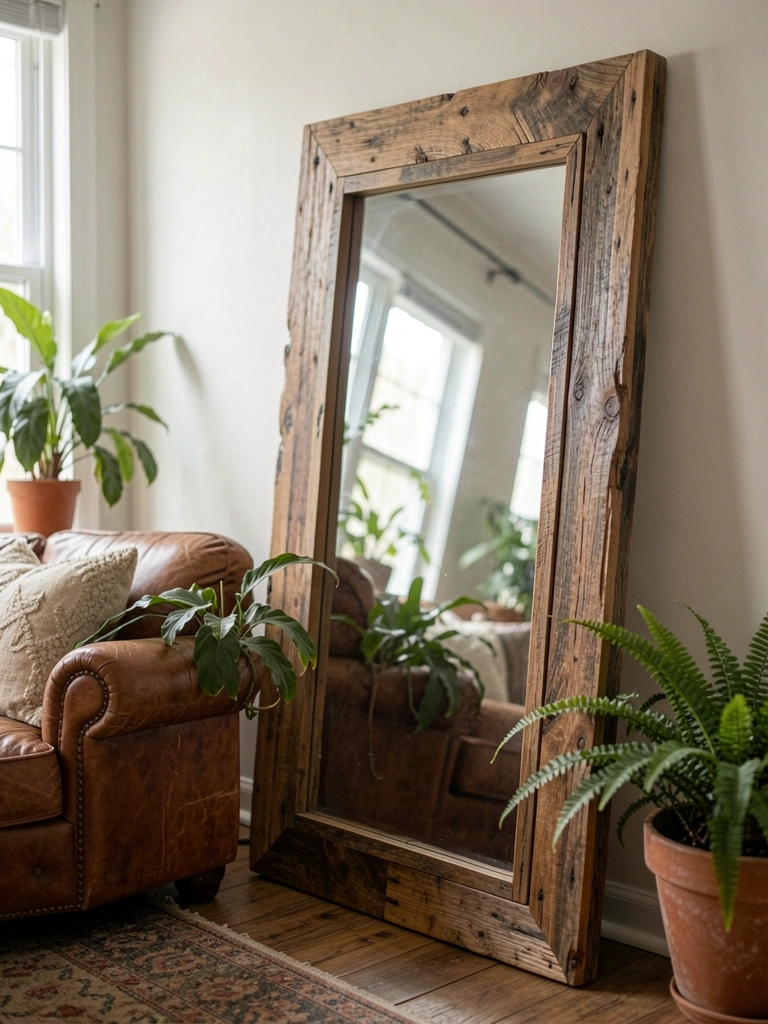
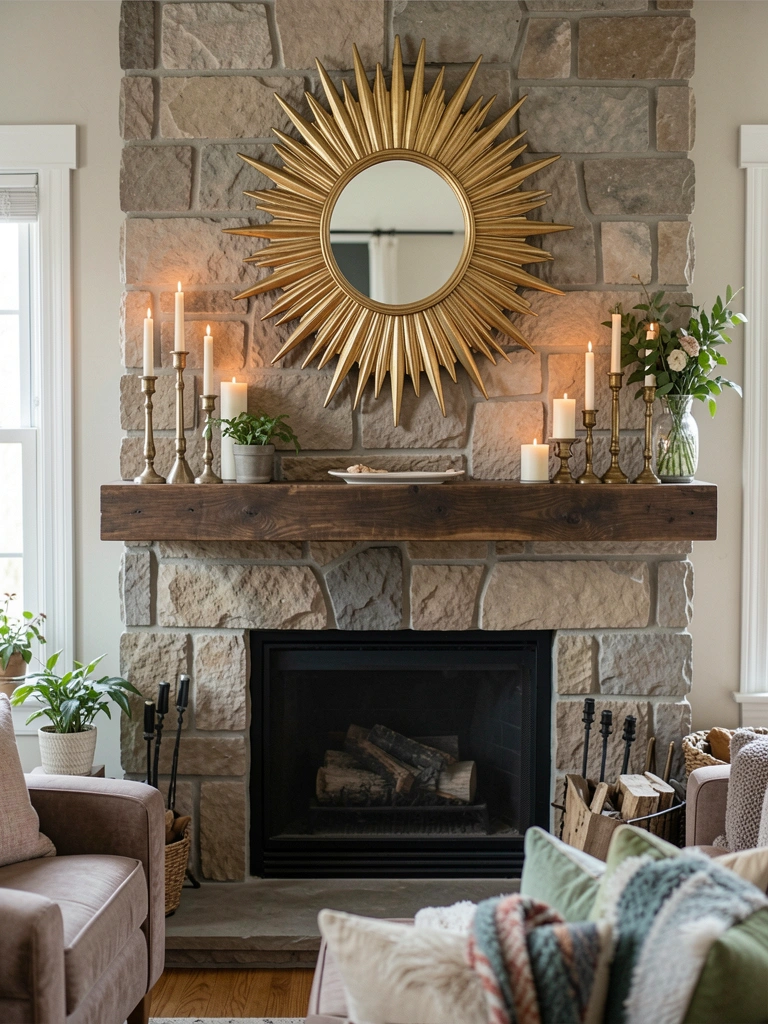
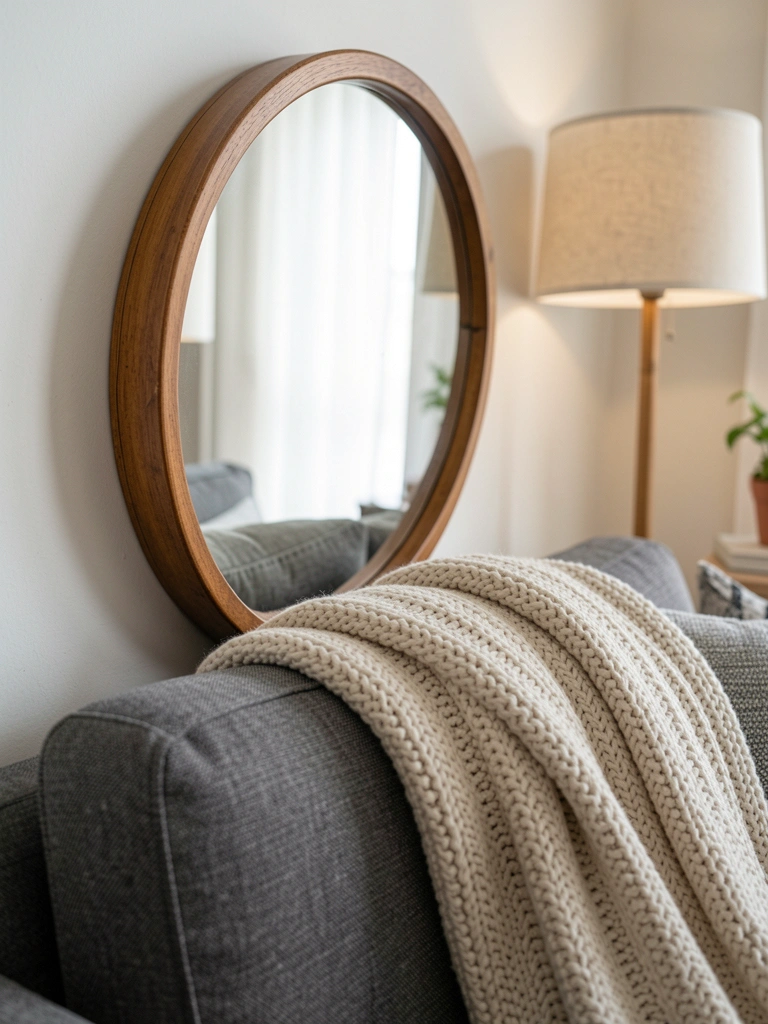
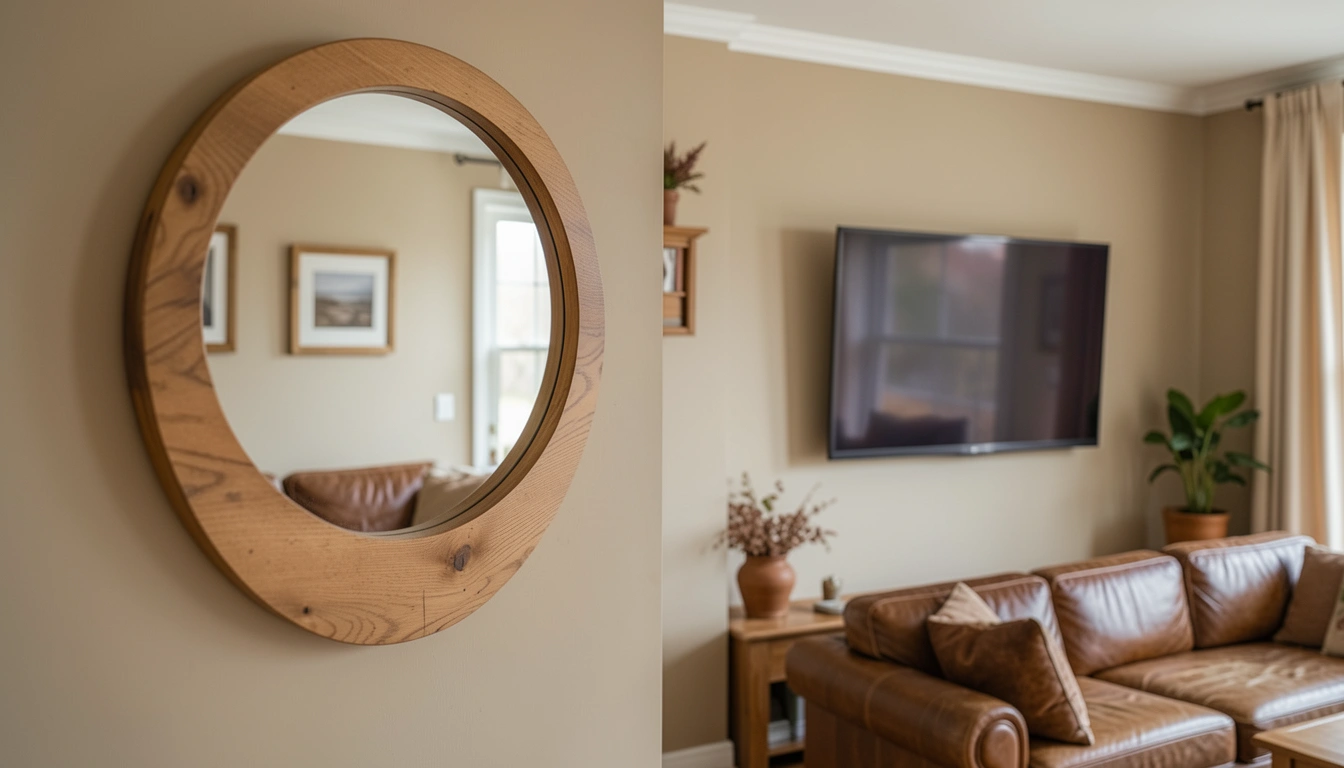
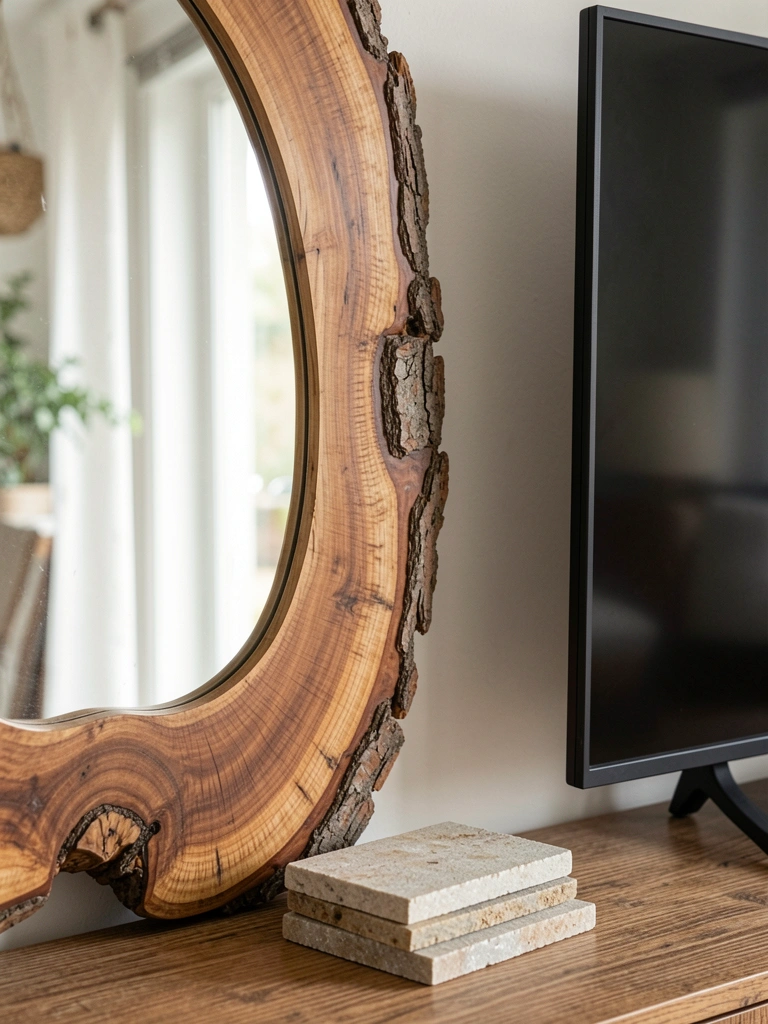
5. Vintage Wood Circle Over the Mantel
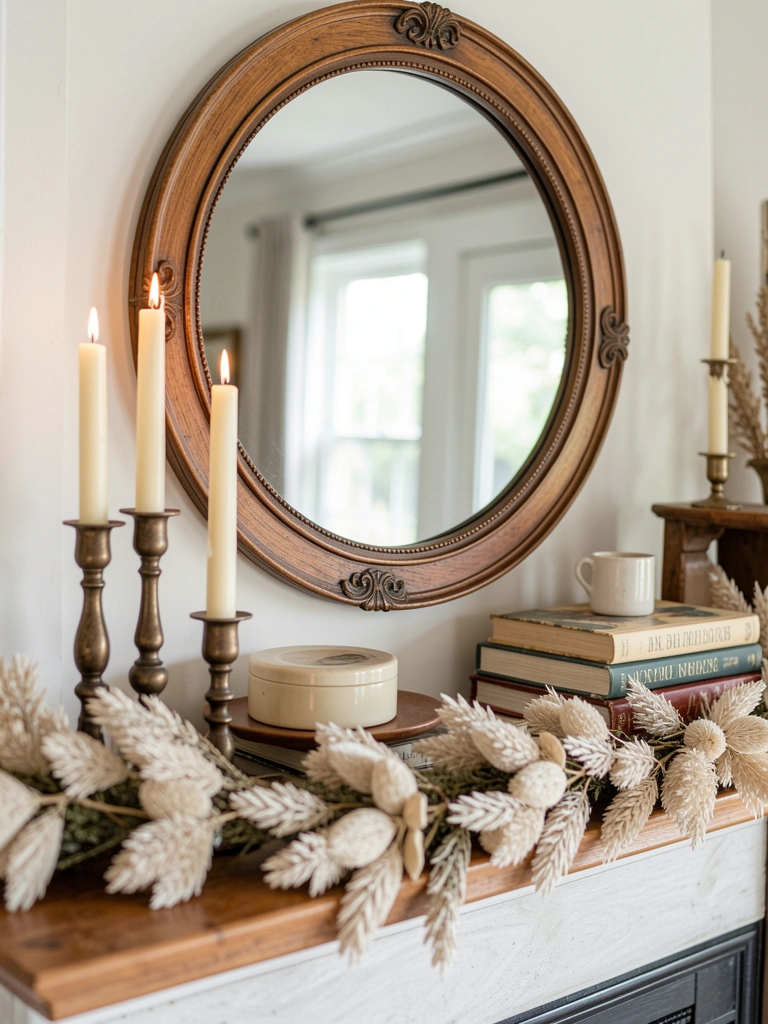
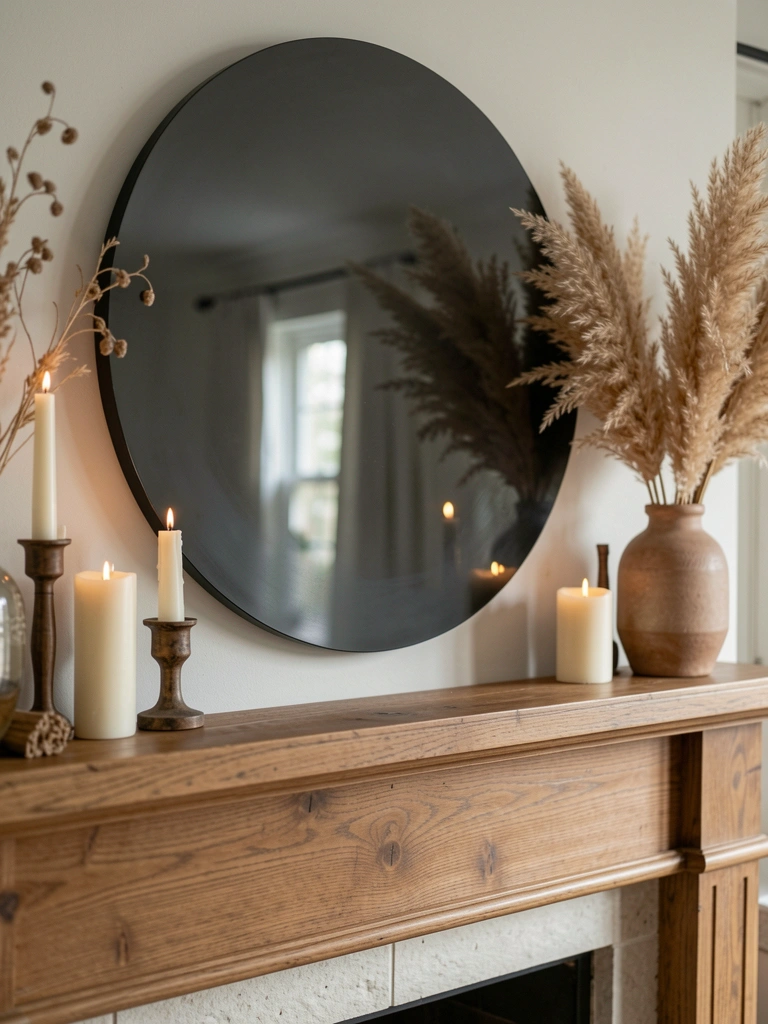
Fireplace wall begged for warmth. I found a weathered wood circle mirror for the mantel. It mirrors flames, adds rustic depth without fussy decor.
Room feels like a cabin now—cozy nights improved.
36-inch distressed wood works best. Layer low mantel stuff sparingly.
Wood scratches easy; use felt pads under candles.
What You’ll Need for This Look
36-inch distressed wood circle mirror
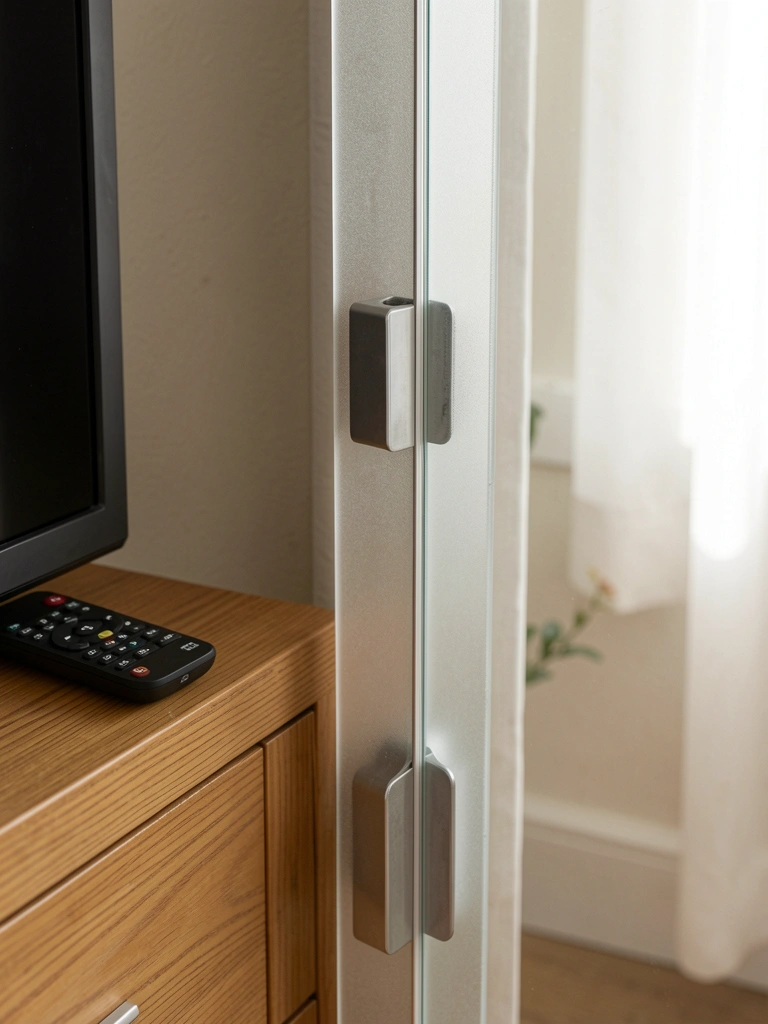
6. Slim Chrome Circle in Modern Gray Space
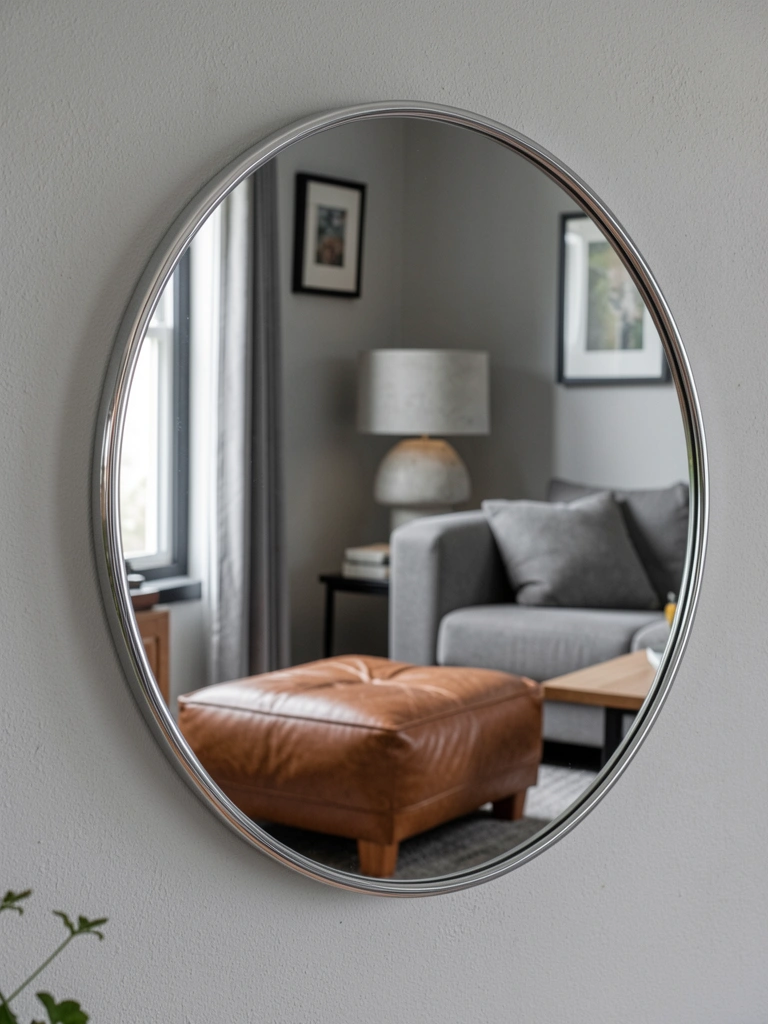
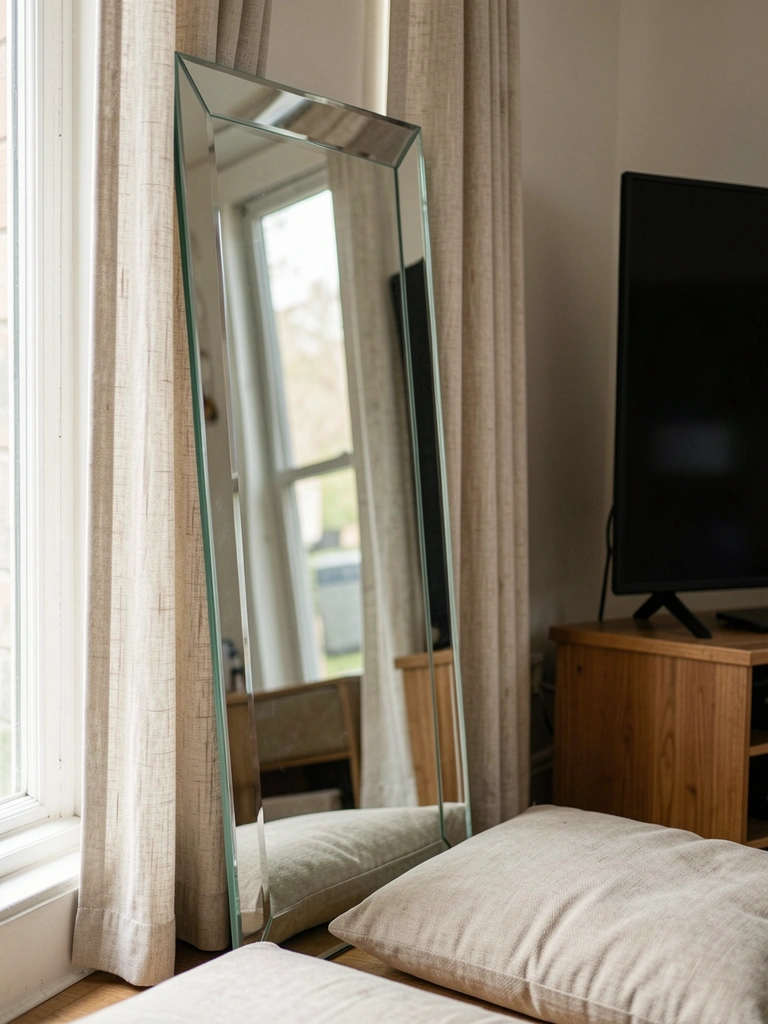
Grays felt cold until chrome circle went up beside the TV. Reflects windows, softens edges.
Space reads sleek now, not sterile. Light plays all day.
24-inch slim chrome. Off-center for interest.
Chrome fingerprints? Microfiber cloth daily.
What You’ll Need for This Look
24-inch slim chrome circle mirror
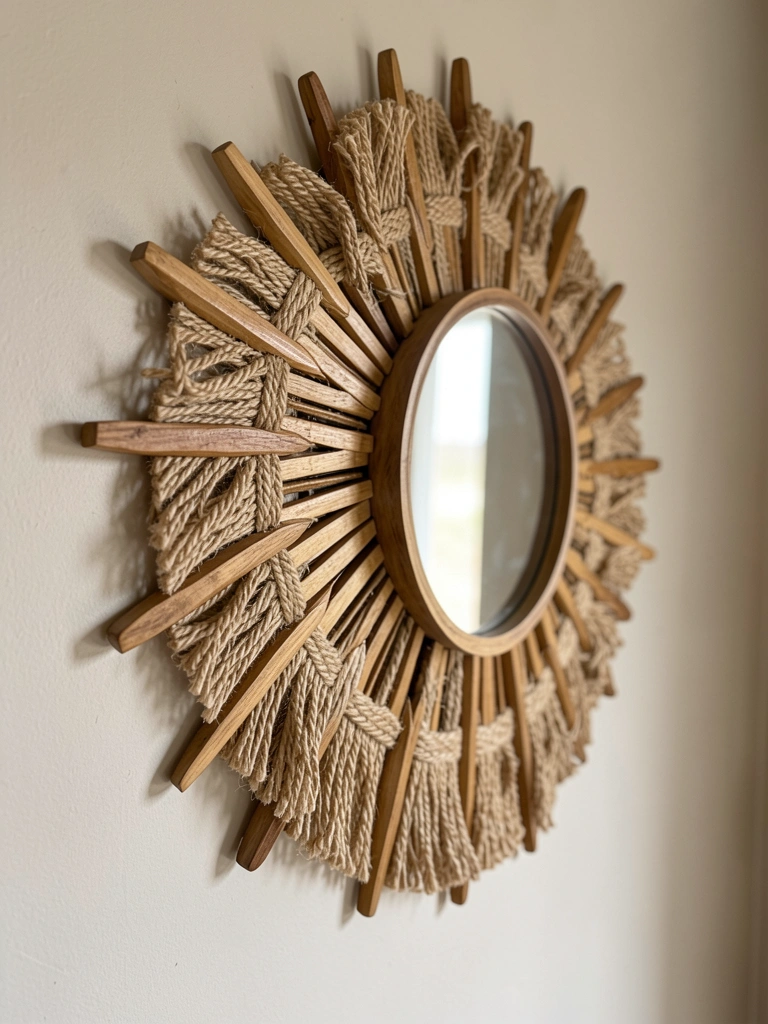
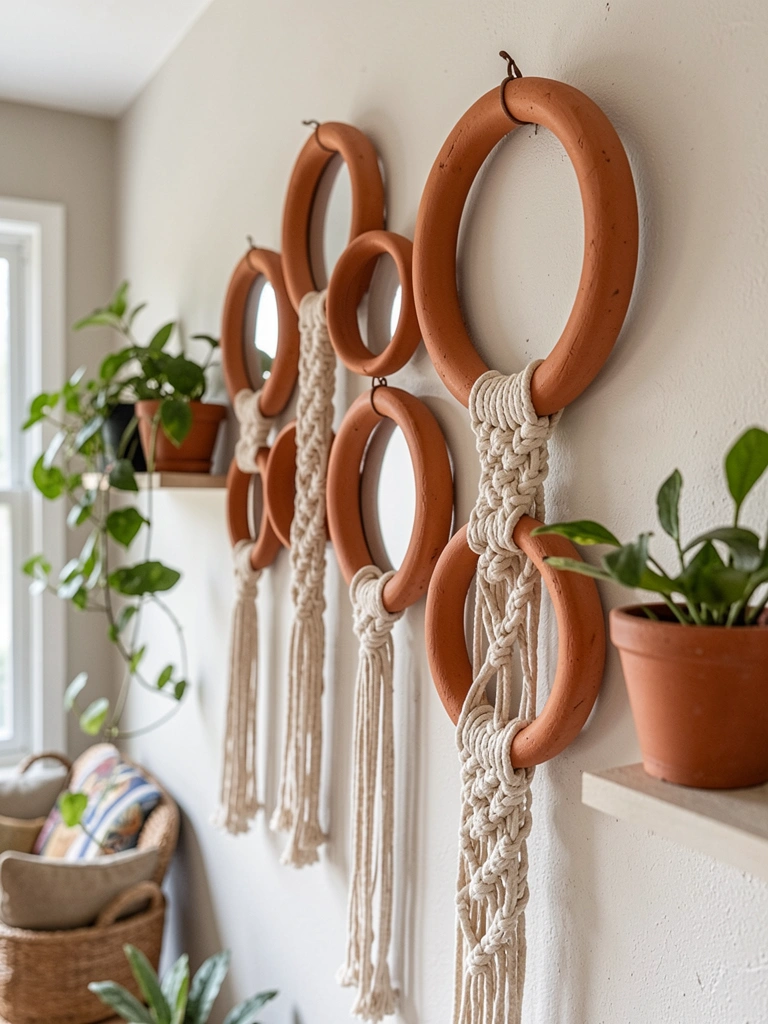
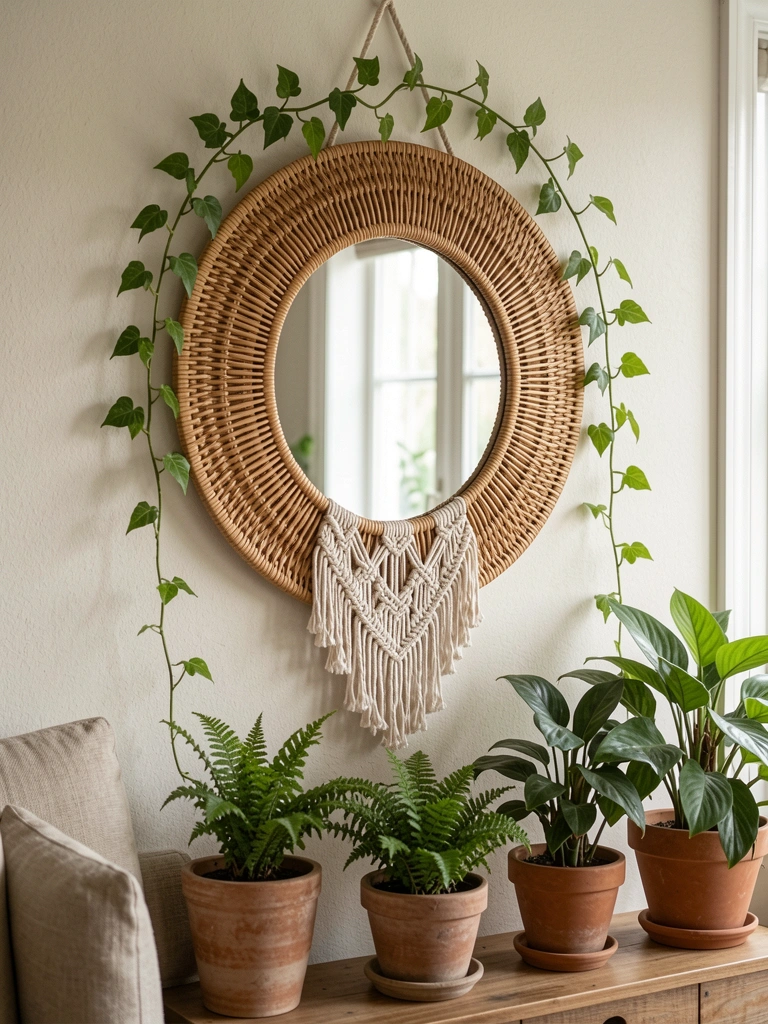
7. Macrame Wrapped Circle for Boho Vibes
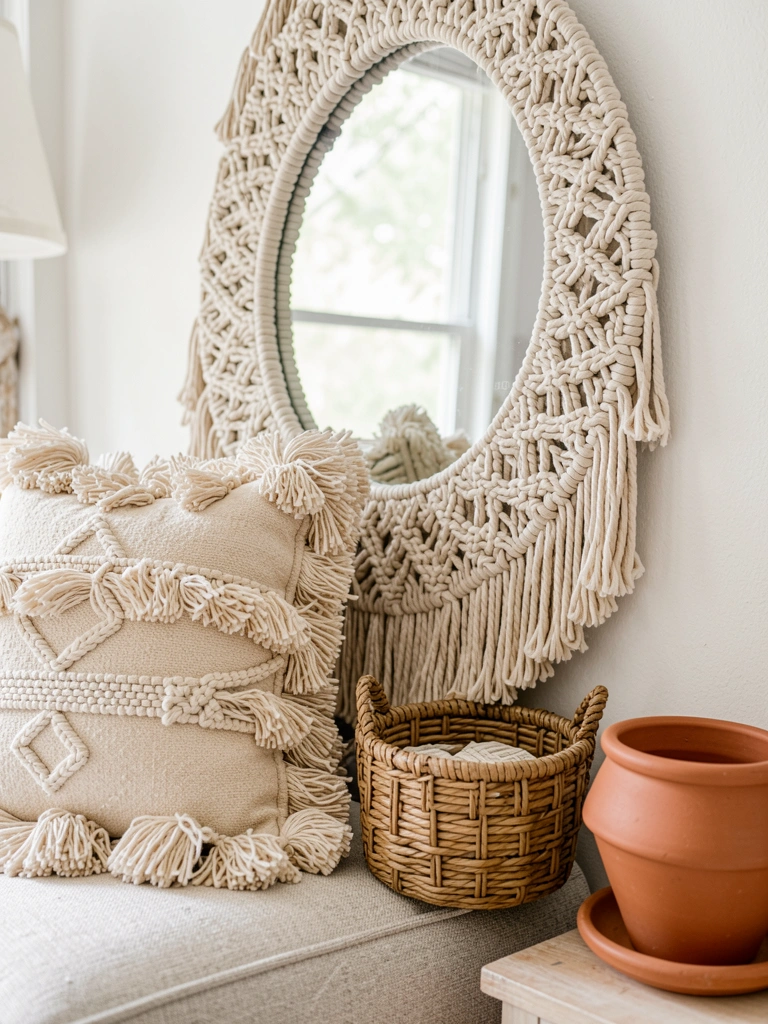
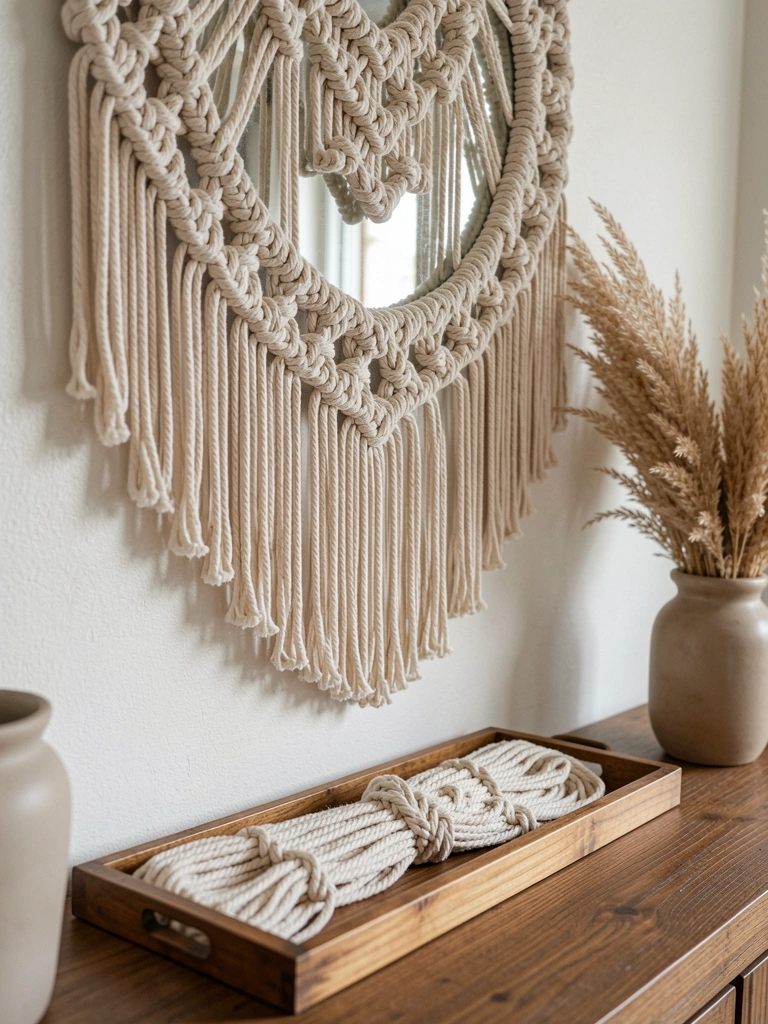
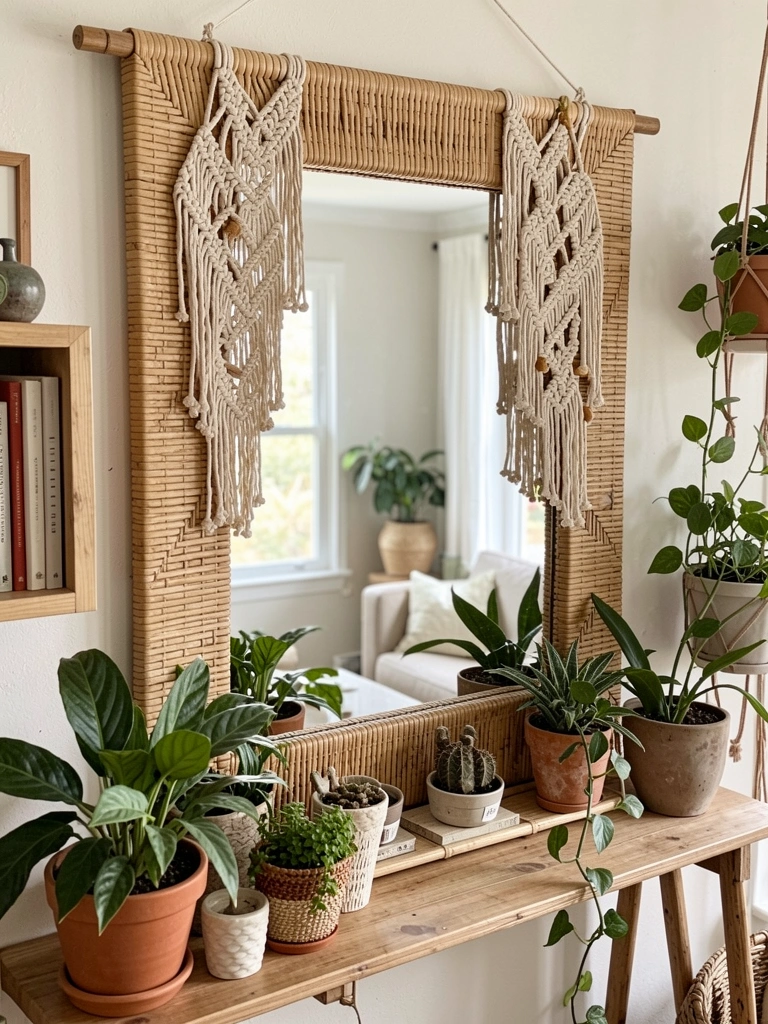
Boho hit my rental hard. Macrame circle mirror over the side table caught every breeze, swaying plants reflected.
Feels free, not messy. Textures layer soft.
26-inch mirror with cotton wrap. Hang from hook for movement.
Macrame frays; trim loose threads monthly.
What You’ll Need for This Look
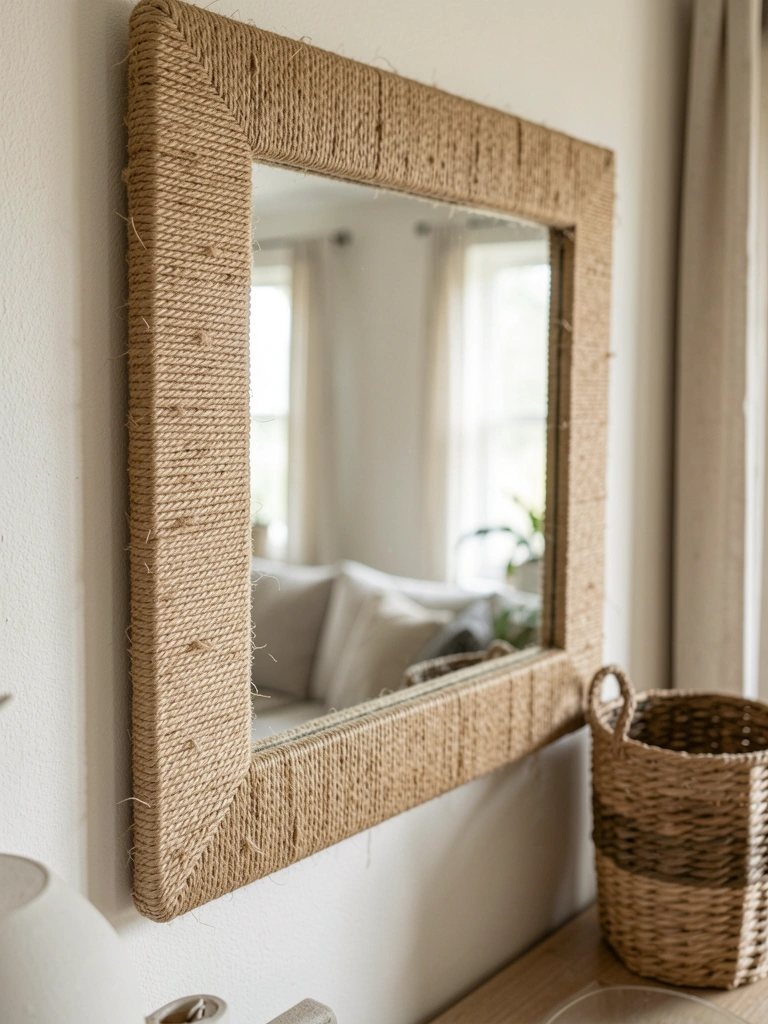
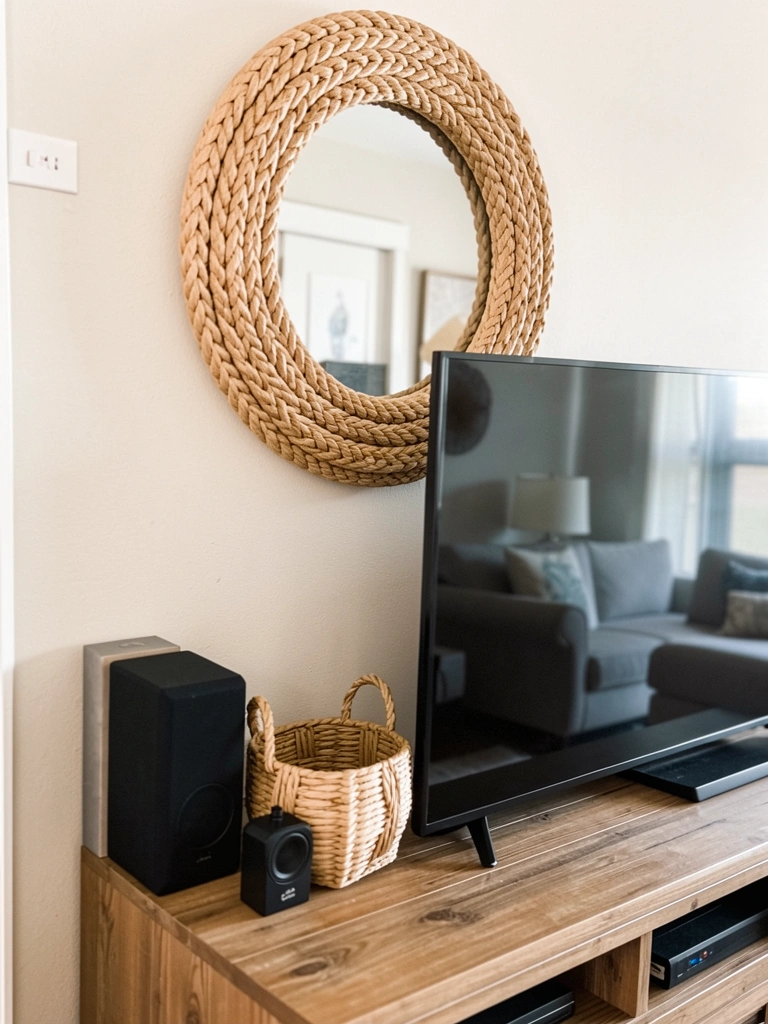
8. Textured Rope Circle Beside the Bookshelf
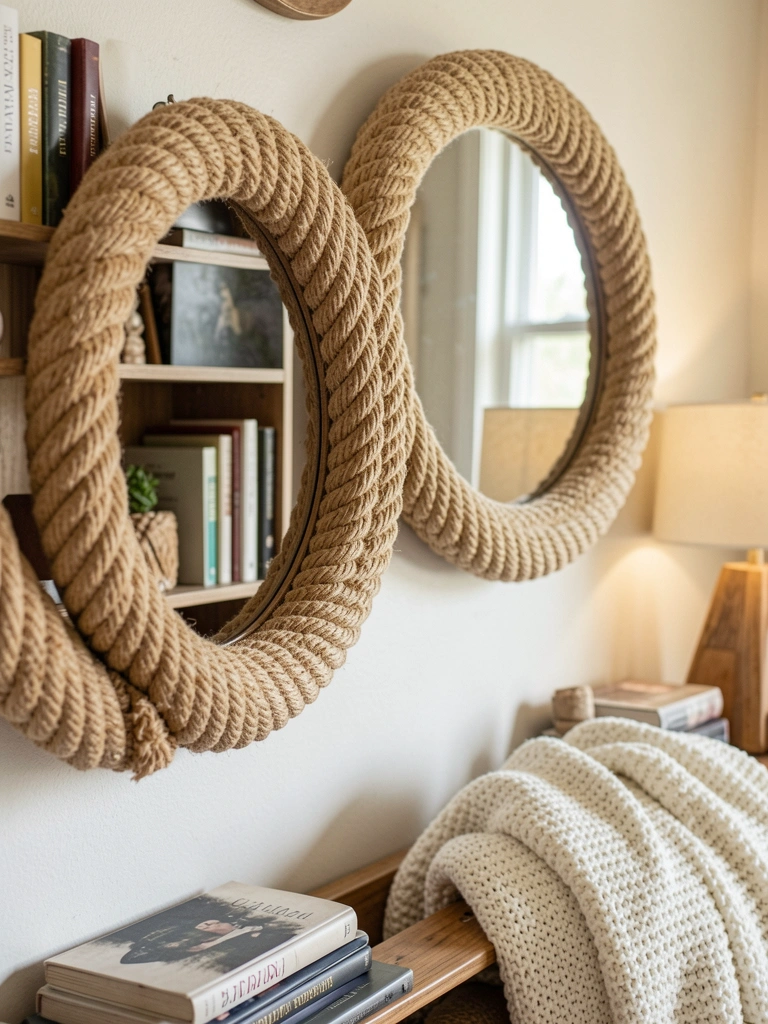
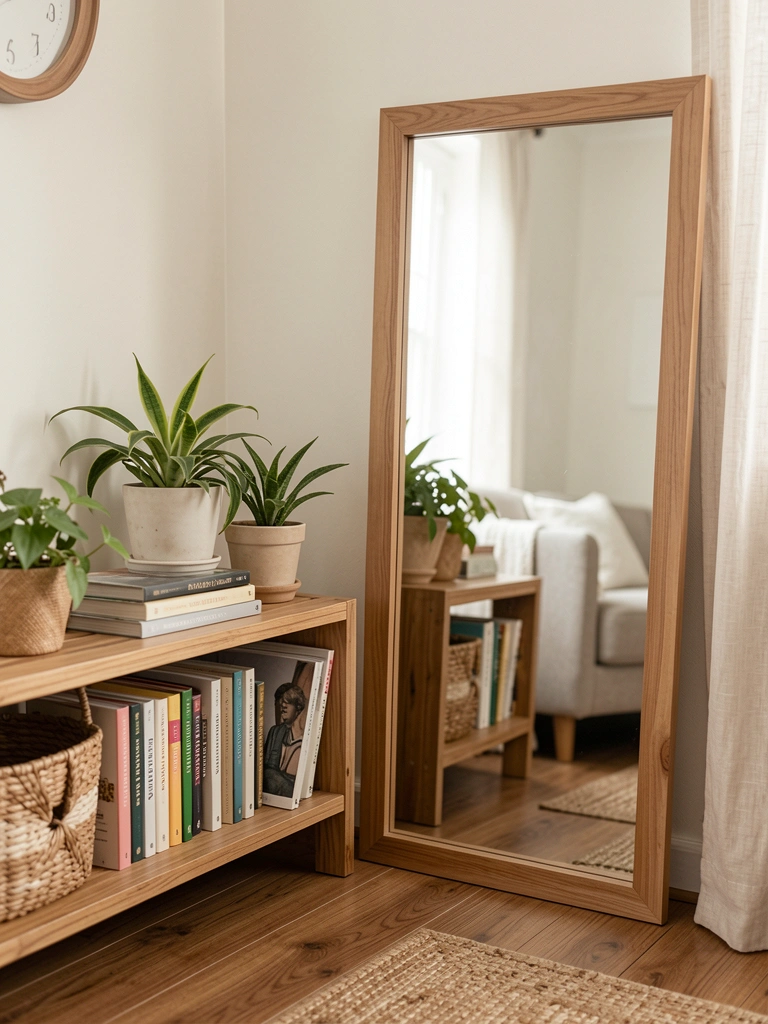
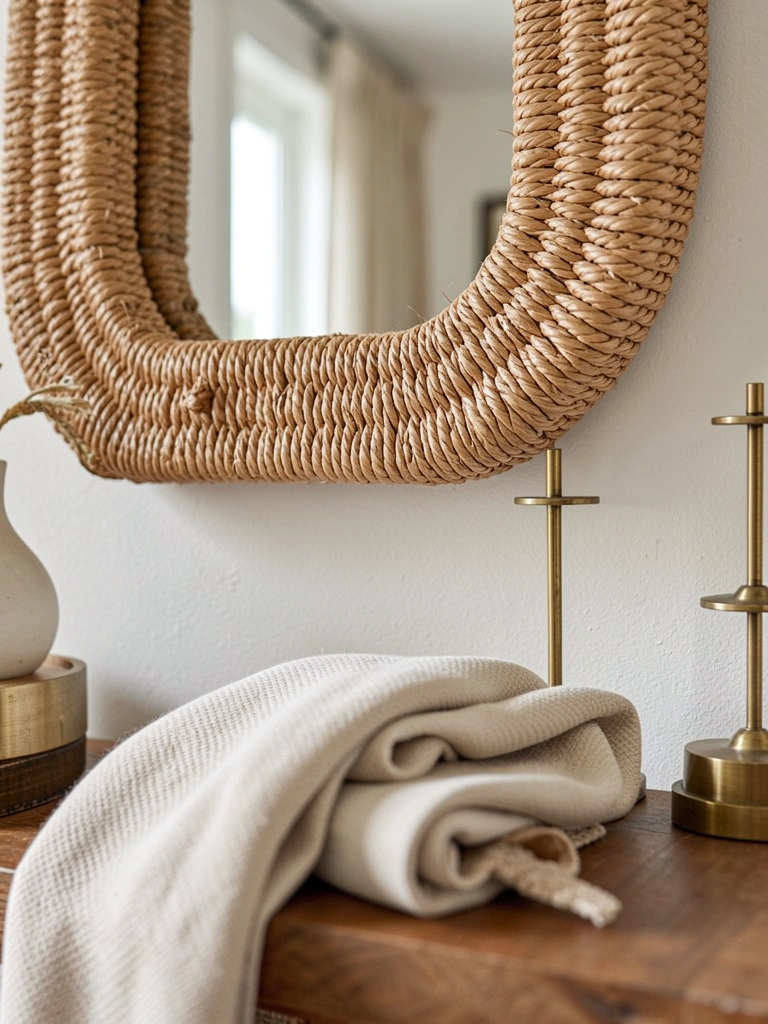
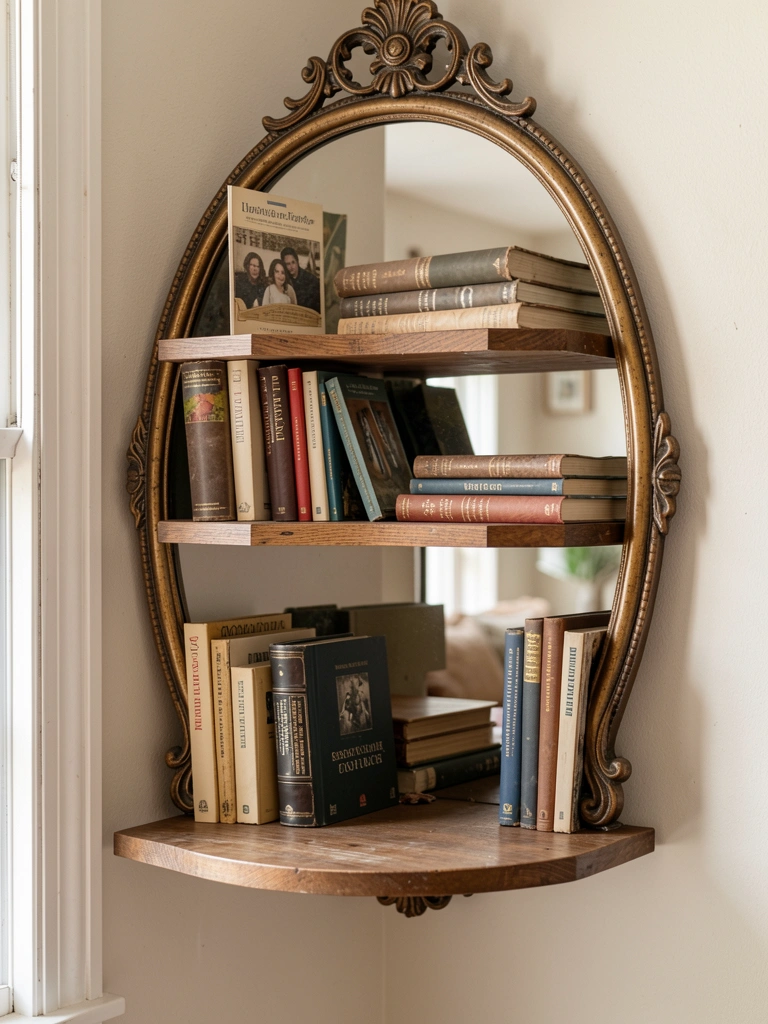
Bookshelf wall lacked punch. Rope circle mirror next to it mirrors shelves, doubles the color pops.
Now, reading spot feels wrapped in texture. Cozier evenings.
22-inch rope frame. Align top with shelf height.
I picked too thick rope once; thin twists blend better.
What You’ll Need for This Look
9. Multi-Small Circles Clustered on Blank Wall
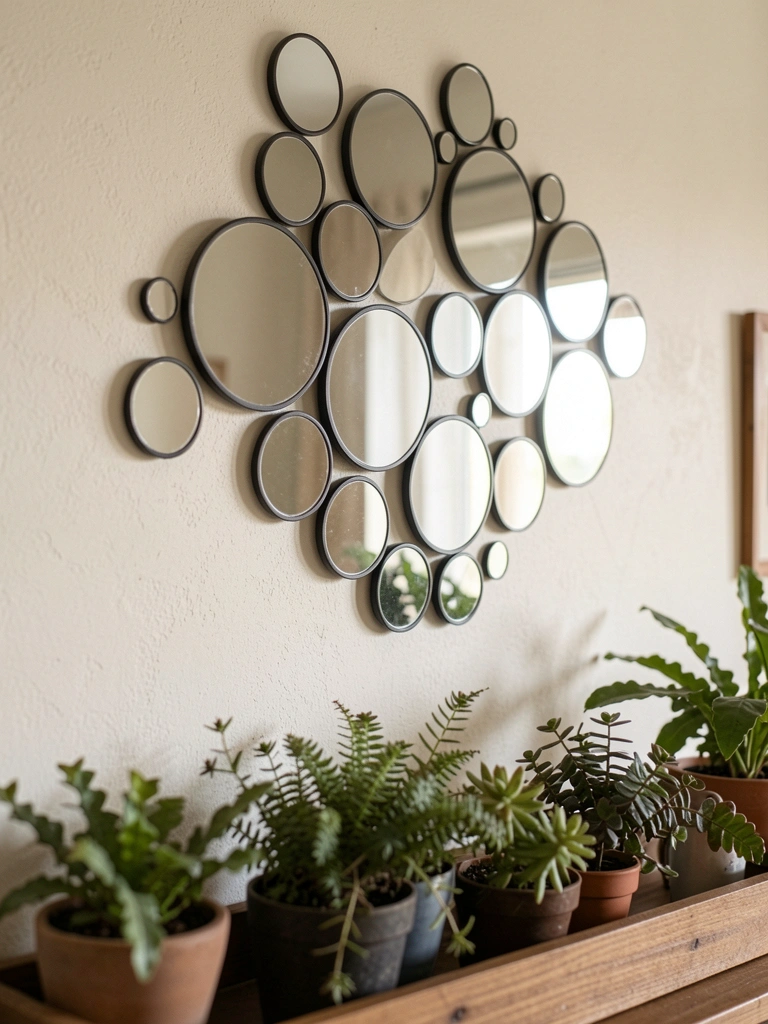
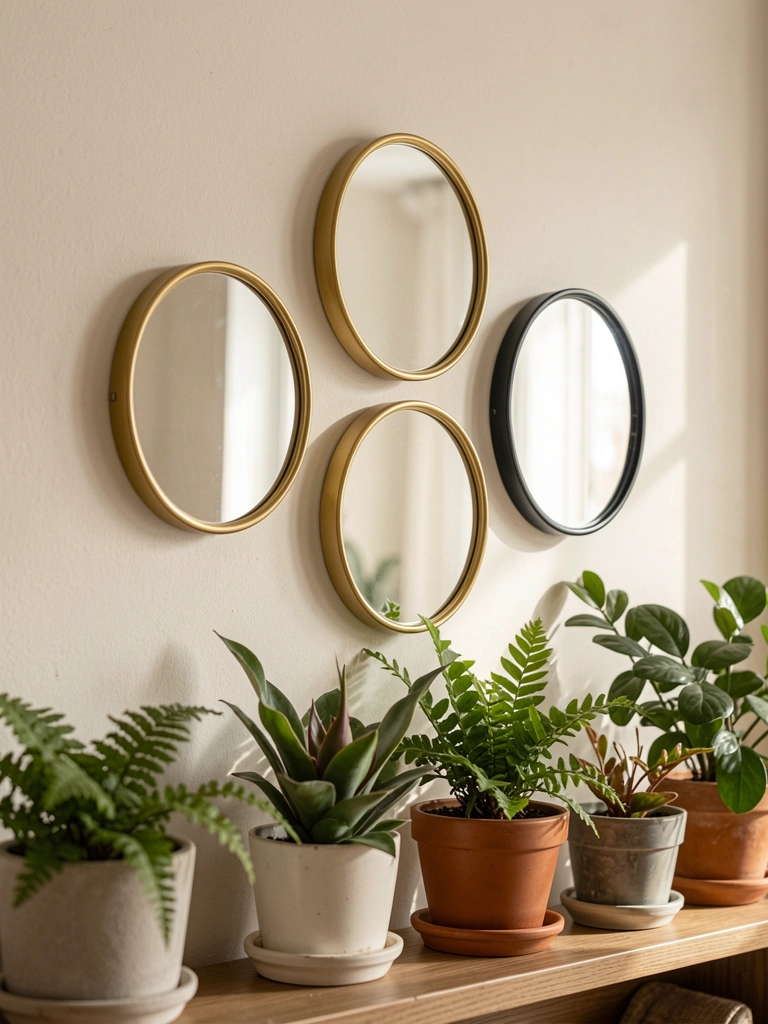
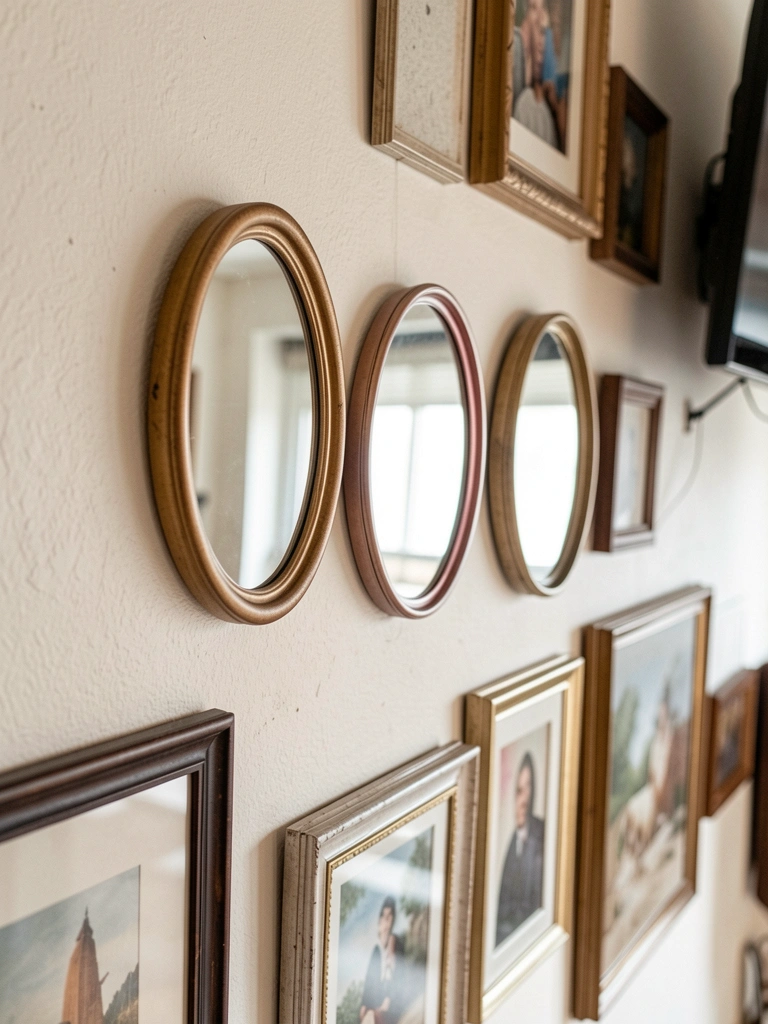
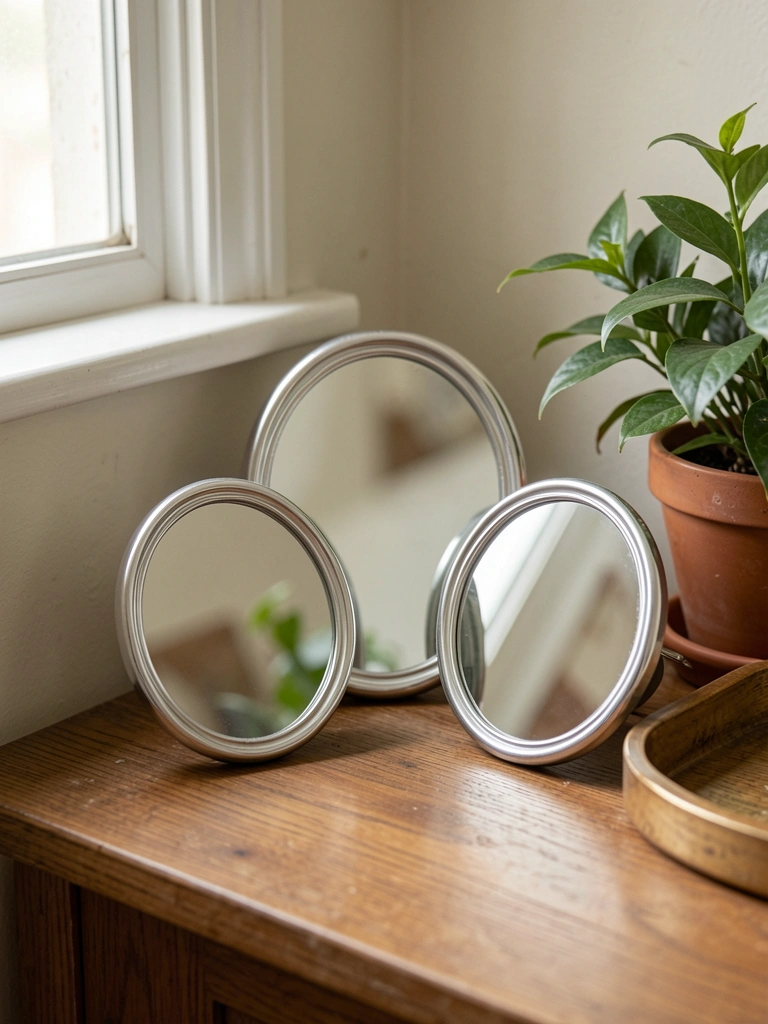
Blank wall stared back forever. Clustered five small circles—mirrors bounce light like jewelry.
Wall sparks now. Playful without trying.
Mix 12-18 inch sizes, gold and silver. Space 2 inches apart.
Odd numbers feel natural.
What You’ll Need for This Look
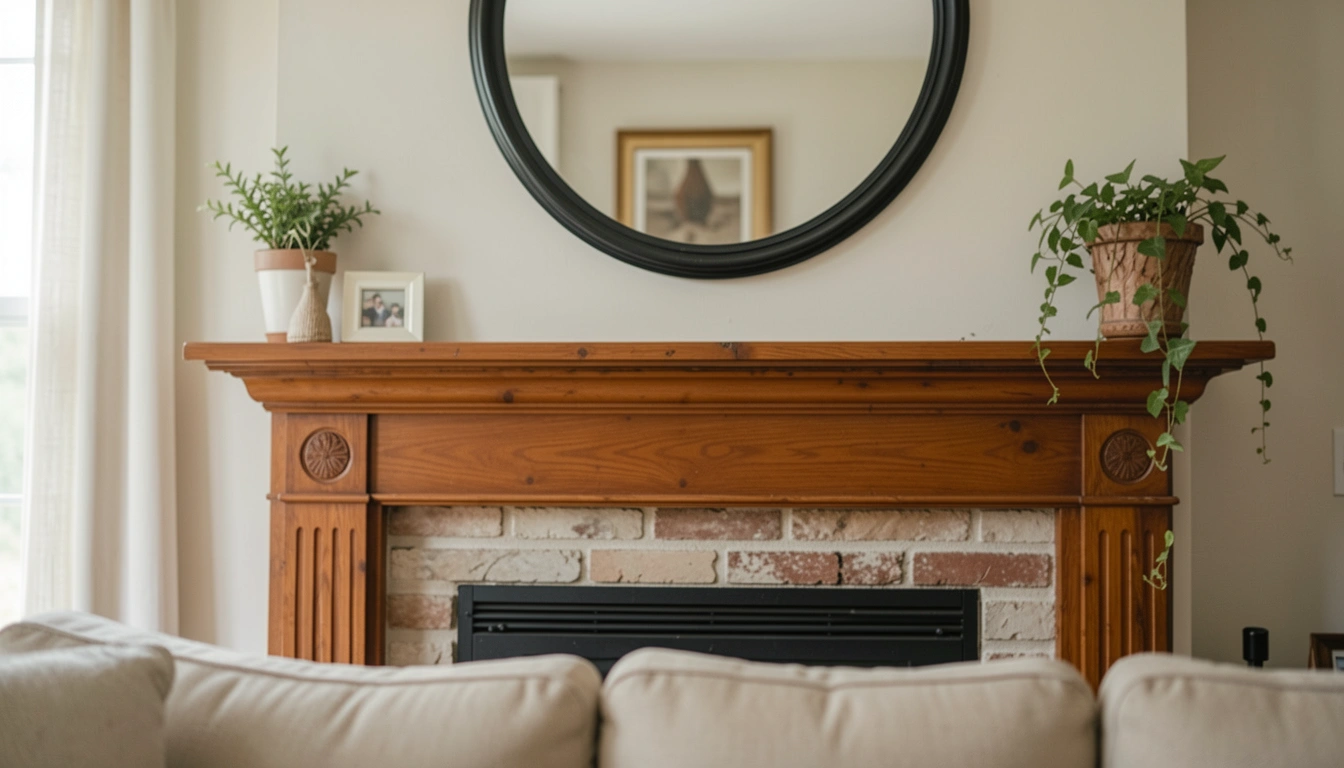
10. Matte Black Circle Above Tufted Sofa
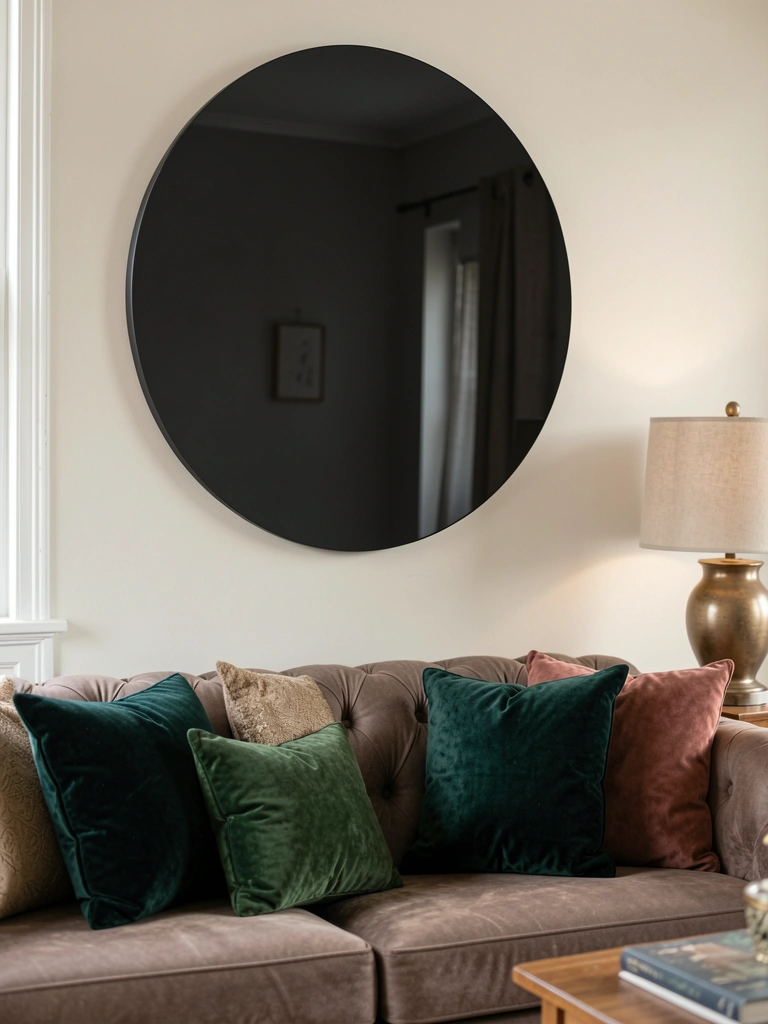
Tufted sofa needed anchor. Matte black circle centered above it grounds the plush.
Room balances soft and sharp. Feels pulled together.
30-inch matte black. 8 inches above sofa back.
Matte doesn't glare like gloss.
What You’ll Need for This Look
30-inch matte black circle mirror
11. Bamboo Circle with Farmhouse Neutrals
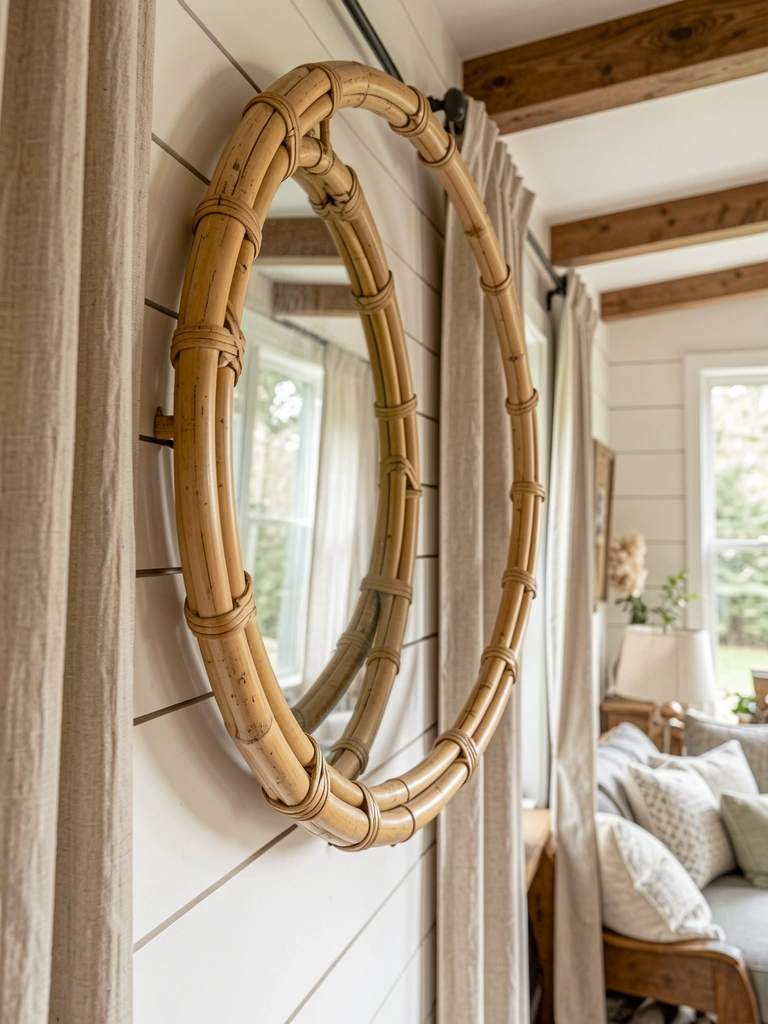
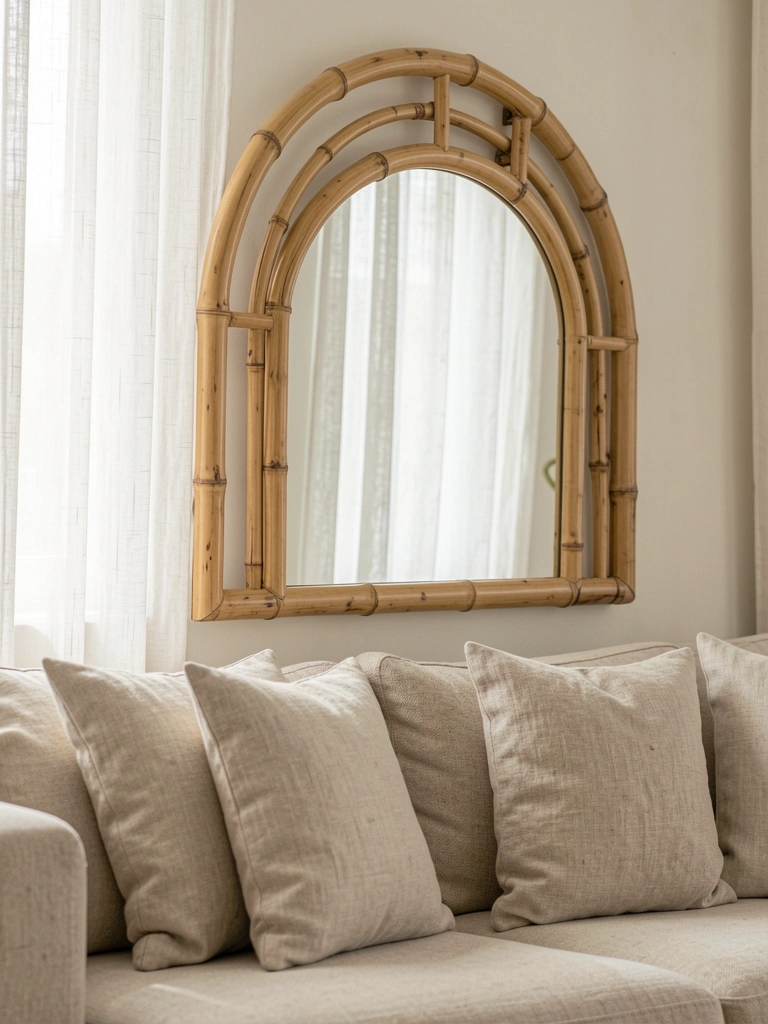
Farmhouse redo, bamboo circle over sideboard warmed the shiplap. Reflects beams, adds height.
Kitchen-living flows easy now.
28-inch bamboo. Natural finish shines.
Bamboo warps in humidity; acclimate first.
What You’ll Need for This Look
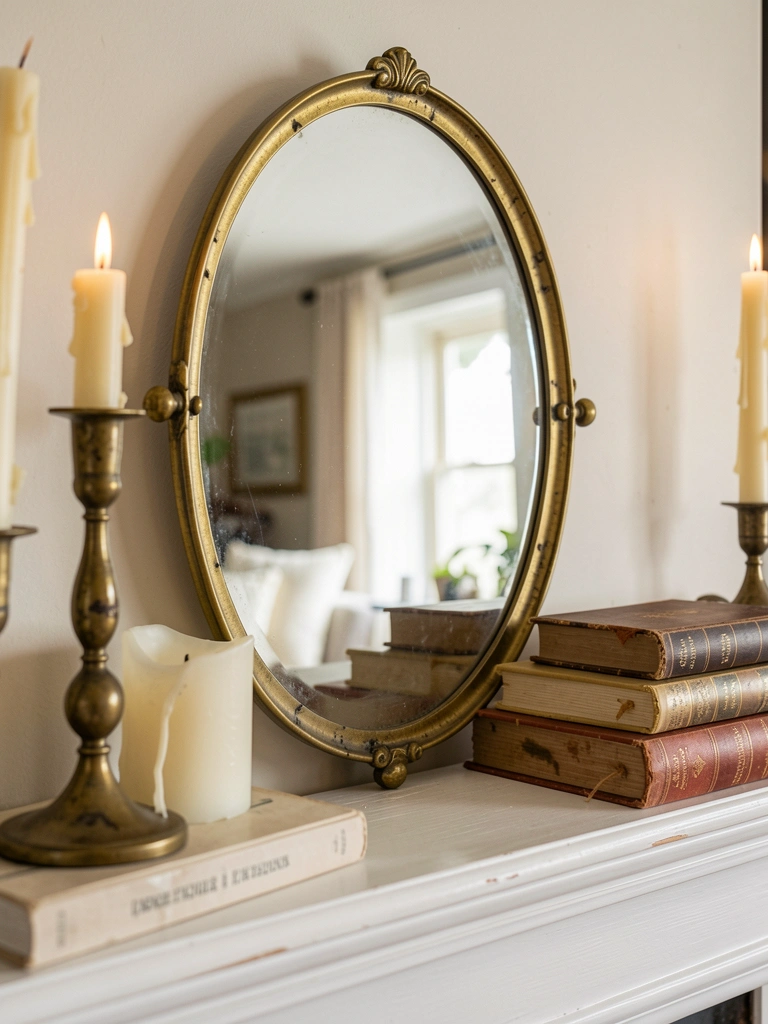
12. Antique Brass Circle Flanking Window
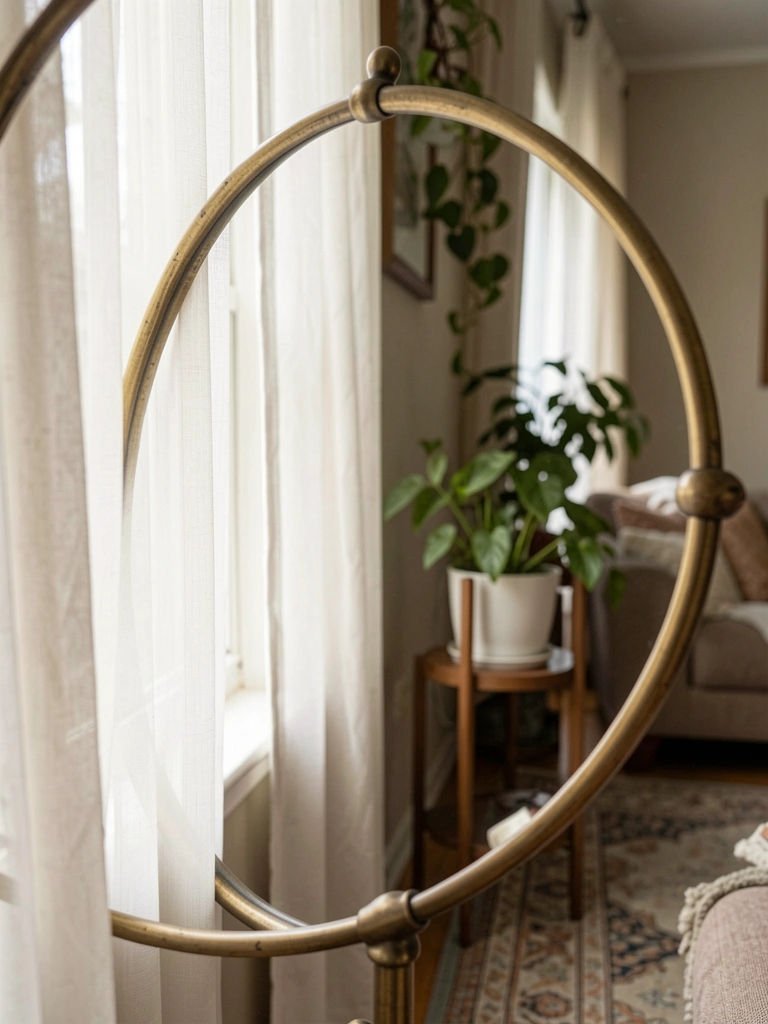
Window wall dimmed corners. Two antique brass circles flanked it—doubles daylight inside.
Room glows even rainy days.
18-inch pair. Same height, 12 inches apart.
I mismatched sizes first; twins unify.
What You’ll Need for This Look
Pair 18-inch antique brass circle mirrors
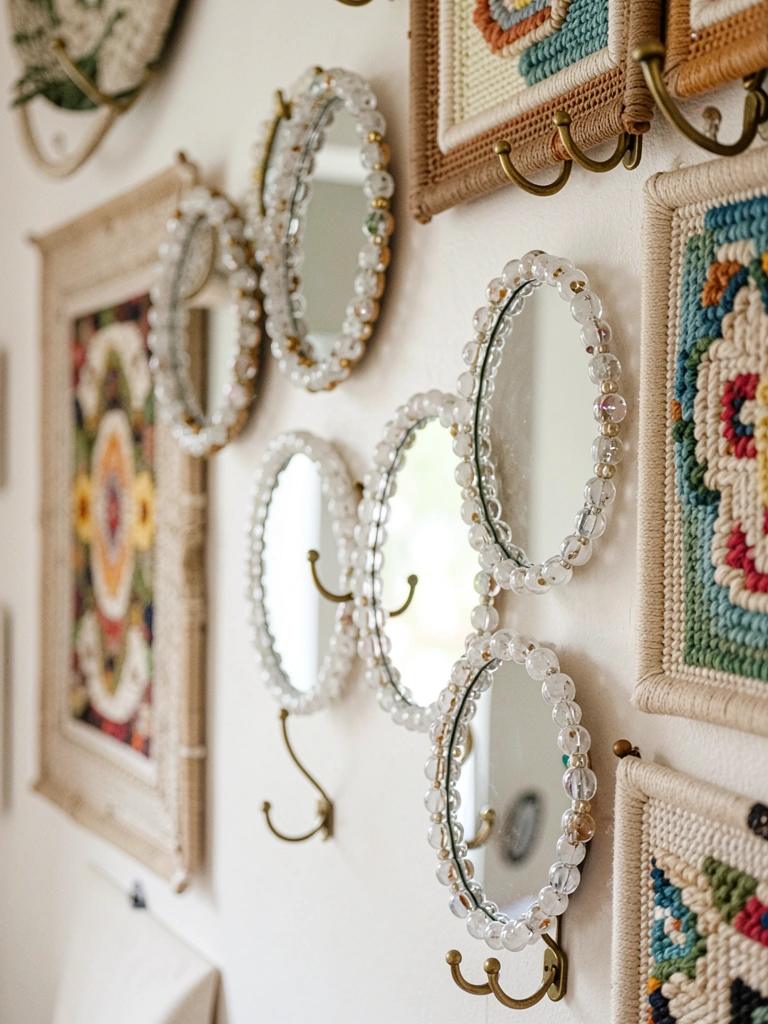
13. Beaded Circle for Subtle Glam
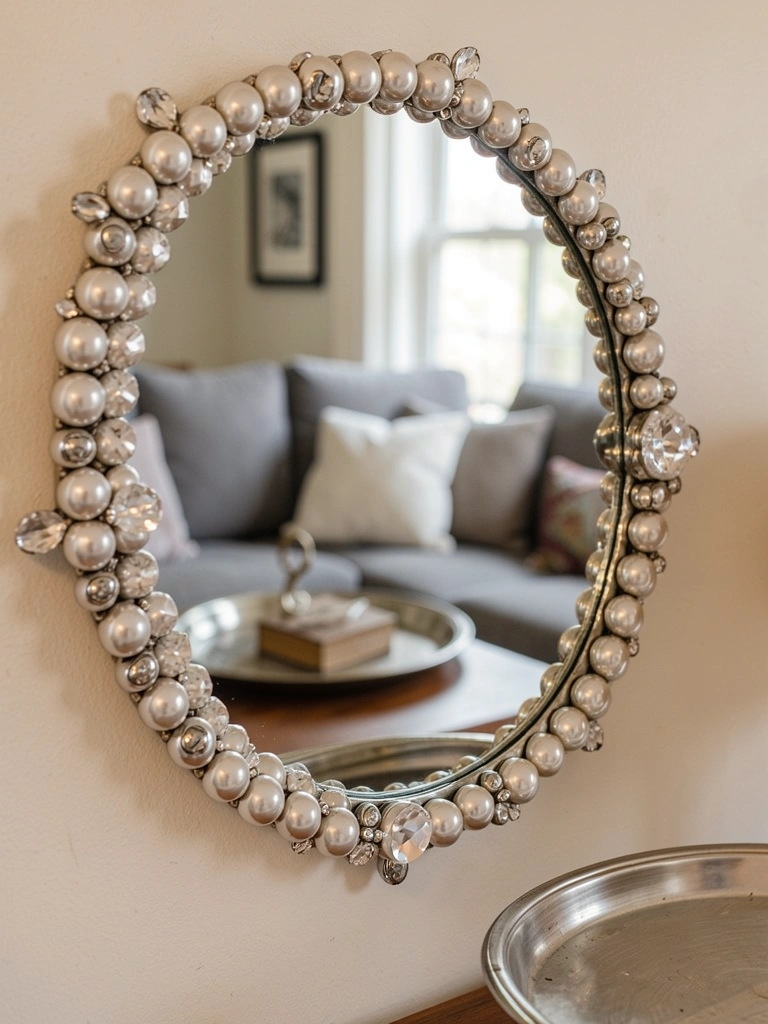
Glam without sparkle overload. Beaded circle over console catches lamp light softly.
Evenings feel dressed up, days neutral.
24-inch acrylic beads. Hang secure—heavy.
Beads tangle; gentle dust.
What You’ll Need for This Look
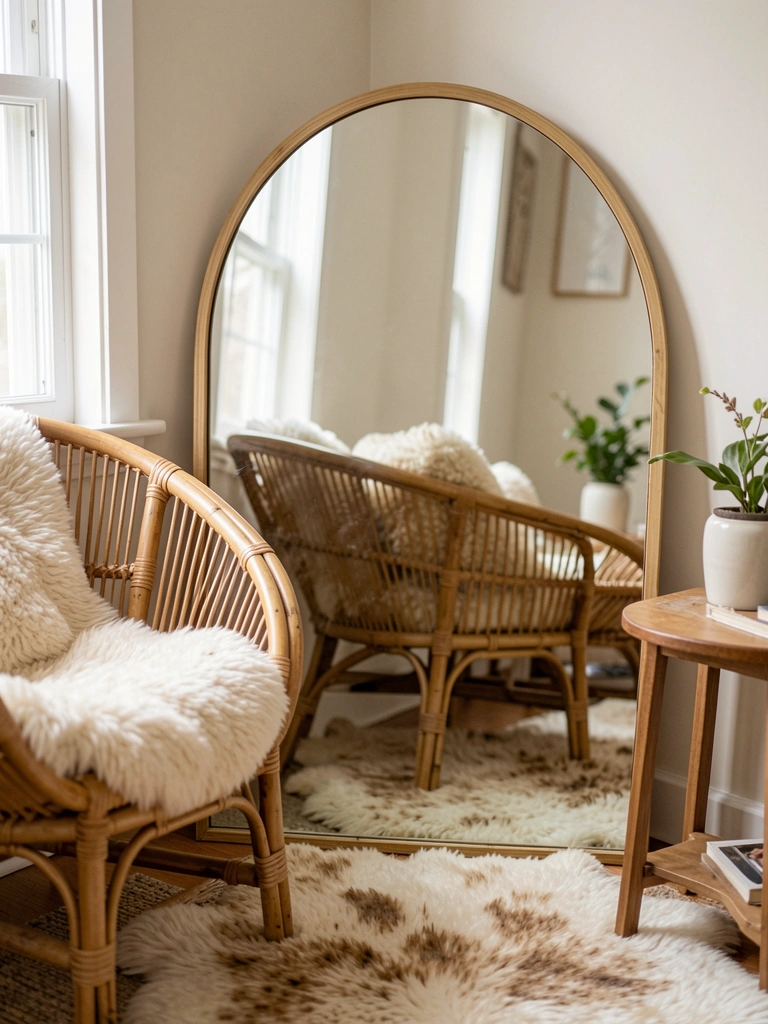
14. Oversized Wicker Circle in Sunlit Corner
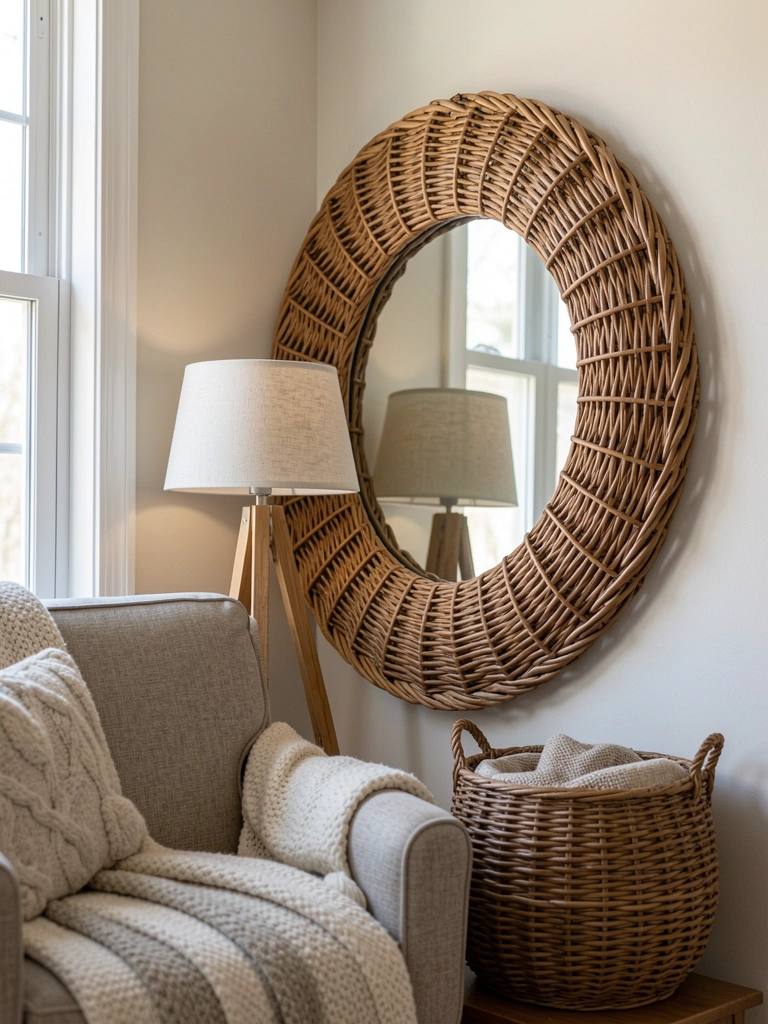
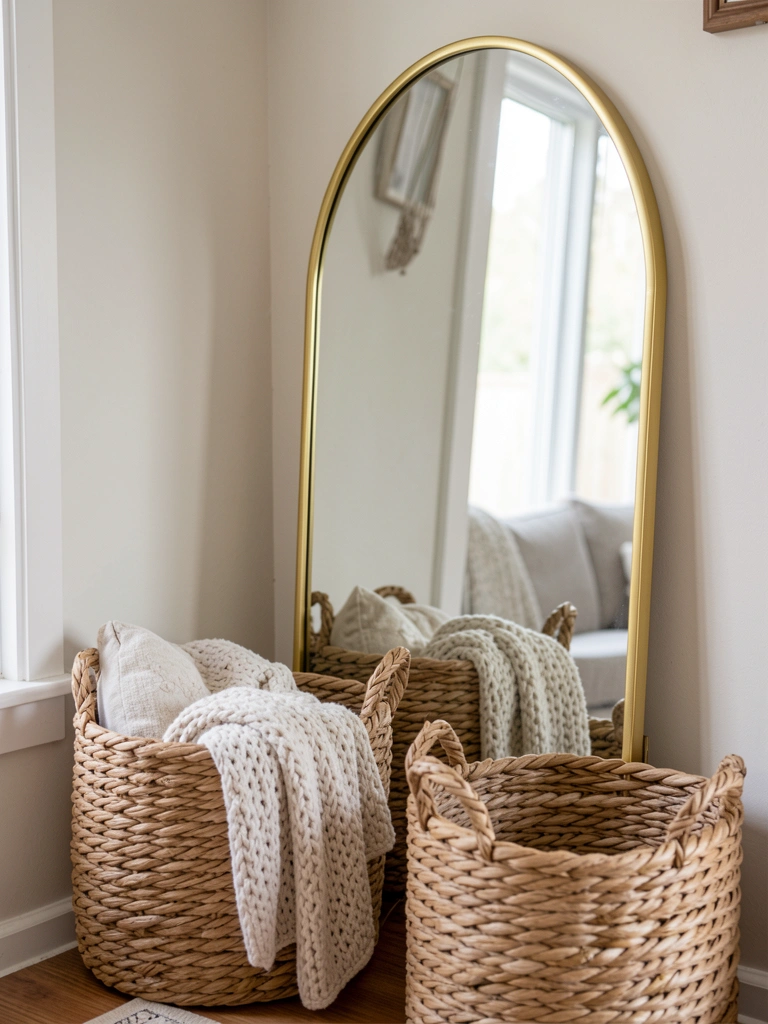
Sun corner sat empty. Huge wicker circle made it a lounge spot—mirrors sun fully.
Light floods now. Relaxing.
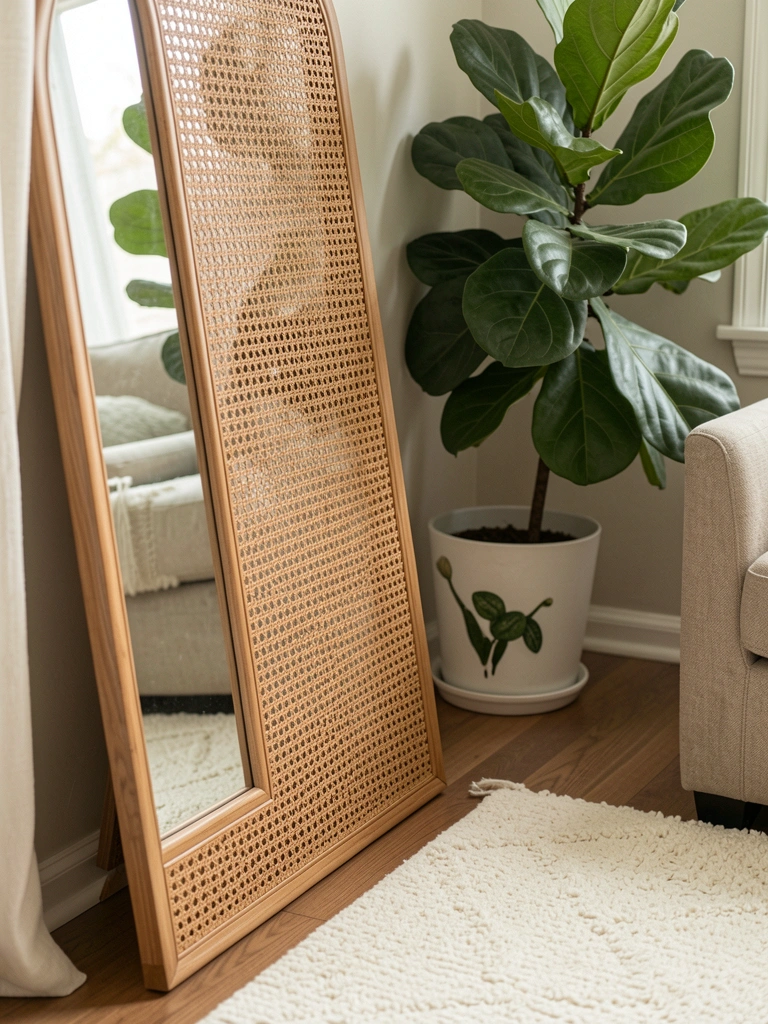
40-inch wicker. Lean if renting.
Wicker sheds; vacuum base.
What You’ll Need for This Look
40-inch oversized wicker circle mirror
15. Copper Circle with Terracotta Accents
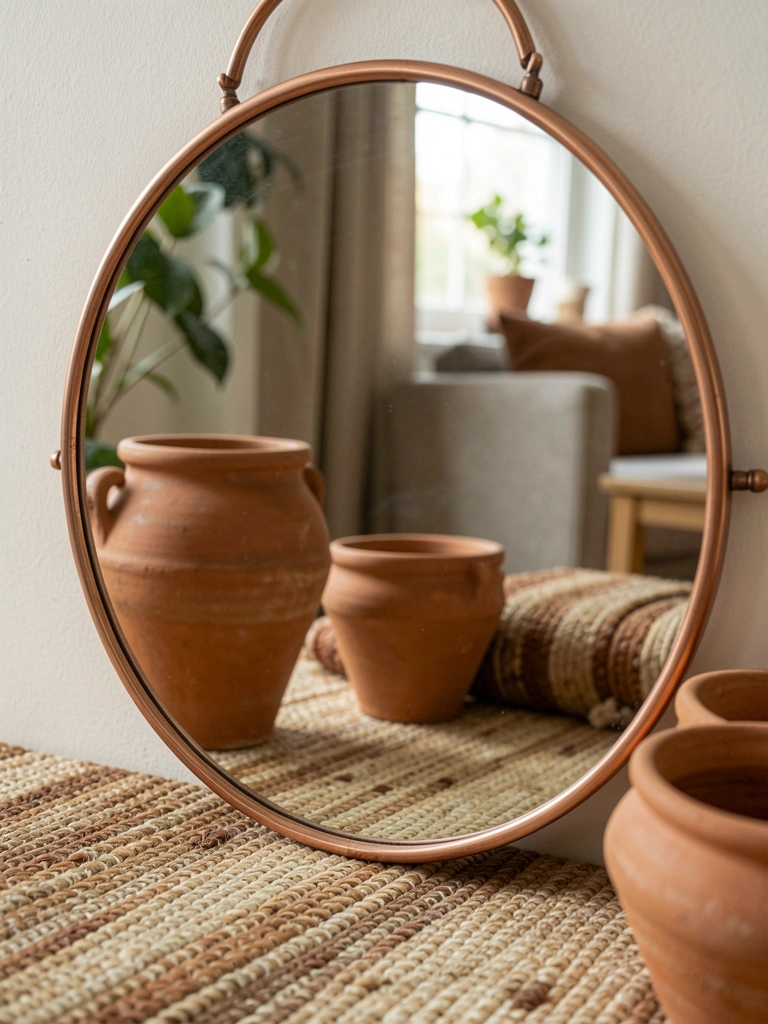
Earth tones bored me. Copper circle sparked it—pats with pots.
Warmth everywhere. Desert calm.
26-inch hammered copper. Patina grows nice.
Copper oxidizes pretty; no polish needed.
What You’ll Need for This Look
26-inch hammered copper circle mirror
16. Frosted Glass Circle for Soft Reflection
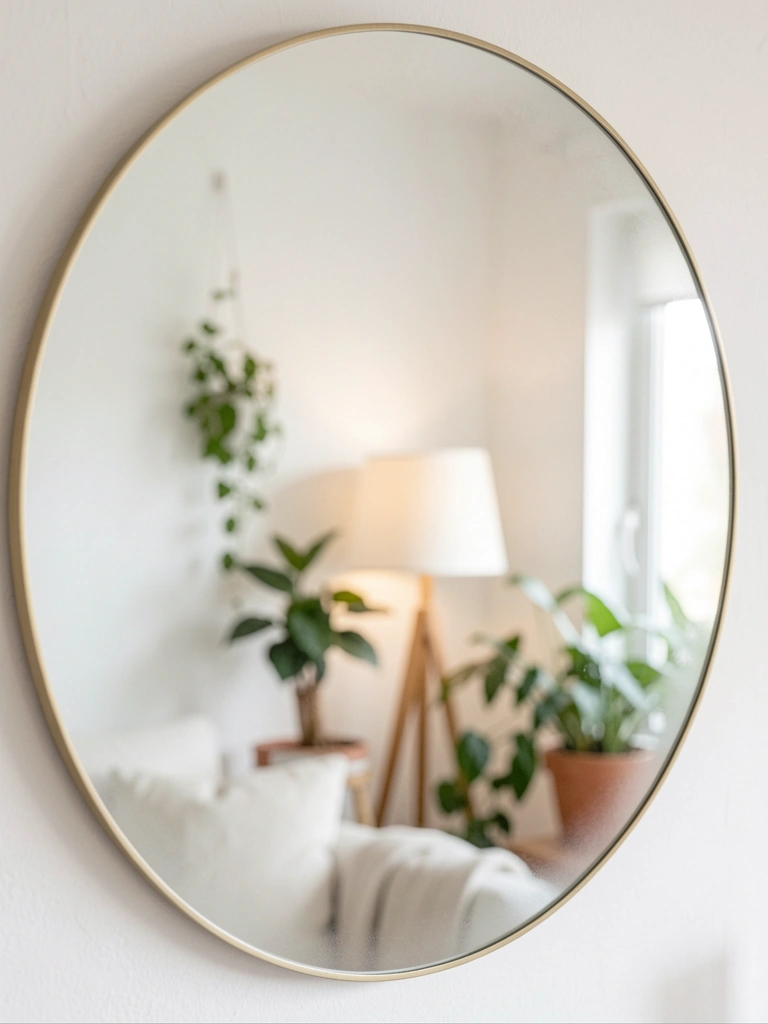
Harsh lights bugged me. Frosted circle diffuses them—gentle glow.
Room rests easy now.
32-inch frosted. Bathroom borrow works.
Glass cleans with glass spray.
What You’ll Need for This Look
32-inch frosted glass circle mirror
17. Iron Circle Frame in Industrial Loft
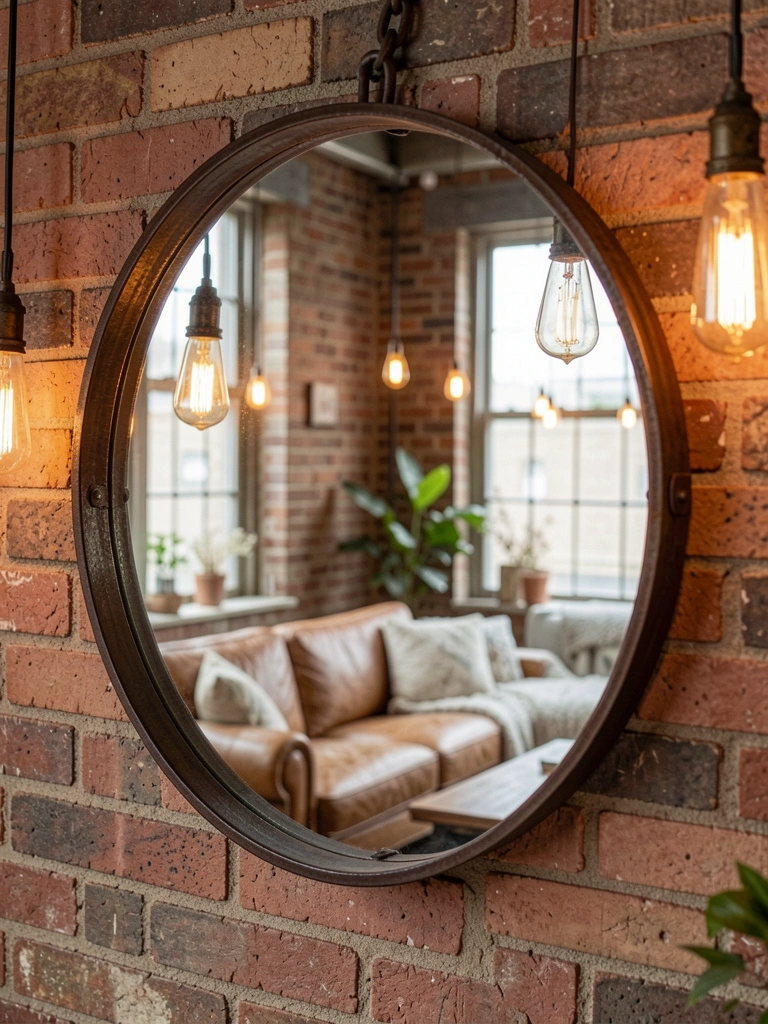
Loft felt warehouse-y. Iron circle over bar cart toughens softens.
Balances now. Inviting edge.
34-inch wrought iron. Rust patina adds.
I hung too high; eye level rules.
What You’ll Need for This Look
34-inch wrought iron circle mirror
18. Hand-Painted Circle for Color Pop
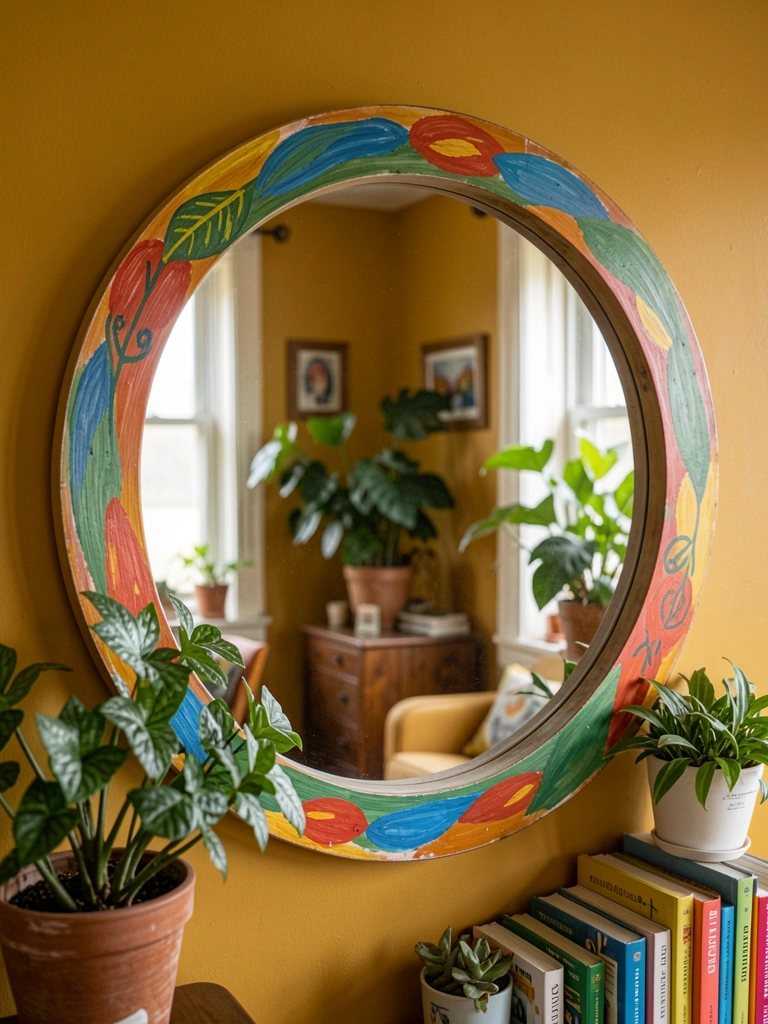
Neutrals yawned. Blue hand-painted circle wakes it—ties rug hues.
Joyful now.
20-inch watercolor style. Unique finds pop.
Paint fades sun-side; rotate.
What You’ll Need for This Look
20-inch hand-painted blue circle mirror
19. Large Acorn Circle with Fall Layers
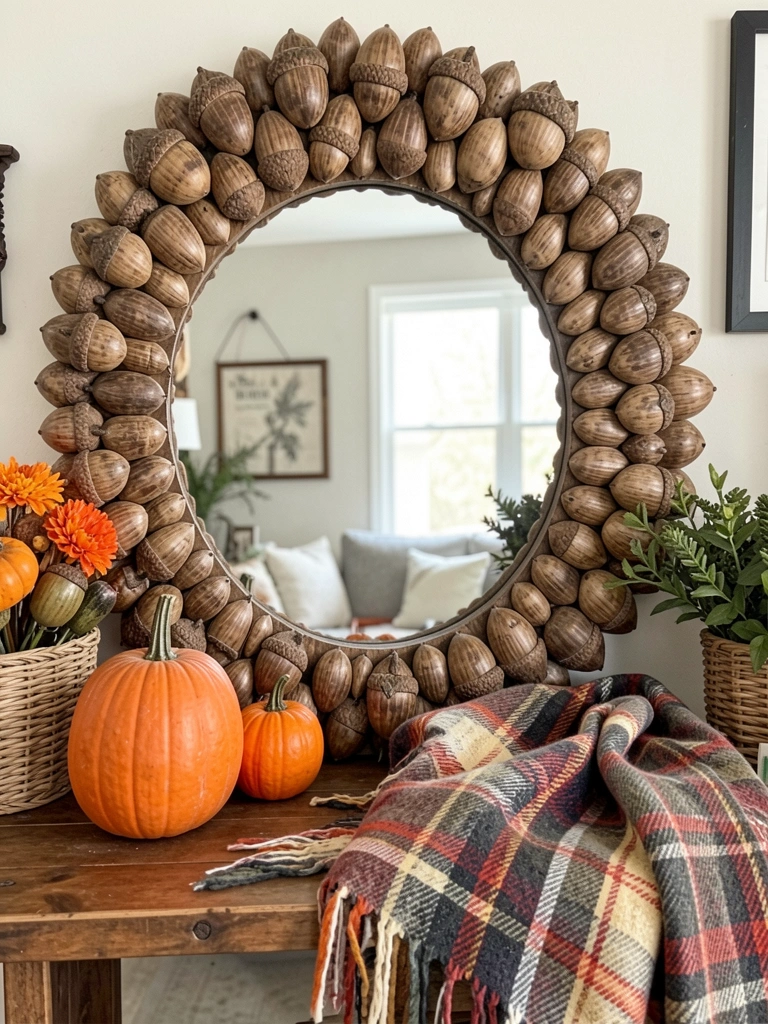
Fall swaps bore quick. Acorn circle stays year-round—mirrors seasonal bits.
Hygge holds.
38-inch wood acorn. Heavy, stud wall.
Store extras labeled.
What You’ll Need for This Look
38-inch acorn wood circle mirror
20. Slimline Silver Circle Over TV Console
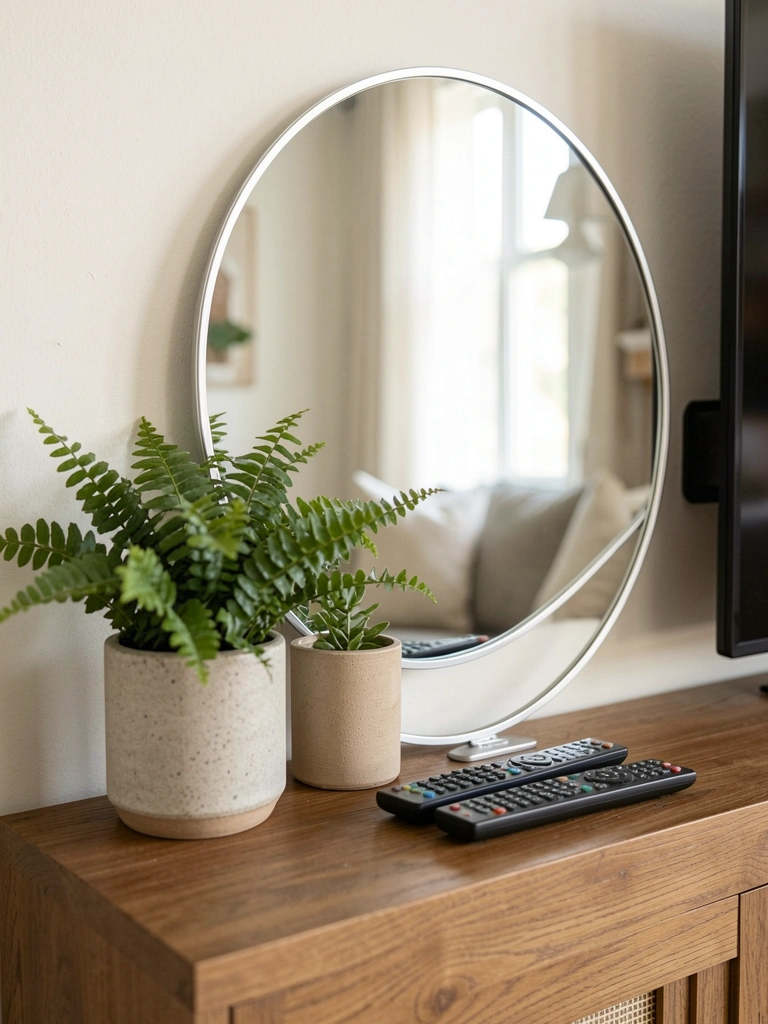
TV wall screamed tech. Silver circle distracts, reflects art.
Chill zone now.
28-inch slim silver. Cable hide first.
Silver spots; vinegar wipe.
What You’ll Need for This Look
28-inch slim silver circle mirror
21. Natural Oak Circle in Cozy Family Room
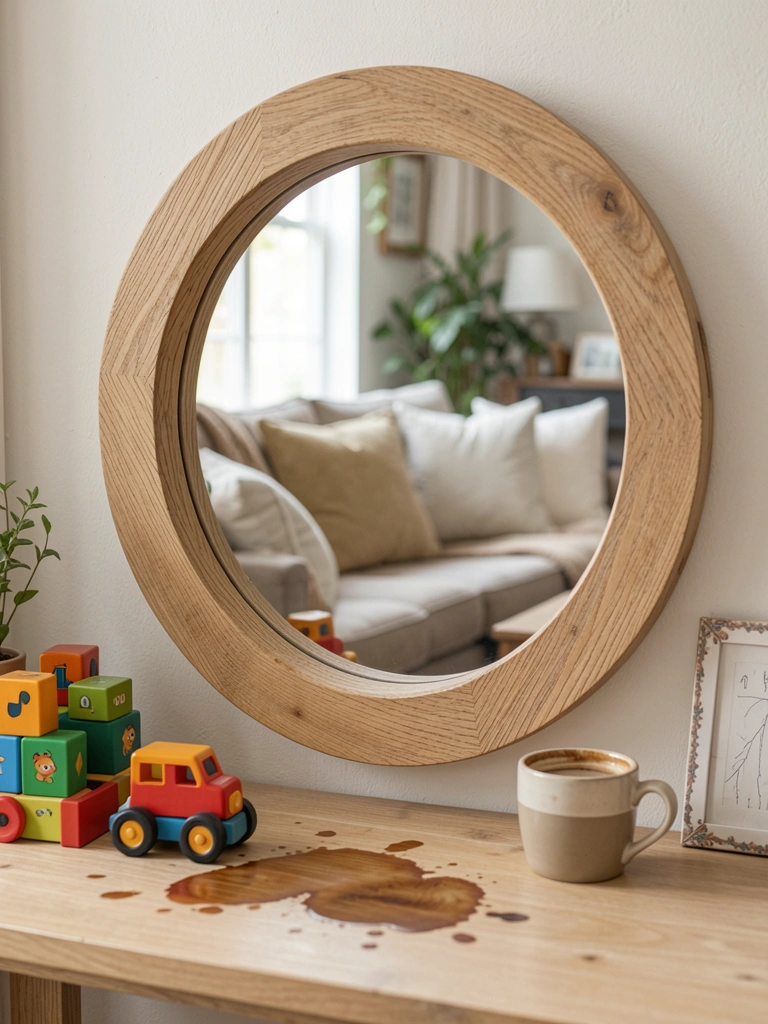
Kid chaos needed calm. Oak circle above play table mirrors toys soft.
Family nests here.
30-inch oak. Kid height safe.
I scratched mine; clear coat protects.
What You’ll Need for This Look
30-inch natural oak circle mirror
Final Thoughts
Circle mirrors changed my rooms without big spends. Start with one idea that fits your light and walls.
You don't need all 21. Test, live with it, adjust like I do.
Your home will feel right soon. Trust the circle.